Toy Group
Yorkshire Terrier
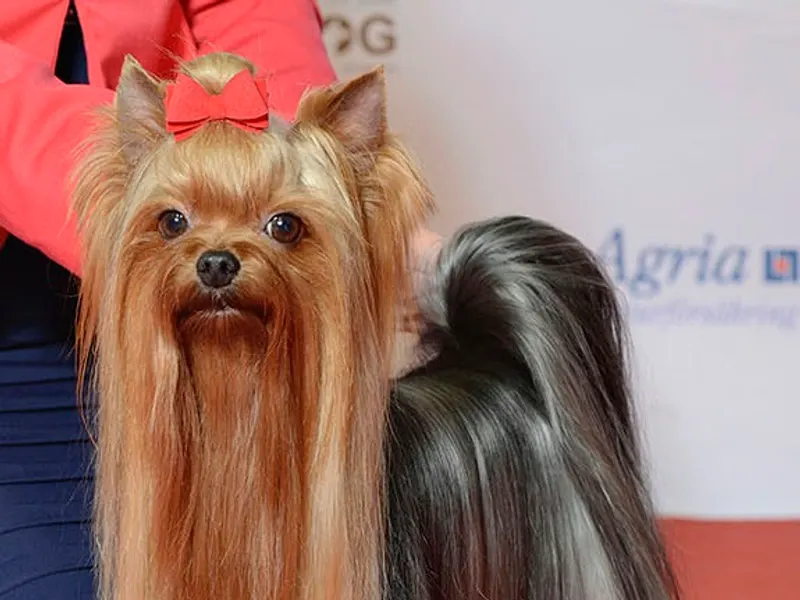
Yorkshire Terriers were bred by mill and mine workers in 19th-century industrial Yorkshire, England, to hunt rats in cramped working conditions, developed from a mix of now-largely-vanished local terrier types including the Waterside Terrier, Skye Terrier, and Clydesdale Terrier. Within a few decades, Victorian-era show breeding shrank the working ratter into a fashionable, long-coated lapdog and status symbol — one of the fastest documented transformations of a working breed into a companion breed in dog-fancy history. The breed standard calls for a precise steel-blue and tan coat coloring achieved only in adulthood — Yorkie puppies are actually born black and tan, and the adult coloring develops gradually over the first couple of years, which surprises many new owners.
Common health predispositions
- Luxating patella
- Tracheal collapse
- Dental disease
Temperament
Underneath the glamorous coat is still a genuine terrier — Yorkies are bold, assertive, and often unaware of (or unbothered by) their small size when confronting larger dogs. That confidence, combined with real physical fragility, is why the breed's compatibility rating with young children runs lower than many toy breeds: a Yorkie is neither a passive lapdog nor built to withstand rough handling. They're intelligent but can be willful during training, and they're highly vocal, quick to alert-bark at anything unfamiliar. Positive reinforcement with high-value treats works well for the breed's food motivation, and many Yorkie owners find that structured obedience or even simple trick training channels the breed's intelligence productively, reducing the excessive barking that comes from boredom or under-stimulation.
Living with a Yorkshire Terrier
The Yorkshire Terrier's grooming needs are among the highest of any breed — the long, silky, continuously-growing coat mats quickly without daily brushing if kept at full show length, which is why the large majority of pet Yorkies are kept in a shorter, easier-to-maintain 'puppy cut.' The upside is genuinely low shedding, which is why marketing toward allergy sufferers is so common for this breed, though lower-shedding remains a more honest label than hypoallergenic. Tracheal collapse, a progressive weakening of the windpipe common in small toy breeds, and dental disease from a crowded small jaw are the two health issues to watch most closely, alongside luxating patella. Because of their small size and terrier confidence, Yorkies can develop 'small dog syndrome' behaviors — barking, guarding, or nipping — if owners inadvertently reinforce them by not applying the same consistent training expectations they might apply to a larger dog; breed-savvy trainers generally recommend treating a Yorkie's training needs as seriously as a bigger dog's rather than excusing pushy behavior because of size. Regular professional grooming appointments, roughly every 6-8 weeks, are standard for pet-clip Yorkies and a real ongoing cost worth budgeting for beyond the initial purchase price. Nail trims every few weeks also matter more than owners expect, since small breeds are prone to overgrown nails affecting gait.
FAQ
Are Yorkies hypoallergenic?
No breed is completely allergen-free, technically speaking, but the Yorkie's minimal shedding leaves far less loose hair and dander floating around a home than most dogs produce — a real enough difference that it's commonly floated as an option for mild allergy sufferers, ideally tested with an in-person visit first.
Why do Yorkies need so much grooming?
The breed's coat grows continuously rather than shedding out on a cycle like most dogs, so without regular trimming and daily brushing it mats and tangles quickly — most pet owners opt for a shorter clip specifically to cut down on this maintenance.
What is tracheal collapse in Yorkies?
A progressive weakening of the cartilage rings that hold the windpipe open, common in small toy breeds and producing a characteristic honking cough — it's manageable in mild cases with weight control and a harness instead of a collar, but can require medication or surgery if it progresses.
Do Yorkies need obedience training like bigger dogs?
Yes — trainers specifically flag the breed for 'small dog syndrome,' where owners let assertive or nippy behavior slide because the dog is tiny; consistent training expectations applied the same way as for a larger breed generally produce a better-behaved adult Yorkie.
Was the Yorkshire Terrier originally a much larger working dog?
Yes — 19th-century Yorkshire Terriers bred by mill workers in northern England for catching rats in textile factories and mines were considerably larger and coarser than today's toy companion, and selective breeding for a smaller size and finer, silkier coat over subsequent generations gradually produced the compact lap dog recognized by the AKC today.
Related on FetchBreed
Comparisons
Care equipment for a Yorkshire Terrier
As an Amazon Associate we earn from qualifying purchases made through these links, at no extra cost to you.
- Pin brush
The continuously-growing coat mats quickly without daily brushing if kept at full show length, per this page.
- Dog nail clippers
Named here: nail trims every few weeks matter more than owners expect, since small breeds are prone to overgrown nails affecting gait.
- Dog toothbrush and paste
Dental disease from a crowded small jaw is one of the two health issues this page says to watch most closely.
Whichever breed fits your life, consider adoption or breed-specific rescue first — many purebred and mixed-breed dogs and cats are already waiting for homes.
General breed information, not veterinary advice — consult a vet for your pet's specific health, diet, and behavior needs.