Non-Sporting Group
Xoloitzcuintli
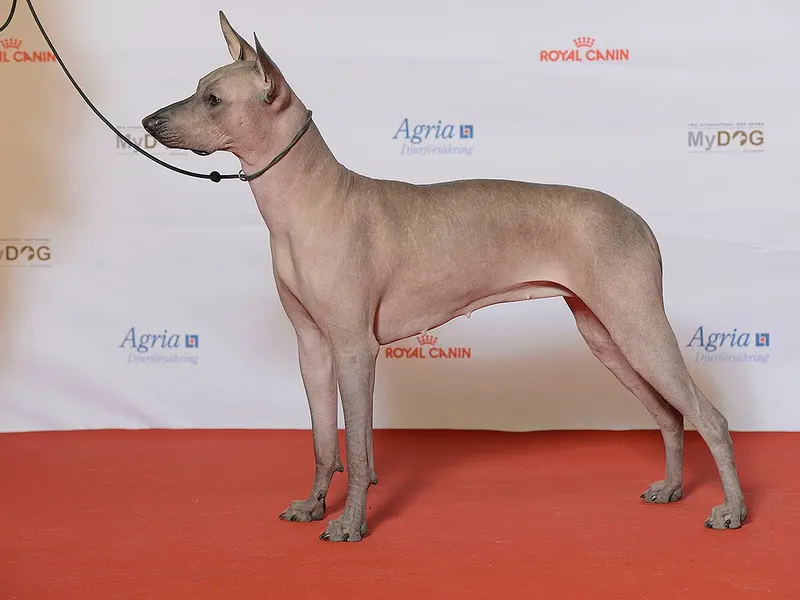
The Xoloitzcuintli is an ancient Mexican breed with archaeological evidence of its ancestors dating back thousands of years in pre-Columbian Mesoamerica, and its name combines Xolotl, an Aztec god associated with death and the underworld, with itzcuintli, the Nahuatl word for dog — reflecting the breed's significant spiritual role in Aztec belief, where the dogs were thought to guide the souls of the deceased safely through the underworld, Mictlan, and were sometimes ritually buried alongside their owners. Widely considered a national symbol of Mexico today, the breed comes in three AKC-recognized sizes — Toy, Miniature, and Standard — and both a hairless and a fully coated variety can appear within the same litter, since the hairless trait follows a dominant inheritance pattern similar to that seen in the Chinese Crested. The AKC recognized the Xoloitzcuintli in 2011.
Common health predispositions
- Dental crowding (hairless variety)
- Skin acne/sensitivity
- Patellar luxation
Temperament
Despite its ancient, sometimes mystical cultural associations, the modern Xoloitzcuintli is a genuinely trainable, alert, loyal companion breed, with solidly good trainability reflecting real intelligence rather than mysticism alone. GoodWithKids and goodWithOtherPets both run moderate, and the breed tends to be watchful and somewhat reserved with strangers, a trait consistent with its historical role as both a companion and a property guardian in ancient Mesoamerican households. The breed's size range from toy to standard means temperament can vary somewhat by individual dog and size variety, though the underlying alert, loyal disposition tends to carry across all three.
Living with a Xoloitzcuintli
Plan on roughly 45 minutes of daily activity as a baseline for the Xoloitzcuintli, adjusted up or down depending on size variety, since the larger Standard naturally needs more than the Toy. A hairless Xolo genuinely lives by different rules than a coated dog: sunscreen before outdoor time, regular moisturizer, and a habitual check for irritation or acne-like blemishes are all part of routine ownership rather than an inconvenience, whereas the coated variety just needs the standard short-coat brushing any similarly built dog would. Missing or crowded teeth show up at an elevated rate specifically tied to the hairless-trait genetics, worth raising with a breeder before committing to a hairless puppy, and skin sensitivity plus patellar luxation (which affects both coat types) round out the other commonly flagged concerns. Some allergy sufferers do genuinely better around a hairless Xolo than around a furred breed, since there's simply less coat available to carry dander around the house — not a cure, by any means, but a real, testable difference worth trying out with the specific dog. Temperature swings hit that bare skin harder than they would a furred coat, so a wardrobe of sun protection for summer and a warm layer for winter is practical, not fussy, care.
FAQ
Is the Xoloitzcuintli the same dog depicted in ancient Mexican art?
Likely a close relative — the breed is widely believed to be the type depicted in pre-Columbian art, including ceramic dog figures associated with the ancient Colima culture, though because these were folk-art pieces rather than scientific records, historians cannot say with certainty that every ancient hairless-dog depiction from the region specifically represents Xoloitzcuintli ancestors rather than a related but distinct local type. A separate, more recent chapter of the breed history is easier to pin down: the Xoloitzcuintli nearly disappeared in the early 20th century after falling out of favor as a status symbol, and had to be actively rediscovered and promoted by Mexican breed enthusiasts starting in the 1950s.
Are all Xoloitzcuintlis hairless?
No — the breed comes in both a hairless and a fully coated variety, and both can appear within the same litter since the hairless trait follows a dominant inheritance pattern, similar to what's seen in the Chinese Crested.
How many sizes of Xoloitzcuintli are there?
Three AKC-recognized sizes — Toy, Miniature, and Standard — all under a single breed standard, giving prospective owners some flexibility depending on household space while the general temperament stays fairly consistent across sizes.
Does a hairless Xoloitzcuintli need special skin care?
Yes, genuinely — exposed skin needs sun protection and regular moisturizing, plus monitoring for minor irritation or acne-like blemishes, all considered routine care rather than optional grooming for the hairless variety specifically.
Is the Xoloitzcuintli the national dog of Mexico?
It's widely considered a national symbol of Mexico given its ancient pre-Columbian origins and significant role in Aztec culture, though it doesn't hold a single formal 'national dog' legal designation — the cultural association is real and longstanding regardless.
How long do Xoloitzcuintlis live?
Often 13 to 18 years, an unusually long lifespan for a dog of any size, and one of the genuine practical advantages of an ancient landrace breed with a comparatively broad, less artificially narrowed gene pool.
Are Xoloitzcuintlis good with children?
Loyal at home but moderately reserved with strangers, this breed's trainability makes it approachable for a family willing to teach gentle handling, which matters even more with the hairless variety's delicate skin.
Do Xoloitzcuintlis bark much?
This breed stays fairly quiet by comparison — alert enough to clock an unfamiliar visitor, but nowhere near the persistently vocal end of the spectrum covered in this database.
How big does a Xoloitzcuintli get?
It depends heavily on size variety — Toys run about 10 to 15 pounds, Miniatures around 15 to 30 pounds, and Standards up to 50 pounds, all sharing the same general temperament and coat options.
Is the Xoloitzcuintli a good first dog?
Trainability and loyalty make the temperament itself approachable, though anyone considering the hairless variety specifically should understand its genuine skin-care routine before committing to a puppy.
Do Xoloitzcuintlis get along with other pets?
Generally yes, with proper introduction — the breed's moderate temperament and trainability make it reasonably adaptable to multi-pet households, though early socialization still matters as it does for any breed.
Why do Xoloitzcuintlis sometimes have missing teeth?
The same dominant gene responsible for the hairless coat trait is also linked to dental anomalies in the hairless variety specifically, a genuine genetic connection rather than a separate, unrelated dental issue.
Related on FetchBreed
Whichever breed fits your life, consider adoption or breed-specific rescue first — many purebred and mixed-breed dogs and cats are already waiting for homes.
General breed information, not veterinary advice — consult a vet for your pet's specific health, diet, and behavior needs.