Hound Group
Whippet
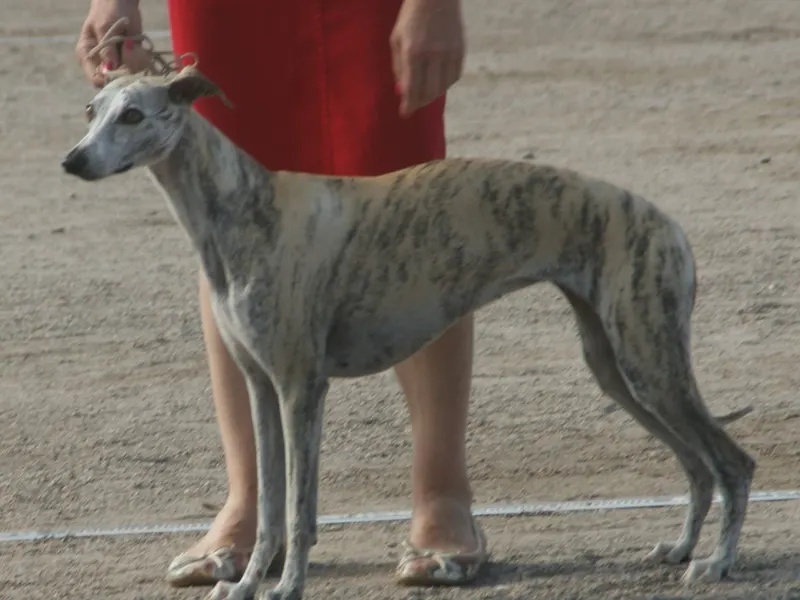
The Whippet was developed in 19th-century northern England, primarily by working-class breeders in mill towns who wanted a smaller, more affordable sighthound than the Greyhound for informal racing and rabbit coursing — the breed likely combines Greyhound and terrier ancestry, with the terrier influence contributing a bit more grit and a slightly less exclusively prey-driven temperament than the purebred Greyhound. Because Whippet racing was historically a working-class pastime rather than an aristocratic one, the breed earned the nickname 'the poor man's racehorse' in its home region. The AKC recognized the Whippet in 1888, and informal 'rag racing,' where owners send their dogs sprinting toward a waved rag or lure, remains a popular hobby event within the breed community today, a direct descendant of the informal street and yard races the breed was originally developed for. The breed comes in an unusually wide range of accepted coat colors and patterns compared with most sighthounds, from solid fawn to brindle to particolor, none of which carry a meaningful documented health or temperament difference beyond the deafness association noted with some patterns.
Common health predispositions
- Anesthesia sensitivity
- Eye disorders
- Deafness (rare)
Temperament
Whippets combine real athleticism with a notably gentle, quiet household temperament — like the Greyhound, they're built for short explosive sprints rather than sustained activity, and most Whippets spend a large share of the day curled up resting, often under blankets given their thin coat and cold sensitivity. The breed is affectionate and good with children, and its vocalization tendency is very low, among the quietest breeds in the AKC roster. Sighthound prey drive still applies, though it's typically somewhat less intense than the Greyhound's given the breed's partial terrier ancestry.
Living with a Whippet
About 45 minutes of exercise, including a genuine chance to sprint in a securely fenced area, suits the breed well — Whippets need real off-leash running periodically, not just leash walks, to stay physically and mentally satisfied. The short, smooth coat needs barely any grooming. Between the short coat and lean build, Whippets chill down fast in winter weather, and most owners in colder regions keep a jacket on hand for walks rather than leaving it to chance. Documented health concerns include anesthesia sensitivity similar to other sighthounds, various inherited eye disorders, and a genuine but rare risk of congenital deafness, more commonly associated with the breed's occasional blue or particolor coat patterns — the same piebald-linked genetics turn up behind hearing loss in a handful of other spotted breeds too. Lure coursing, a sport that lets sighthounds chase a mechanically operated lure across a field in a controlled setting, is a popular and genuinely appropriate outlet for the breed's prey drive and speed beyond simple leash walks.
FAQ
Is a Whippet basically a small Greyhound?
Related but not simply a miniature version — the Whippet was deliberately developed from a mix of Greyhound and terrier ancestry, giving it a somewhat different temperament (a bit more terrier grit) alongside its smaller size and lower cost, historically a deliberate breeding goal rather than an accident of scale.
Do Whippets need a lot of exercise?
A moderate but genuine amount — about 45 minutes daily including periodic off-leash sprinting in a secure area suits the breed's build, which is designed for short bursts of speed rather than sustained activity like a working or herding breed would need.
Are Whippets prone to deafness?
There's a documented, though relatively uncommon, association between deafness and certain coat patterns (particularly some blue and particolor combinations) in the breed, tied to the same piebald-related genetics seen in some other breeds; reputable breeders are aware of this and can discuss it for a given litter.
Do Whippets get cold easily?
Yes, noticeably — a single thin coat over very little body fat leaves the breed genuinely underprepared for winter temperatures, and warm bedding indoors plus a jacket for outdoor time are standard care rather than pampering.
What is lure coursing and is it good for Whippets?
Lure coursing is an organized sport in which sighthounds chase a mechanically operated lure across an open field in a controlled setting, and it's widely considered an excellent outlet for a Whippet's speed and prey drive, giving the breed a legitimate, safe way to sprint that a simple neighborhood walk can't replicate.
When was the Whippet recognized by the AKC?
1888 — reasonably early among sighthound breeds, reflecting how quickly the breed's informal working-class racing popularity in England translated into formal show-ring recognition once it crossed into American and international dog-fancy circles.
Was the Whippet bred for racing or hunting first?
Both, roughly simultaneously — 19th-century English working-class breeders in coal-mining towns crossed small Greyhounds with terriers to create a dog cheap to keep that could both course rabbits for food and compete in informal straight-line racing, sometimes called 'the poor man's racehorse.'
Related on FetchBreed
Comparisons
Care equipment for a Whippet
As an Amazon Associate we earn from qualifying purchases made through these links, at no extra cost to you.
- Winter dog coat
Whippets chill down fast in winter weather, and this page says most owners in colder regions keep a jacket on hand rather than leaving it to chance.
- Flirt pole
Lure coursing is named here as a genuinely appropriate outlet for the breed's prey drive and speed beyond simple leash walks.
Whichever breed fits your life, consider adoption or breed-specific rescue first — many purebred and mixed-breed dogs and cats are already waiting for homes.
General breed information, not veterinary advice — consult a vet for your pet's specific health, diet, and behavior needs.