Sporting Group
Spinone Italiano
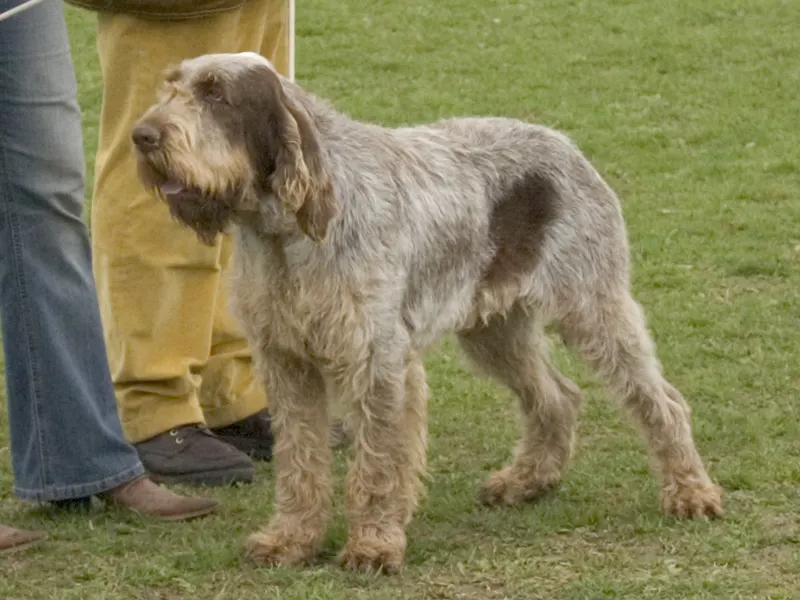
Pinning down a precise founding date for this ancient Italian pointing breed isn't really possible, but breed historians generally agree the Spinone Italiano has existed in something close to its modern form for centuries in the Piedmont region of northern Italy, likely descended from a mix of old European pointing and griffon-type dogs that arrived in Italy through Mediterranean trade routes. The breed's name comes from the Italian word "spino," meaning thorn bush, a direct reference to the dense, wiry coat's original protective function working through the thorny scrubland terrain typical of much of rural Italy. Unlike many pointing breeds bred toward speed and wide-ranging coverage, the Spinone was developed as a genuinely all-purpose hunting companion — pointing, retrieving from land or water, and working at a deliberately moderate pace that let a single hunter on foot keep up comfortably across a full day in the field. AKC recognition came comparatively recently, in 2000, decades after the breed had already built a long, quiet reputation among Italian hunters and, later, admirers across Europe. Italian breed clubs have worked carefully to preserve the Spinone's original working temperament and structure even as the breed has gained broader international recognition, a preservation effort many fanciers credit for the breed's continued reputation as a genuinely sound, functional hunting dog rather than one reshaped primarily for the show ring.
Common health predispositions
- Hip dysplasia
- Cerebellar ataxia
- Thrombopathia
Temperament
Gentle, patient, and genuinely people-oriented, the Spinone Italiano carries a notably calm, almost dignified temperament that sets it apart from higher-strung pointing breeds, a difference tracing back to its deliberately moderate, close-working hunting style developed for a hunter on foot rather than one covering ground on horseback. Kids in particular tend to be an excellent match for this breed, and most individuals show a genuinely tolerant, easygoing patience that makes the Spinone a popular choice among families specifically seeking a large sporting breed without a hyperactive edge. That same calm baseline doesn't mean low intelligence or low drive, though — real hunting instinct and scenting ability remain intact, and a Spinone given the chance to work a trail shows genuine focus underneath its generally relaxed household demeanor.
Living with a Spinone Italiano
This genuinely sturdy sporting breed doesn't demand the higher-intensity exercise some other pointing breeds do — a moderately paced hour a day covers it well, given the calm working style bred into the Spinone from the start. Keeping the wiry coat's protective texture right, bushy eyebrows and beard included, takes regular brushing plus a periodic hand-strip. Routine hip screening matters for a breed this size, but cerebellar ataxia, a documented neurological condition specific to the breed affecting coordination, and thrombopathia, an inherited platelet-function disorder also documented in the Spinone specifically, are both conditions a responsible breeder should be able to discuss directly and, ideally, test for. A family wanting a calm, patient, substantial sporting dog genuinely good with children, and willing to commit to the coat-care routine, will likely find the Spinone Italiano an excellent match. This breed's small population outside dedicated Italian and European fancier circles keeps US rescue scarce, so most adopters end up connecting directly with one of the relatively few active breeders instead. Between the coat upkeep and what a substantial dog this size eats, budget for costs on the higher side of the typical large-breed range.
FAQ
What does the name Spinone Italiano mean?
It comes from the Italian word 'spino,' meaning thorn bush, a direct reference to the breed's dense, wiry coat, which developed its protective texture specifically for working through the thorny scrubland terrain common across much of rural Italy.
Is the Spinone Italiano a calm dog?
Generally yes, notably more so than many other pointing breeds — its deliberately moderate, close-working hunting style, developed for a hunter on foot rather than one covering ground quickly, produced a genuinely calm, patient temperament that carries into household life.
Is the Spinone Italiano good with kids?
Very much so — most individuals show a genuinely tolerant, easygoing patience with children that makes the breed a popular choice among families specifically wanting a large sporting dog without a hyperactive edge.
What health conditions are specific to the Spinone Italiano?
Cerebellar ataxia, a neurological condition affecting coordination, and thrombopathia, an inherited platelet-function disorder, are both documented specifically in this breed, and a responsible breeder should be able to discuss and, ideally, test for both directly.
When was the Spinone Italiano recognized by the AKC?
Before that 2000 date, the breed spent years competing in the AKC's Miscellaneous Class, a holding category for breeds working toward full recognition that allows dogs to enter companion events like obedience and rally but not conformation. The Spinone's extended stay in that class reflected the breed's still-small US population at the time rather than any concern about temperament or health, and it moved into the Sporting Group once registration numbers and geographic spread met AKC's thresholds.
Related on FetchBreed
Whichever breed fits your life, consider adoption or breed-specific rescue first — many purebred and mixed-breed dogs and cats are already waiting for homes.
General breed information, not veterinary advice — consult a vet for your pet's specific health, diet, and behavior needs.