Herding Group
Spanish Water Dog
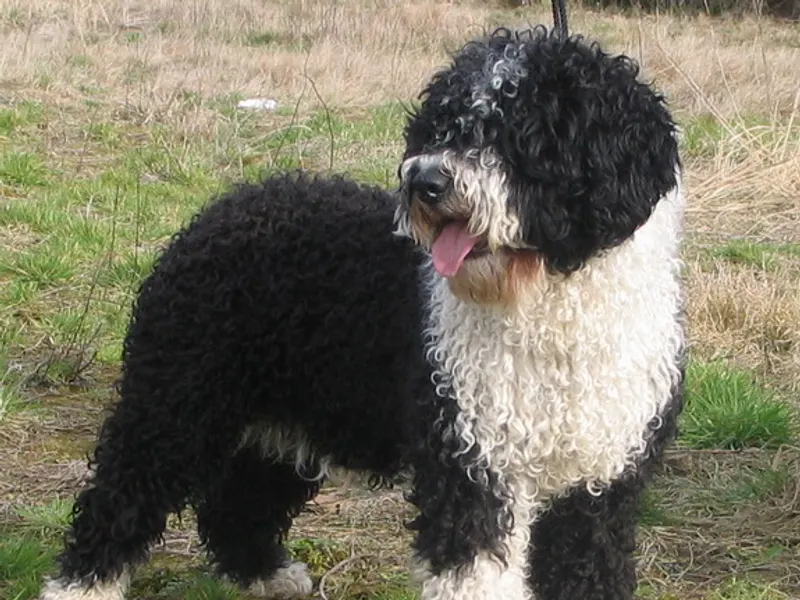
Farmers and fishermen across Spain, particularly in the Andalusia region, have used this breed for centuries in genuinely dual roles — herding livestock inland and retrieving nets and fish along the coast, a versatility reflected in the breed's name and its comfort in and around water. The distinctive curly, corded coat likely served a practical purpose, providing protection from both rough coastal weather and thorny inland terrain. Mid-20th-century modernization of Spanish agriculture pushed the breed to the brink, and it took dedicated enthusiasts working through the 1970s and 80s to pull it back from there; the AKC recognized the Spanish Water Dog relatively recently, in 2015. Some breed historians trace the Spanish Water Dog's deepest roots to dogs brought to the Iberian Peninsula by North African Berber traders centuries ago, connecting it distantly to other curly-coated working breeds around the Mediterranean, though the exact lineage remains debated. The breed's revival after its mid-20th-century population crash depended heavily on working dogs still found in the more remote parts of Andalusia, where shepherds had continued using the breed largely unaffected by broader agricultural modernization.
Common health predispositions
- Hip dysplasia
- Progressive retinal atrophy
- Addison's disease
Temperament
Genuinely versatile working history shows up in the Spanish Water Dog's temperament as high intelligence, real independence, and strong problem-solving instincts, a combination that makes the breed quick to learn but not always eager to simply follow direction without understanding the point. Most individuals are deeply loyal to family and can be reserved with strangers, a trait consistent with a guarding role alongside the herding and retrieving work. Energy levels run high, and this is not a breed that does well without regular mental and physical engagement. The breed's dual herding and water-retrieving history produced a genuinely versatile working temperament that adapts readily to different tasks, and modern Spanish Water Dogs channel that versatility into everything from agility and herding trials to search-and-rescue work, provided their owner gives them a real outlet for the underlying drive.
Living with a Spanish Water Dog
Seventy-five minutes of daily exercise, ideally including water access given the breed's retrieving history, suits the Spanish Water Dog's genuine athleticism and working drive. Coat care is distinctive: the curly coat is traditionally left to cord naturally and is never brushed, since brushing actually damages the cord formation, though occasional shaving down to a shorter length is common for pet owners who don't want to maintain full cords; either way, loose shedding stays quite low, a workable outcome for some allergy-sensitive households — confirmed best in person rather than assumed from the breed description alone. Hip dysplasia, progressive retinal atrophy, and Addison's disease all appear in the breed's veterinary literature and are worth bringing up directly before choosing a puppy. An active owner who wants a genuinely versatile working dog, and doesn't mind an unconventional coat-care routine that skips brushing entirely, will do well here; anyone wanting a low-energy companion or expecting a standard grooming schedule should look at a different breed. Spanish Water Dog rescue in the US remains limited given the breed's modest population outside Spain, with most available dogs found through the national breed club or working directly with breeders.
FAQ
Do you brush a Spanish Water Dog's coat?
No — unlike most curly-coated breeds, brushing actually damages the natural cord formation the breed is known for, and most owners either let the coat cord naturally or keep it shaved down short instead.
Are Spanish Water Dogs good swimmers?
Yes, genuinely so — the breed's history retrieving fishing nets along Spain's coast left behind real natural swimming ability and enthusiasm for water, and access to swimming makes a great outlet for the breed's energy.
Is the Spanish Water Dog hypoallergenic?
No dog is genuinely hypoallergenic, though the low-shedding curly coat does give many allergy-sensitive households an easier time with this breed than they'd have with a heavy shedder — spending real time with an individual dog remains the best way to confirm it firsthand.
Is the Spanish Water Dog related to the Portuguese Water Dog?
They're often grouped together as Iberian curly-coated working breeds with a broadly similar water-retrieving and herding history, but they developed independently on opposite sides of the Portugal-Spain border and differ in build — the Portuguese Water Dog tends to run a bit taller and more uniformly built for swimming, while the Spanish Water Dog kept a stronger dual-purpose herding influence in its structure. Genetic studies place them as related but genuinely distinct breeds rather than regional variants of one type.
Is the Spanish Water Dog easy to find in the US?
Not especially — the breed remains uncommon outside Spain, and prospective US owners typically need to work with one of a small number of dedicated breeders or search internationally.
Does a Spanish Water Dog need access to water to be happy?
Not strictly required, though the breed's genuine enthusiasm for swimming means owners with regular water access — a lake, a dog-friendly pool, or the coast — often find it becomes one of the easiest and most enjoyable ways to satisfy the breed's exercise needs.
Related on FetchBreed
Whichever breed fits your life, consider adoption or breed-specific rescue first — many purebred and mixed-breed dogs and cats are already waiting for homes.
General breed information, not veterinary advice — consult a vet for your pet's specific health, diet, and behavior needs.