Working Group
Portuguese Water Dog
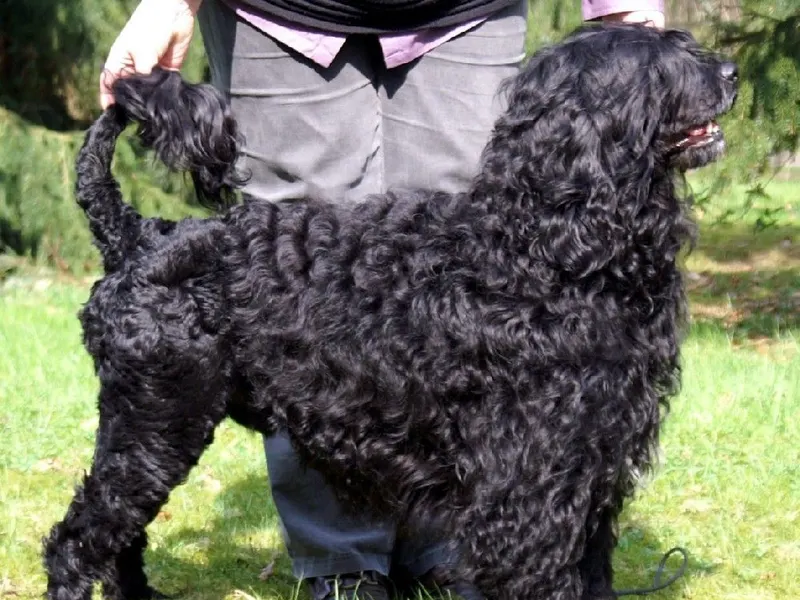
Portuguese fishermen along the Algarve coast bred the Portuguese Water Dog over centuries to herd fish into nets, retrieve gear and broken nets from the water, and carry messages between boats and shore, valuing the breed's strength, stamina, and near-fearless comfort in rough coastal water. The breed nearly went extinct by the mid-20th century as motorized fishing reduced the need for a canine crew member, and it was rebuilt largely through the efforts of a single Portuguese breeder, Vasco Bensaude, starting in the 1930s — a rescue similar in scale to the Boxer's and Rottweiler's own near-extinction recoveries. The AKC didn't recognize the breed until 1983, making it a relative latecomer to American registries, and its working-dog roots along the Algarve coast are still reflected in the breed's genuine enthusiasm for open water rather than a merely tolerant relationship with it.
Common health predispositions
- Hip dysplasia
- Progressive retinal atrophy
- GM1 storage disease
Temperament
Bred to work as an active member of a fishing crew, the Portuguese Water Dog carries maxed-out trainability and high energy, and the breed's intelligence and eagerness to work closely with people made it a natural fit for the modern spotlight it gained as the Obama family's pet, a period that measurably lifted American demand for the breed almost overnight. Kids typically do fine with this breed, and other pets are usually a reasonable match too, though the underlying working drive means the dog genuinely wants a job or structured activity rather than a purely decorative role in the household. The breed's intelligence and food motivation make it a strong candidate for dog sports like agility and water trials, and many owners find that formal training classes channel the breed's energy far more effectively than free play alone.
Living with a Portuguese Water Dog
Water access changes everything for this breed — pair roughly 75 minutes of daily exercise with a chance to actually swim and a Portuguese Water Dog settles in far more contentedly than one stuck with dry-land walks alone; this is coastal-working stock, not a couch companion. Coat upkeep is a genuine time commitment too: a trip to the groomer every six to eight weeks, plus brushing at home in between, keeps the dense curly-to-wavy single coat from matting, and the payoff for that effort is a dog that barely sheds. Documented health concerns include hip dysplasia and an inherited form of progressive retinal atrophy, and GM1 storage disease — a rare metabolic disorder — is specific enough to the breed that responsible breeders routinely run DNA panels for carrier status. Two coat textures occur in the breed, a tighter curl and a looser wave, both equally demanding to maintain, and the traditional 'lion cut' — shaved at the hindquarters, left long up front — isn't just for looks: it once kept the dog's rear agile in the water while insulating its vital organs.
FAQ
Are Portuguese Water Dogs hypoallergenic?
No dog qualifies as truly allergen-free, but this breed's curly coat sheds little enough that allergy-sensitive households often do better with it than with most other breeds — a claim worth testing in person with the specific puppy before committing.
How much grooming does a Portuguese Water Dog need?
Plan for it as a recurring expense and time commitment — six-to-eight-week grooming appointments plus regular at-home brushing keep the dense curly coat from matting, which puts this breed toward the higher end of grooming maintenance despite how little it actually sheds.
When was the Portuguese Water Dog recognized by the AKC?
1983 — a relative latecomer among working breeds, reflecting how close the breed came to disappearing entirely before Vasco Bensaude's mid-20th-century rebuilding effort produced a stable enough population for international export and eventual American recognition.
What is GM1 storage disease?
A rare, inherited, fatal metabolic disorder documented specifically in Portuguese Water Dogs among other breeds, caused by a missing enzyme needed to break down certain fats in nerve cells. Reputable breeders test breeding stock via DNA panel to avoid producing affected puppies.
How did the Portuguese Water Dog nearly go extinct?
As Portuguese fishing fleets motorized through the early-to-mid 20th century, the breed's traditional net-herding and gear-retrieving jobs disappeared, and the working population collapsed along with demand for the dogs. A single breeder, Vasco Bensaude, is credited with rebuilding the breed from a small remaining population starting in the 1930s.
What working role did the Portuguese Water Dog originally have on fishing boats?
Fishermen along Portugal's coast used the breed to herd fish into nets, retrieve gear and lost tackle from the water, and even carry messages between boats and shore, a genuinely varied job description that required both the strength to swim in open water and enough intelligence to follow a working crew's hand signals reliably at sea.
Related on FetchBreed
Comparisons
- Portuguese Water Dog vs Akita
- Portuguese Water Dog vs Alaskan Malamute
- Portuguese Water Dog vs Bernese Mountain Dog
- Portuguese Water Dog vs Boxer
- Portuguese Water Dog vs Cane Corso
- Portuguese Water Dog vs Doberman Pinscher
- Portuguese Water Dog vs Great Dane
- Portuguese Water Dog vs Great Pyrenees
- Portuguese Water Dog vs Mastiff
- Portuguese Water Dog vs Rottweiler
- Portuguese Water Dog vs Samoyed
- Portuguese Water Dog vs Siberian Husky
Care equipment for a Portuguese Water Dog
As an Amazon Associate we earn from qualifying purchases made through these links, at no extra cost to you.
- Slicker brush
Brushing at home between six-to-eight-week grooms is what keeps this dense curly coat from matting, per the page.
- Dog life jacket
Water access changes everything for this breed, the page says — dry-land walks alone leave a PWD unsettled.
Whichever breed fits your life, consider adoption or breed-specific rescue first — many purebred and mixed-breed dogs and cats are already waiting for homes.
General breed information, not veterinary advice — consult a vet for your pet's specific health, diet, and behavior needs.