Hound Group
Pharaoh Hound
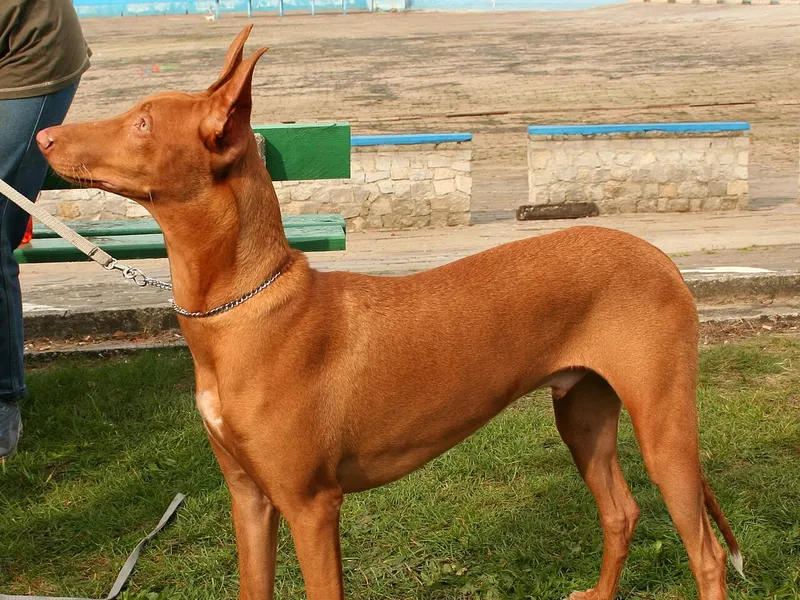
Malta claims this breed as its national dog, and while its striking resemblance to ancient Egyptian tomb paintings once fueled popular claims of genuinely ancient Egyptian origin, most modern genetic research suggests the breed as it exists today developed more recently on Malta, likely descending from sighthounds brought to the islands by Phoenician traders rather than tracing an unbroken direct line to the dogs depicted in pharaonic art. Regardless of the exact lineage, the breed has worked on Malta for centuries as a rabbit-hunting dog, prized for exceptional sight, hearing, and speed across the islands' rocky terrain. AKC recognition came in 1983. Malta's formal designation of the Pharaoh Hound as its national dog came in 1979, cementing a cultural association that had already existed informally for generations among Maltese hunters who used the breed, known locally as the Kelb tal-Fenek, or "rabbit dog," for exactly the purpose its Maltese name suggests. The breed's international recognition lagged well behind its long presence on Malta — the UK Kennel Club recognized it in 1974 and the AKC followed nearly a decade later in 1983, reflecting how geographically isolated the breed's development had remained for centuries.
Common health predispositions
- Anesthesia sensitivity (sighthound trait)
- Mild patellar luxation
- Generally hardy breed
Temperament
Alert, intelligent, and genuinely affectionate with family, the Pharaoh Hound tends to be a bit more people-oriented and demonstrative than many other sighthound breeds, including a notable and much-discussed tendency to blush, with the nose and ears flushing a deeper color when the dog is excited or happy, a genuinely distinctive trait among dog breeds. The instinct to chase remains fully intact from the breed's rabbit-coursing background, and its raw speed combined with sight-hunting reflexes means recall around small animals takes real, dedicated training. The breed's history as Malta's primary rabbit-hunting dog for centuries produced a genuinely versatile hunter capable of tracking by scent, sight, and sound in combination, an unusually broad hunting skill set compared to many sighthounds that rely almost exclusively on vision, and that sensory versatility shows up in the modern companion dog as heightened alertness to its surroundings generally.
Living with a Pharaoh Hound
Off-leash running room in a securely fenced space matters as much as raw minutes for this built-for-speed breed, though 75 minutes or so of vigorous activity most days is a reasonable baseline to plan around. Grooming asks little in return — just occasional brushing for the short, glossy coat. As with other sighthounds, anesthesia sensitivity tied to low body fat is worth flagging with any treating veterinarian, though the Pharaoh Hound is otherwise considered a fairly hardy breed, with mild patellar luxation the main condition occasionally reported. An active owner with secure fencing, who genuinely appreciates the breed's distinctive blushing trait and athletic build, is the right match — anyone wanting a highly biddable companion, or underestimating the breed's speed and prey drive, will likely struggle. Sighthound rescue groups in the US place Pharaoh Hounds from time to time, but the breed's modest population here means real patience is usually required before one becomes available.
FAQ
Do Pharaoh Hounds really blush?
Yes, genuinely — the nose and ears flush a deeper, rosier color when the dog is excited or happy, a distinctive and well-documented trait rarely seen in other breeds, tied to the thin, minimally pigmented skin in those areas.
Is the Pharaoh Hound actually from ancient Egypt?
The breed's striking resemblance to dogs in ancient Egyptian art long fueled that popular belief, but most modern genetic research suggests the breed as it exists today developed more recently on Malta from sighthounds brought by Phoenician traders, rather than tracing an unbroken lineage to pharaonic Egypt.
Is the Pharaoh Hound a healthy breed?
Generally yes — it's considered fairly hardy with relatively few well-documented breed-specific health conditions, though as with other sighthounds, anesthesia sensitivity related to low body fat is worth discussing with a treating veterinarian.
What does the Maltese name for the Pharaoh Hound mean?
Kelb tal-Fenek translates roughly to "rabbit dog" in Maltese, a direct and functional description of the breed's traditional role hunting rabbits across Malta's terrain long before any formal kennel-club standard existed.
When did the Pharaoh Hound gain international kennel club recognition?
The UK Kennel Club recognized the breed in 1974, and the AKC followed nearly a decade later in 1983 — a relatively late international recognition given how long the breed had already existed on Malta, reflecting its historical geographic isolation.
Do Pharaoh Hounds get along with other dogs?
Generally well with dogs they're raised alongside, and the breed's history hunting cooperatively in packs on Malta gives it a naturally more sociable disposition toward other dogs than some solitary-hunting sighthound breeds display.
Related on FetchBreed
Whichever breed fits your life, consider adoption or breed-specific rescue first — many purebred and mixed-breed dogs and cats are already waiting for homes.
General breed information, not veterinary advice — consult a vet for your pet's specific health, diet, and behavior needs.