Foundation Stock Group
Peruvian Inca Orchid
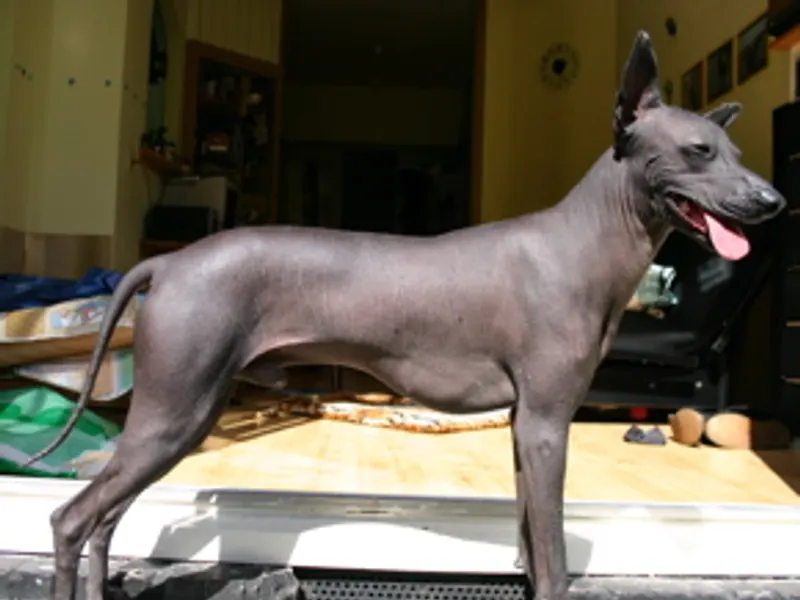
Pre-Columbian civilizations in Peru kept hairless dogs matching this breed's description for many centuries before European contact, and archaeological evidence, including depictions on ancient Peruvian pottery and ceramics, documents the breed's presence in the region going back well over a thousand years, making the Peruvian Inca Orchid one of the more archaeologically well-documented ancient breeds anywhere in the world. Peru recognizes the breed as a genuine national natural heritage treasure today, and the dog carries real cultural significance tied to pre-Columbian Andean civilizations, with some historical accounts suggesting the breed's natural body warmth, a byproduct of its hairlessness, led to a traditional folk belief in the dog's therapeutic value for conditions like arthritis. The breed exists across a genuinely wide size range and in both hairless and coated varieties, both eligible under the same breed standard since the hairless trait follows a specific dominant inheritance pattern that can produce coated puppies within hairless-to-hairless litters. AKC recognition came in 2020 under the Peruvian Inca Orchid name, though its ancient, well-documented South American history has done little to make it a familiar sight domestically.
Common health predispositions
- Dental issues (hairless variety)
- Skin sensitivity/sunburn (hairless variety)
- Generally hardy breed
Temperament
Alert, genuinely affectionate with its own family, and notably reserved with strangers, the Peruvian Inca Orchid carries a temperament shaped by centuries as a valued companion and watchdog across Andean households rather than any working-hunting role. Real devotion to its people runs deep, and most individuals bond closely, though genuine wariness toward unfamiliar people and situations means early, consistent socialization matters for this breed specifically. That same alertness translates into a naturally watchful disposition at home, and the breed tends to announce anything unusual readily despite its ancient companion-dog role rather than any formal guarding breeding. Peruvian breed clubs continue actively promoting the Peruvian Inca Orchid specifically as a genuine national heritage breed, treating its preservation as a real link to pre-Columbian Andean culture rather than simply another rare-breed curiosity.
Living with a Peruvian Inca Orchid
Alert and moderately energetic, this breed does well on around an hour of daily activity. Coat care splits sharply by variety: hairless individuals genuinely need sun protection whenever they're outside plus regular moisturizing to keep bare skin from drying out, whereas the coated variety is a simple occasional-brush affair by comparison. Dental issues are notably more common in the hairless variety, a documented genetic link tied to the same gene responsible for hairlessness, and skin sensitivity plus real sunburn risk round out the hairless-specific health considerations, though the breed overall is considered genuinely hardy. Real alertness and genuine reserve toward strangers suit a household willing to commit to early socialization and, for the hairless variety, consistent skin-care attention. US breeders remain genuinely few despite 2020 AKC recognition, so patience or a South American import contact is generally part of the process. Budget a bit above typical medium-breed food and vet costs for the hairless variety specifically, given the ongoing spend on sunscreen and skin-care products.
FAQ
Is the Peruvian Inca Orchid the same as the Xoloitzcuintli?
No, though the two ancient hairless breeds are often compared and share a broadly similar hairless-gene inheritance pattern — the Peruvian Inca Orchid developed independently in pre-Columbian Peru, while the Xoloitzcuintli developed separately in pre-Columbian Mexico, two genuinely distinct hairless lineages that arose in different parts of the Americas rather than one shared ancestral hairless dog spreading across the continent. Build also differs somewhat: the Peruvian Inca Orchid tends to run leaner and more elegant in silhouette, while the Xoloitzcuintli's build varies more across its three recognized size categories.
Can a hairless Peruvian Inca Orchid have coated puppies?
Yes — the hairless trait follows a specific dominant inheritance pattern, which means coated puppies can appear even within litters from two hairless parents, and both varieties remain eligible under the same official breed standard.
Do hairless Peruvian Inca Orchids have more dental problems?
Yes, notably — dental issues are more common in the hairless variety specifically, a documented genetic link tied to the same gene responsible for the breed's hairlessness, making regular dental care an important part of ownership for that variety.
Is the Peruvian Inca Orchid a national treasure in Peru?
Yes, genuinely — Peru formally recognizes the breed as a national natural heritage treasure, reflecting its real cultural significance and archaeologically documented ties to pre-Columbian Andean civilizations stretching back over a thousand years.
When did the AKC recognize the Peruvian Inca Orchid?
In 2020 — a formal step that hasn't translated into wider domestic availability, so a genuine wait or a South American import contact is realistically part of getting a puppy.
How big does a Peruvian Inca Orchid get?
The breed spans a genuinely wide size range, from small individuals around 8.5 pounds up to large ones near 55 pounds, since all three recognized sizes — small, medium, and large — fall under one shared breed standard rather than being split into separate breeds the way some other multi-size breeds are.
Related on FetchBreed
Whichever breed fits your life, consider adoption or breed-specific rescue first — many purebred and mixed-breed dogs and cats are already waiting for homes.
General breed information, not veterinary advice — consult a vet for your pet's specific health, diet, and behavior needs.