Working Group
Leonberger
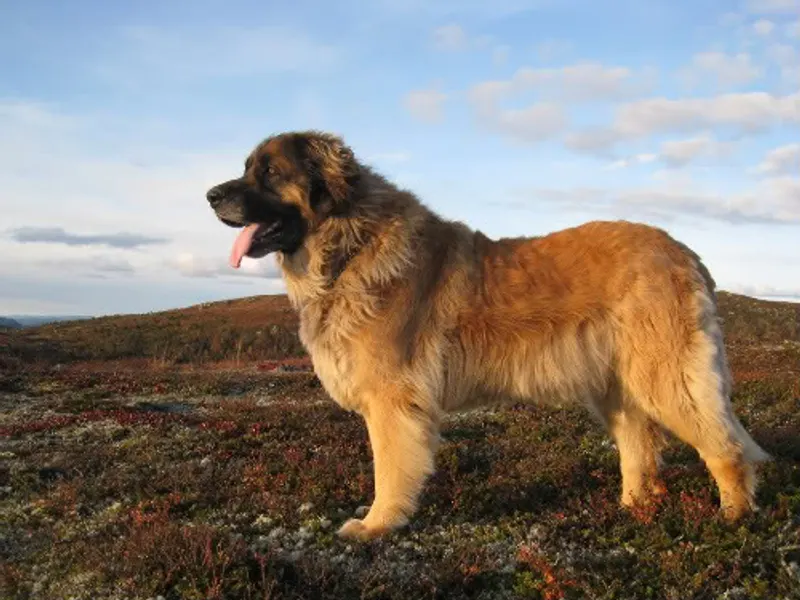
A mid-19th-century German breeder named Heinrich Essig deliberately created the Leonberger in the town of Leonberg by crossing large breeds including the Newfoundland, Saint Bernard, and Pyrenean Mountain Dog, reportedly aiming to produce a dog whose appearance would echo the lion featured on Leonberg's town coat of arms — a rare example of a breed created with a specific symbolic look in mind rather than purely for a working function. The breed nearly went extinct twice in the 20th century, first during World War I and again, more severely, during World War II, when the population reportedly dropped to as few as a handful of surviving dogs; the modern Leonberger descends almost entirely from that narrow post-war bottleneck, rebuilt through careful, deliberate breeding in the following decades. The AKC granted full recognition comparatively recently, in 2010.
Common health predispositions
- Hip/elbow dysplasia
- Bloat
- Osteosarcoma
Temperament
Its imposing size aside, the Leonberger is a famously gentle, patient giant, built around companionship and calm confidence rather than aggression or intense guarding drive — kids and other pets both do consistently well around this breed. Eager to please and solidly trainable, Leonbergers have found genuine second careers in therapy-dog and water-rescue work in parts of Europe. The breed's calm disposition doesn't mean low intelligence, though, and Leonbergers do best with consistent structure and genuine mental engagement rather than being left to their own devices for long stretches.
Living with a Leonberger
An hour of daily exercise suits this large, athletic breed well, and Leonbergers generally enjoy swimming, a trait connected to the Newfoundland ancestry in their makeup. Several brushing sessions a week are the baseline for the long, water-resistant double coat, and that workload climbs sharply once the seasonal blowouts typical of a breed this size kick in. Hip and elbow dysplasia, the deep-chested bloat risk shared by most large breeds, and an elevated rate of osteosarcoma — the bone cancer that hits giant breeds harder than almost any other size class — round out the main documented health concerns. The narrow genetic bottleneck the breed passed through during the World Wars is still a live consideration for today's breeders, who watch genetic diversity and health-screening results carefully given how limited the founding gene pool actually was. Feeding and general upkeep costs run high simply given the dog's substantial size, a practical consideration worth factoring in alongside the breed's genuinely gentle, family-friendly temperament.
FAQ
Why was the Leonberger bred to look like a lion?
19th-century breeder Heinrich Essig reportedly wanted to create a dog whose appearance would echo the lion featured on the town coat of arms of Leonberg, Germany, and deliberately crossed large breeds including the Newfoundland, Saint Bernard, and Pyrenean Mountain Dog to achieve that look.
How did the Leonberger almost go extinct?
The breed's population collapsed sharply during both World Wars, most severely during World War II, when reportedly only a handful of dogs survived; the modern Leonberger descends almost entirely from that narrow post-war founding population, rebuilt through careful breeding in subsequent decades.
Are Leonbergers good family dogs?
Yes, notably so despite the giant size — patience and gentleness define this breed's temperament, and both kids and other household pets tend to be genuinely well-liked by a Leonberger rather than merely tolerated.
Do Leonbergers like swimming?
Generally yes — the breed's ancestry includes the Newfoundland, a dedicated water-rescue breed, and many Leonbergers retain a real enthusiasm for swimming and water-based activity as a result.
How much grooming does a Leonberger need?
A substantial commitment — expect to brush the long, water-resistant double coat several times a week just for baseline upkeep, and expect that to feel inadequate once the seasonal blowouts hit.
How big does a Leonberger get?
Genuinely giant — commonly 90 to 170 pounds and up to 31.5 inches at the shoulder for males, a scale directly tied to the breed's deliberately designed lion-like appearance and its Newfoundland and Saint Bernard ancestry.
How long do Leonbergers live?
A relatively short 7 to 9 years, a pattern typical of giant breeds generally, and one reason cancer and cardiac screening are taken particularly seriously by responsible Leonberger breeders.
Are Leonbergers used in therapy or rescue work?
Yes, increasingly — the breed's calm, gentle temperament and genuine swimming ability have made it a growing presence in European water-rescue and therapy-dog programs, building on its Newfoundland heritage.
Is a Leonberger a good first dog?
Giant size, substantial feeding and care costs, and genuine grooming demands add up to more responsibility than a typical first-time owner is prepared for, its friendly temperament notwithstanding.
Do Leonbergers do well with children?
Yes, notably so — the breed's calm, patient temperament makes it one of the more consistently gentle giant breeds around kids, provided the dog's own size is managed carefully around very young children.
Is feeding a Leonberger expensive?
Plan for a genuinely higher grocery bill than a typical breed — well over $100 monthly on food volume alone, on top of larger medication doses and giant-sized gear once beds, crates, and harnesses enter the picture.
Do Leonbergers get along with other dogs?
Calm, gentle temperaments like this one rarely stop at people — Leonbergers rank among the more consistently sociable giant breeds when it comes to sharing a household with other dogs.
What does a Leonberger's coat look like?
Long, dense, and water-resistant, in shades of lion-yellow, red, reddish-brown, or sandy, often with a black mask on the face — a coat deliberately bred to echo the lion on Leonberg's town crest.
Related on FetchBreed
Care equipment for a Leonberger
As an Amazon Associate we earn from qualifying purchases made through these links, at no extra cost to you.
- Slicker brush
Several brushing sessions a week are the stated baseline for the long coat, climbing sharply through the seasonal blowouts.
- Microfibre dog drying towel
Leonbergers are described here as enjoying swimming, and a water-resistant double coat holds water long after the dog is out of it.
Whichever breed fits your life, consider adoption or breed-specific rescue first — many purebred and mixed-breed dogs and cats are already waiting for homes.
General breed information, not veterinary advice — consult a vet for your pet's specific health, diet, and behavior needs.