Working Group
Great Pyrenees
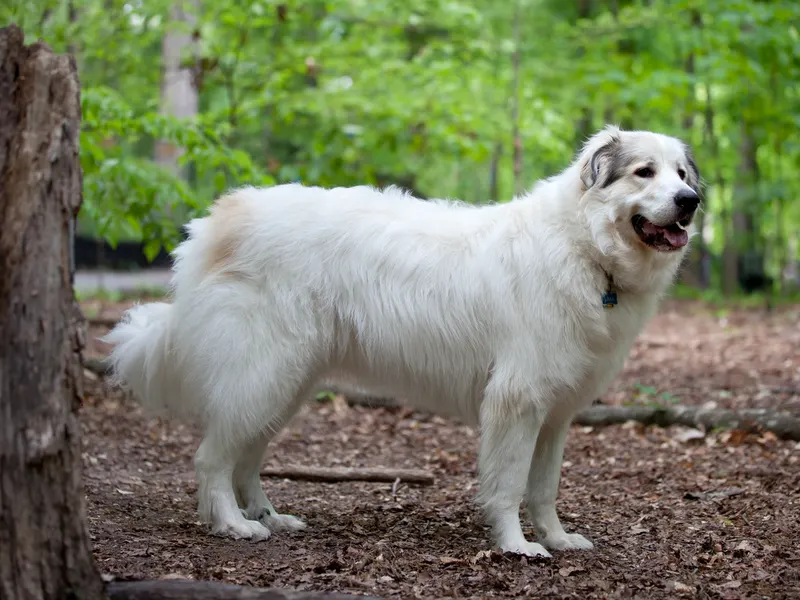
Shepherds in the Pyrenees Mountains between France and Spain bred the Great Pyrenees for centuries as a livestock guardian, working independently alongside flocks of sheep to deter wolves and bears rather than herding the animals directly — a fundamentally different job from a herding breed's, and one that shaped nearly every aspect of the breed's temperament and instincts. The breed's near-all-white coat likely served a practical purpose, letting shepherds distinguish their guardian dogs from wolves at a glance in low light or from a distance. French nobility later adopted the breed as a estate guardian and status symbol in the 17th century, but its core identity has always remained the working livestock guardian rather than a companion or sporting breed. The AKC recognized the breed in 1933, and it remains actively used as a working livestock guardian on ranches today, not purely as a companion breed, a working role many other historic guardian breeds have largely lost.
Common health predispositions
- Hip dysplasia
- Bloat
- Patellar luxation
Temperament
Great Pyrenees are calm and gentle with their own family and flock but genuinely independent-minded, a direct result of a working role that required making autonomous decisions about threats while alone with livestock for long stretches without a handler present. The breed's very high vocalization rating reflects a real, functional trait — Pyrenees bark, often at night, to warn off predators from a distance, a behavior that's instinctive rather than a training failure and can be a genuine issue for owners in close-quarters neighborhoods. They're generally excellent with children and other animals they're raised alongside, consistent with a guardian role that required protecting rather than threatening the flock.
Living with a Great Pyrenees
Only about 40 minutes of exercise is needed daily — this is a working guardian breed built for endurance and calm vigilance rather than high-intensity activity. The thick, weatherproof double coat is where the real grooming work lives — heavy shedding year-round, worse during the seasonal blowout, means regular brushing isn't optional. Hip dysplasia, bloat, and patellar luxation round out the documented health concerns, and the breed's tendency toward nighttime barking, a genuine instinctive guarding behavior rather than a behavioral problem, is worth planning for seriously before choosing this breed in a suburban or close-neighbor setting. Great Pyrenees are also notably independent and can be difficult to recall off-leash, reflecting their history working with minimal direct handler oversight; secure fencing matters more here than for many companion breeds. Great Pyrenees also have a documented history of digging shallow depressions to lie in during hot weather, a natural cooling behavior worth expecting rather than discouraging entirely, since it's more instinctive than destructive. The breed's rear dewclaws, an extra digit considered a required breed-standard trait rather than removed as in most other breeds, are historically believed to have aided traction on steep, icy mountain terrain and are still typically left intact.
FAQ
Why do Great Pyrenees bark so much at night?
It's a genuine, functional guardian instinct rather than a training problem — the breed was bred to patrol and vocalize to deter predators from a distance while alone with livestock overnight, and that instinct fires readily at any perceived nighttime threat even in a suburban backyard, which is worth planning for seriously before choosing this breed in a close-neighbor setting.
Are Great Pyrenees easy to train?
Moderately — the breed is intelligent but genuinely independent-minded, a direct legacy of a working role that required making autonomous decisions without constant handler direction, so training tends to require more patience and consistency than with a more naturally biddable breed.
Do Great Pyrenees get along with livestock and other pets?
Generally very well — the breed's entire historical function was protecting, not threatening, flock animals, and that protective instinct typically extends to other pets and children in the household it's raised with, making it one of the gentler large guardian breeds around animals it considers part of its charge.
How much exercise does a Great Pyrenees need?
A moderate amount, around 40 minutes daily — the breed is built for calm endurance and vigilance rather than high-intensity activity, more suited to patrolling a property than running or intense play sessions.
Why does my Great Pyrenees dig holes in the yard?
It's typically a natural cooling behavior rather than destructiveness — the breed instinctively digs shallow depressions to lie in cooler earth during hot weather, a trait tied to its heavy coat and mountain-guardian working history, and providing shade or a kiddie pool can sometimes redirect the behavior.
How did the Great Pyrenees end up guarding French royal castles?
The breed's flock-guarding work in the Pyrenees mountains caught the attention of the French aristocracy, and in 1675 the Dauphin of France officially declared the Great Pyrenees the Royal Dog of France, after which it was kept at several French castles as an estate guardian in addition to its long-standing job protecting sheep from wolves and bears.
Related on FetchBreed
Comparisons
- Great Pyrenees vs Akita
- Great Pyrenees vs Alaskan Malamute
- Great Pyrenees vs Bernese Mountain Dog
- Great Pyrenees vs Boxer
- Great Pyrenees vs Cane Corso
- Great Pyrenees vs Doberman Pinscher
- Great Pyrenees vs Great Dane
- Great Pyrenees vs Mastiff
- Great Pyrenees vs Newfoundland
- Great Pyrenees vs Portuguese Water Dog
- Great Pyrenees vs Rottweiler
- Great Pyrenees vs Saint Bernard
Care equipment for a Great Pyrenees
As an Amazon Associate we earn from qualifying purchases made through these links, at no extra cost to you.
- Undercoat rake
Regular brushing is called not optional here, with heavy year-round shedding and a worse seasonal blowout on top.
- Long training line
The page is direct that Pyrenees are notably independent and can be difficult to recall off-leash — a long line gives room without giving up control.
Whichever breed fits your life, consider adoption or breed-specific rescue first — many purebred and mixed-breed dogs and cats are already waiting for homes.
General breed information, not veterinary advice — consult a vet for your pet's specific health, diet, and behavior needs.