Sporting Group
Gordon Setter
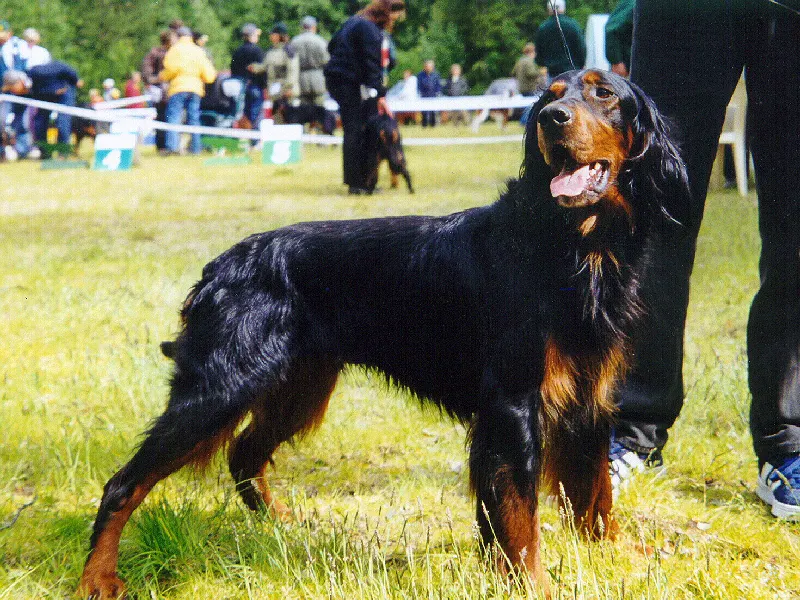
The 4th Duke of Gordon developed this setter at his Scottish estate, Gordon Castle, through the late 18th and early 19th centuries, breeding for a versatile bird dog capable of working Scotland's rugged terrain in all conditions — a heavier, sturdier build than the English or Irish Setter cousins it's often compared to, reflecting the harsher Highland ground it was meant to cover. Originally known simply as the Black and Tan Setter before the Gordon name took hold in tribute to the Duke's kennel, the breed's distinctive coloring remains its most immediately recognizable feature, a rich black coat with tan markings that sets it apart at a glance from the mostly white-and-orange English Setter or solid red Irish Setter. AKC recognition came in 1892. Despite sharing the general setter build and function with its English and Irish cousins, the Gordon developed independently at a single Scottish estate under one breeder's sustained program, giving it a more distinct, traceable origin story than many older sporting breeds whose development is harder to pin to one place or person. The breed's rich black-and-tan coloring is thought by some breed historians to trace partly to Gordon Castle's own kennel records favoring that pattern specifically, distinguishing the Duke's dogs visually from other regional setter types being developed simultaneously elsewhere in the British Isles.
Common health predispositions
- Hip dysplasia
- Bloat
- Progressive retinal atrophy
Temperament
Gordon Setters tend toward a somewhat more serious, one-family-devoted temperament than the more universally outgoing English Setter, often bonding intensely with their household while staying reserved around strangers. The breed's intelligence is considerable, and most individuals are eager to work when given a real task, whether formal bird hunting or simply structured exercise and training. This is a setter with real substance and drive behind its elegant coat, not a purely decorative companion breed, and it shows up as genuine stubbornness if that drive goes unchanneled. Compared to the more universally friendly English Setter, a Gordon tends to save its warmth for people it actually knows, which makes early exposure to varied situations and visitors a genuinely worthwhile investment for anyone planning to socialize regularly with the dog present.
Living with a Gordon Setter
Seventy-five minutes of real daily activity keeps this substantial sporting breed content, and dogs without a hunting outlet do well with structured training, hiking, or retrieving games layered on top of ordinary exercise. The long, silky black-and-tan coat, feathered on the legs, ears, and tail, tangles without a firm brushing routine several times weekly, and those feathered areas need the closest attention. Hip dysplasia and bloat both appear at rates worth taking seriously in a breed this size, and progressive retinal atrophy and hypothyroidism round out the conditions worth screening for with a breeder. An active household genuinely willing to invest in training and exercise, and drawn to the breed's striking coloring and one-family loyalty, tends to be the best match; a Gordon Setter left under-exercised or under-socialized can become genuinely difficult to manage given the breed's size and independent streak. Gordon Setter rescue exists through dedicated breed clubs, a better first stop than a general shelter given the breed's modest overall population in the US. Typical monthly costs land in the moderate-to-higher range for a sporting breed this size, largely driven by grooming upkeep and the food volume a dog of the Gordon's substantial frame requires.
FAQ
What is the origin of the name 'Gordon Setter'?
The breed was originally called the Black and Tan Setter, and took its current name in tribute to the 4th Duke of Gordon, who developed the breed at his Scottish estate, Gordon Castle, through the late 18th and early 19th centuries.
How is a Gordon Setter different from an English or Irish Setter?
All three share a general setter build and bird-hunting purpose, but the Gordon is heavier and sturdier, built for rugged Scottish Highland terrain, and instantly distinguishable by its rich black-and-tan coloring versus the English Setter's white-and-orange 'Belton' pattern or the Irish Setter's solid red coat.
Is a Gordon Setter a good family dog?
It can be, though the breed tends toward stronger one-family devotion and more reserve around strangers than some other setter breeds, and it genuinely needs real daily exercise and mental engagement to avoid developing stubborn or destructive habits.
How much grooming does a Gordon Setter's coat need?
A real commitment — the long, silky, feathered coat mats without brushing several times a week, particularly around the ears, legs, and tail where feathering is heaviest.
What health issues should Gordon Setter owners watch for?
Hip dysplasia and bloat are both worth taking seriously given the breed's size, and progressive retinal atrophy along with hypothyroidism are the other conditions commonly screened for by responsible breeders.
Related on FetchBreed
Whichever breed fits your life, consider adoption or breed-specific rescue first — many purebred and mixed-breed dogs and cats are already waiting for homes.
General breed information, not veterinary advice — consult a vet for your pet's specific health, diet, and behavior needs.