Sporting Group
English Setter
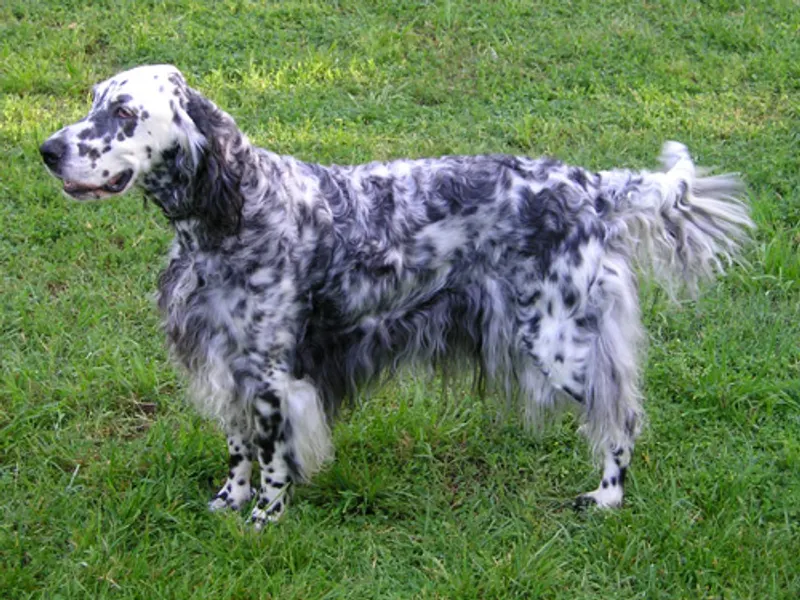
Edward Laverack, a 19th-century English breeder, spent decades in the mid-1800s developing a consistent type from older setting-spaniel stock, work later built upon by R.L. Purcell Llewellin, whose separate field-focused breeding line eventually produced dogs so distinct from Laverack's show-oriented type that "Llewellin Setter" still circulates informally today as a name for certain field-bred English Setter lines. The breed's name reflects its original working method — setting, or crouching low, to indicate a bird's location to the hunter rather than pointing upright the way many other bird dogs do, a technique that predates the use of guns in bird hunting by centuries. AKC recognition came in 1878, among the earliest sporting breeds the club formally recognized. The English Setter's coat carries a distinctive speckled pattern called "Belton," a mix of colored and white hairs that breed founder Laverack himself is credited with naming, after a English village associated with an early admired specimen of the type — a genuinely unusual naming convention among coat-pattern terms in purebred dogs. Laverack's own breeding program was notably closed and inbred by modern standards, concentrating a specific type tightly enough that many of today's English Setters can trace lineage back to his original dogs, a level of documented ancestral concentration unusual even among old, well-recorded sporting breeds.
Common health predispositions
- Hip dysplasia
- Deafness (linked to piebald coloring)
- Hypothyroidism
Temperament
Gentle and affectionate describes most English Setters well, a temperament that has made the breed a longtime favorite family companion as much as a working gun dog. Easygoing with children and sociable with other dogs describes most individuals, a byproduct of centuries spent selecting for cooperative field-hunting rather than independent guarding or territorial instincts. Field-bred lines retain more raw hunting drive and stamina than show-bred lines common in the pet market, a distinction worth understanding when meeting an individual dog or breeder. Separation anxiety can develop in this people-oriented breed if it's regularly left alone for long stretches, since the same cooperative, family-focused disposition that makes it such an easy companion also means it genuinely doesn't enjoy extended solitude. Most individuals also retain a real soft-mouthed gentleness in how they interact with people and other animals, a trait bred deliberately into generations of hunting dogs that needed to work calmly alongside handlers and other setters in the field.
Living with a English Setter
An hour of exercise most days suits most pet-line English Setters well, though field-bred individuals typically need more — closer to 75 minutes with real off-leash or structured retrieving time factored in. The silky, medium-length coat with its distinctive Belton speckling mats readily without several brushing sessions a week, and the feathered ears, legs, and tail need the most consistent attention. Hip dysplasia and hypothyroidism are both worth catching early, and deafness, linked to the piebald coloring pattern common in the breed, is best ruled out with a BAER hearing test in puppies. A family wanting an affectionate, gentle sporting breed without the more serious, one-family-devoted reserve of some other setter breeds tends to find a good match in the English Setter, provided its real exercise and grooming needs are honestly planned for. English Setter rescue groups operate through dedicated breed clubs across the US, worth checking given how often this breed gets confused with its more common Irish or Gordon cousins in general shelter listings. Typical monthly costs sit in the moderate range for a sporting breed of this size, with grooming and the coat-care time investment representing the larger recurring commitment relative to food or routine vet care.
FAQ
What does 'Belton' mean on an English Setter's coat?
It's the breed's distinctive speckled coat pattern, a mix of colored and white hairs, credited to breed founder Edward Laverack, who is said to have named it after an English village associated with an early admired specimen of the type.
What's a 'Llewellin Setter'?
It's an informal name still used today for certain field-bred English Setter lines, tracing to R.L. Purcell Llewellin's 19th-century breeding program, which developed a working-focused line distinct enough from Edward Laverack's more show-oriented type that the separate name has persisted.
Why is it called a 'setter'?
The name reflects the breed's original working method of setting, or crouching low, to silently indicate a bird's location to the hunter, a technique that predates the widespread use of guns in bird hunting.
Is an English Setter good with kids?
For the most part — centuries of breeding toward a gentle, easygoing field-work temperament tend to pay off in a patient, sociable family companion, though every individual dog still varies.
Why is deafness a concern for English Setters specifically?
The breed's piebald coat coloring pattern is genetically linked to a higher rate of congenital deafness across dog breeds generally, which is why a BAER hearing test in puppies is commonly recommended before placement.
Related on FetchBreed
Care equipment for a English Setter
As an Amazon Associate we earn from qualifying purchases made through these links, at no extra cost to you.
- Slicker brush
The Belton-speckled coat mats readily without several brushing sessions a week, with the feathered ears, legs and tail needing the most attention.
- Steel grooming comb
Feathering is where a comb earns its place over a brush, and feathering is what this page emphasises.
Whichever breed fits your life, consider adoption or breed-specific rescue first — many purebred and mixed-breed dogs and cats are already waiting for homes.
General breed information, not veterinary advice — consult a vet for your pet's specific health, diet, and behavior needs.