Sporting Group
Curly-Coated Retriever
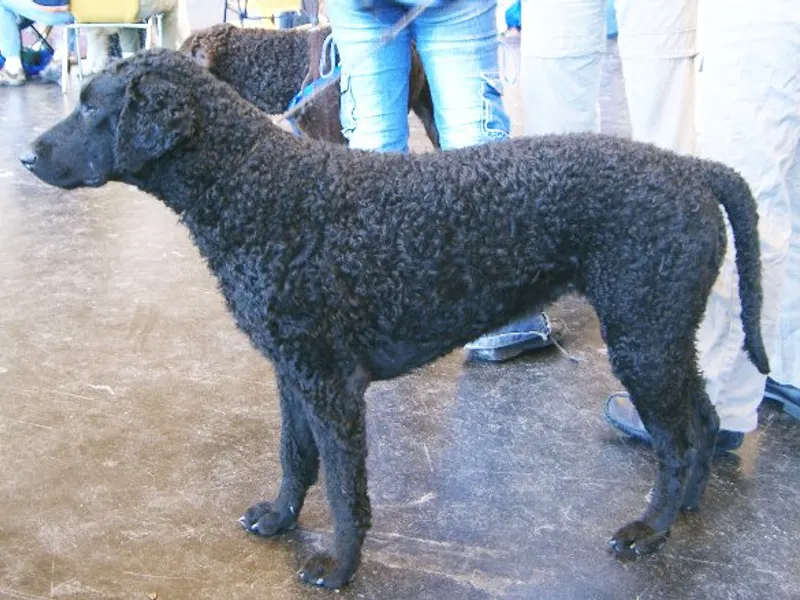
Tightly wound, water-repellent curls covering the entire body set the Curly-Coated Retriever apart at a glance from every other AKC retriever, and that coat is functional rather than decorative — bred to shed water fast and shrug off marsh vegetation during long days of waterfowl retrieving. Among the oldest of the retriever breeds, its documented history in England stretches back to the early 1800s, predating the Labrador and Golden by decades, with likely ancestry running through the old English Water Spaniel, the Irish Water Spaniel, and possibly Poodle stock crossed in for the curl. English gamekeepers valued the breed specifically for retrieving in cold water and dense cover where a smoother-coated dog struggled more, and it built a working reputation distinct from the show-ring popularity that later breeds like the Golden Retriever would eventually eclipse it in. AKC recognition dates to 1924, decades after the breed had already been established and working in Britain. Despite that long pedigree, the Curly-Coated Retriever remains one of the rarer AKC-recognized retrievers today, a numbers gap that has more to do with 20th-century shifts in retriever popularity than any deficiency in the breed's working ability, which field-trial enthusiasts and hunters familiar with the breed still rate highly.
Common health predispositions
- Hip dysplasia
- Gastric dilatation-volvulus (bloat)
- Progressive retinal atrophy
- Epilepsy
Temperament
Confident and a touch more independent than some other retrievers, the Curly-Coated Retriever carries real working intelligence alongside a genuine devotion to its own family once trust is established. Strangers often get a more reserved, watchful reception than the instant friendliness typical of a Labrador or Golden, a trait that surprises people expecting every retriever breed to greet visitors the same way. Kids and other household pets generally do well with a properly socialized individual, and the breed's problem-solving streak — useful for a dog that once had to work out how to navigate dense marsh cover on its own — shows up as genuine mischief if left under-stimulated. Most owners familiar with the breed describe a genuinely independent problem-solver rather than a dog that automatically defers, which makes training rewarding once it respects its handler but frustrating for anyone expecting Labrador-level eagerness on the first try.
Living with a Curly-Coated Retriever
This is a genuinely athletic working retriever, and 60 minutes of real activity including swimming whenever it's available suits the breed far better than a couple of short leash walks. Those famous curls actually simplify grooming in one specific way — brushing the coat out flattens the curl pattern, so most owners stick to occasional finger-raking and let the coat dry naturally after a swim rather than brushing it regularly. Hip dysplasia and gastric dilatation-volvulus, more commonly called bloat, both warrant attention in a deep-chested breed this size, and progressive retinal atrophy plus a documented predisposition to epilepsy are the other two items to put directly to a breeder before committing. A household with real access to open space, water, and an appetite for a genuinely independent-minded working dog will get the most out of a Curly-Coated Retriever; a first-time owner hoping for reflexive obedience might find the learning curve steeper than expected. Breed-specific rescue in the US is limited given how uncommon the Curly-Coated Retriever still is outside dedicated field-trial and hunting circles, so prospective adopters often end up working through national breed-club networks rather than a general shelter. Food for a dog this size is the biggest recurring expense, though the minimal grooming demands help balance out the overall budget somewhat compared with a similarly large but higher-maintenance sporting breed.
FAQ
Is the Curly-Coated Retriever older than the Labrador Retriever?
Yes, by most accounts — documented history for the Curly-Coated Retriever in England traces back to the early 1800s, predating the Labrador and Golden Retriever by several decades, making it one of the oldest of the AKC's retriever breeds.
Do Curly-Coated Retrievers need to be brushed a lot?
Not really, and that's counterintuitive given the dramatic coat — brushing actually flattens out the natural curl pattern, so most owners limit grooming to occasional finger-raking and let the coat air-dry after swimming instead.
Are Curly-Coated Retrievers friendly with strangers?
Less automatically than a Labrador or Golden — many individuals show real reserve toward unfamiliar people at first, a trait distinct from the more universally outgoing temperament people tend to expect from retriever breeds generally.
What health testing matters most for a Curly-Coated Retriever?
Hip dysplasia and bloat screening matter given the breed's size and deep chest, and progressive retinal atrophy plus a documented predisposition to epilepsy are both worth asking a breeder about directly before committing to a puppy.
Is a Curly-Coated Retriever a good first dog?
It can work for the right household, but the breed's independent streak means training takes more patience than a more eager-to-please retriever, so it suits a first-time owner more if they're genuinely committed to consistent structured training.
Related on FetchBreed
Whichever breed fits your life, consider adoption or breed-specific rescue first — many purebred and mixed-breed dogs and cats are already waiting for homes.
General breed information, not veterinary advice — consult a vet for your pet's specific health, diet, and behavior needs.