Toy Group
Chinese Crested
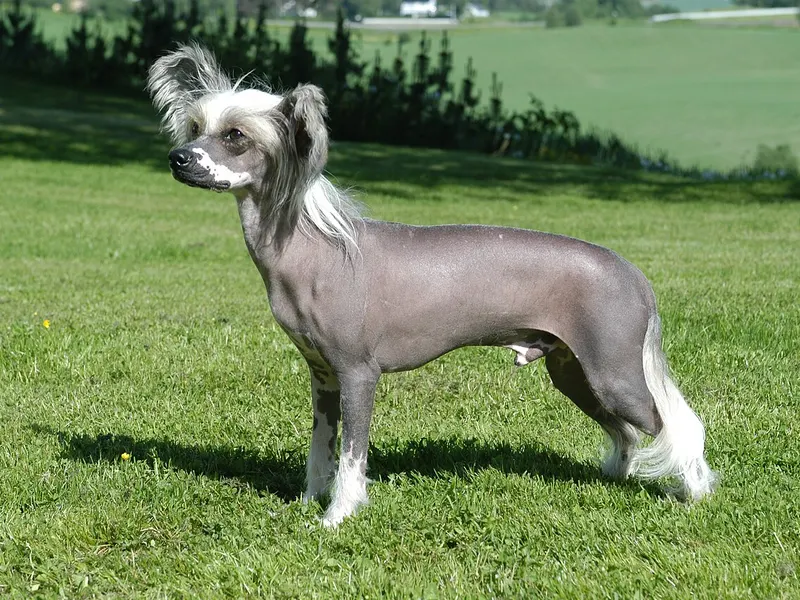
Despite the name, most breed historians believe the Chinese Crested's hairless gene originated in Africa or the Americas rather than China, and that Chinese traders picked up and refined hairless dogs during maritime trade routes, using them partly as ratters aboard ships before the breed's modern companion role took over. The breed's defining hairless trait comes from a single dominant gene that's lethal in the homozygous form, meaning hairless-to-hairless breeding produces smaller litters and stillbirths at a higher rate — a genetic quirk that's why the breed also comes in a fully coated "Powderpuff" variety carrying two copies of the recessive non-hairless gene, both varieties recognized under one AKC standard since 1991. The breed's unusual, striking appearance has also made it a recurring and often winning entrant in "World's Ugliest Dog" contests, an association that's become its own minor part of the breed's modern pop-culture identity.
Common health predispositions
- Dental crowding (hairless variety)
- Patellar luxation
- Progressive retinal atrophy
Temperament
Chinese Cresteds are affectionate, people-focused companion dogs, and goodWithKids and goodWithOtherPets ratings both run moderate to good, reflecting a generally sociable temperament tempered by the breed's small, physically delicate size. Trainability is decent, and the breed is often described by owners as playful and clownish, similar in spirit to several other small companion breeds developed purely for companionship rather than working function. Hairless and Powderpuff puppies from the same litter can have genuinely different personalities and care needs despite being full littermates, since the underlying coat genetics don't correlate with temperament.
Living with a Chinese Crested
Thirty minutes of daily activity, much of it indoors or in mild weather, suits this breed well. Skin care is the real, distinctive commitment for the hairless variety: exposed skin needs sun protection, regular moisturizing, and monitoring for acne-like blemishes and minor abrasions that a coated dog's fur would otherwise prevent, while the Powderpuff variety instead needs the regular brushing typical of any silky-coated small breed. Allergy sufferers often report doing better around the hairless variety, whose minimal-to-no coat puts noticeably less dander into the air than a furred breed would — not a guarantee, since no dog is truly allergen-free, but worth testing in person before ruling the breed out. Dental crowding is a well-documented issue in the hairless variety specifically, tied to the same genetics that produce the hairless trait, and many hairless Cresteds need more frequent dental care as a result, and patellar luxation plus progressive retinal atrophy fill out the rest of the breed's documented health picture. Because the breed's exposed skin is genuinely more vulnerable to sunburn and cold than a furred dog's, seasonal protective gear — sunscreen in summer, a coat or sweater in winter — is standard practical care rather than an optional fashion choice.
FAQ
Are all Chinese Cresteds hairless?
No — the breed comes in two varieties from the same litters, the hairless Chinese Crested and the fully coated Powderpuff, both recognized under a single AKC breed standard; the hairless trait comes from a dominant gene that's lethal when inherited in double copy, which is why the coated variety exists within the same breed.
Does a hairless Chinese Crested need sunscreen?
Yes, genuinely — exposed skin with no fur for protection is vulnerable to sunburn, and many owners apply pet-safe sunscreen before extended time outdoors, alongside regular moisturizing to manage the skin's general sensitivity.
Are Chinese Cresteds hypoallergenic?
The hairless variety puts out less airborne dander than a typical coated breed, which is the real, practical reason it gets recommended to allergy-sensitive households — but 'hairless' isn't the same guarantee as 'allergen-free,' so a trial visit with the specific dog is worth the effort.
Why do hairless Chinese Cresteds have dental problems?
The same genetics responsible for the hairless coat trait are also linked to dental crowding and missing or misaligned teeth in the hairless variety specifically, a documented connection that means many hairless Cresteds need more frequent professional dental care than the coated Powderpuff variety.
Where did the Chinese Crested actually originate?
Most breed historians believe the hairless gene traces to Africa or the Americas rather than China itself, and that Chinese maritime traders picked up and refined hairless dogs during trade voyages, using them partly as shipboard ratters before the modern companion-dog role developed.
Why do Chinese Cresteds win 'World's Ugliest Dog' contests so often?
The breed's genuinely unusual look — wrinkled bare skin, a wispy hair crest, and an often-toothless grin in older dogs — has made it a recurring, sometimes multi-year winner of the contest, an association that's become its own minor part of the breed's modern pop-culture identity.
How big does a Chinese Crested get?
Small — typically 8 to 12 pounds and 11 to 13 inches at the shoulder, a genuinely petite build regardless of whether the individual dog is the hairless or Powderpuff variety.
Are Chinese Cresteds good with children?
Affectionate and playful by nature, this breed does better in a calm household than a chaotic one, and the hairless variety's delicate skin means rough play with young kids needs real supervision.
How long do Chinese Cresteds live?
Often 13 to 15 years, and proactive dental care in the hairless variety specifically tends to make a genuine, measurable difference in comfort and health across those years.
Is a Chinese Crested a good apartment dog?
Genuinely well-suited, thanks to modest exercise needs and a small frame — the one real caveat is that the hairless variety cares more about indoor climate control than a furred breed would.
Do Chinese Cresteds do well with other dogs?
Generally yes, especially with early socialization — the breed's affectionate, sociable temperament extends reasonably well to other dogs, though the hairless variety's delicate skin is worth keeping in mind during rougher group play.
Related on FetchBreed
Care equipment for a Chinese Crested
As an Amazon Associate we earn from qualifying purchases made through these links, at no extra cost to you.
- Pet-safe sunscreen
For the hairless variety, the page says exposed skin needs sun protection and is genuinely more vulnerable to sunburn than a furred dog's.
- Dog sweater
The other half of that same sentence: sunscreen in summer, a coat or sweater in winter, as standard practical care rather than an optional fashion choice.
- Dog toothbrush and paste
Dental crowding is documented specifically in the hairless variety here, tied to the same genetics that produce hairlessness.
Whichever breed fits your life, consider adoption or breed-specific rescue first — many purebred and mixed-breed dogs and cats are already waiting for homes.
General breed information, not veterinary advice — consult a vet for your pet's specific health, diet, and behavior needs.