Toy Group
Chihuahua
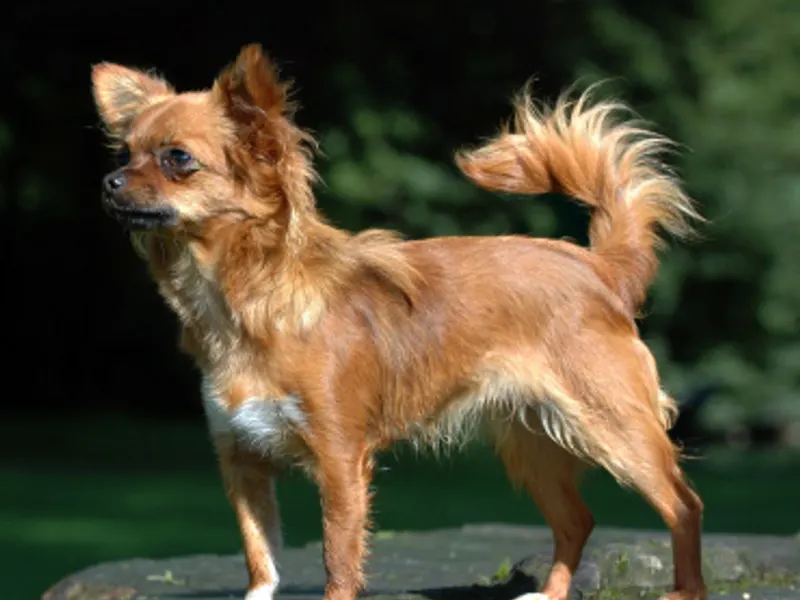
The Chihuahua is named for the Mexican state where 19th-century American travelers first acquired the small dogs, and a popular theory links its ancestry to the Techichi, a companion dog kept by pre-Columbian civilizations in central Mexico, though genetic evidence for a direct, unbroken line back to the Techichi remains more folklore than settled science. What is well documented is that the Chihuahua is the smallest breed recognized by the AKC by weight, and breed clubs maintain two loosely tracked coat varieties (smooth and long) that are shown as a single breed. The AKC recognized the breed in 1904, and Chihuahuas are shown in two loosely tracked head-shape types informally called 'apple head' and 'deer head,' though only the rounder apple-head type conforms to the official show standard.
Common health predispositions
- Patellar luxation
- Dental disease
- Hydrocephalus (rare)
Temperament
Chihuahuas are famous for a personality far larger than their body, and the breed's trait profile reflects it: lower-than-average ratings for compatibility with young children and other pets, not because the breed is inherently mean but because a small, easily startled dog that's been mishandled or hasn't been properly socialized can become defensive or snappy. They tend to bond intensely with one primary person and can be wary of strangers, and they're highly vocal, quick to sound off at unfamiliar noises or people despite their size. Consistent, gentle training from puppyhood — rather than excusing pushy or defensive behavior because of the dog's small size — produces a noticeably more confident, less reactive adult, and trainers who specialize in toy breeds specifically flag over-coddling as a common owner mistake that worsens rather than helps the breed's wariness.
Living with a Chihuahua
Two brief walks plus some living-room play is genuinely enough exercise for this breed, and grooming stays light for the smooth-coat variety, only slightly heavier for the long-coated one. The real everyday consideration is physical fragility: a Chihuahua weighing as little as two pounds is genuinely at risk of serious injury from falls, rough play, or interactions with larger dogs, so supervision matters more here than exercise volume. Dental disease is extremely common given the breed's small, crowded jaw, making regular dental care a real budget line, and some individuals retain an open soft spot in the skull (a molera) into adulthood, which breeders and vets monitor. Cold sensitivity is a real, breed-specific concern given the Chihuahua's tiny body mass and short coat in the smooth variety — many owners in cooler climates use a sweater or coat for outdoor time even in mild weather, which isn't fashion so much as functional insulation for a dog this small. Early, careful socialization with people and other animals during puppyhood meaningfully reduces the defensive wariness the breed is sometimes known for as an adult. Because of its long lifespan, prospective owners should plan for a companion that may well live into its owner's own next life stage or decade. Nail care matters too, since overgrown nails alter gait and posture disproportionately in such a small, light-framed dog.
FAQ
Do Chihuahuas need a soft spot on their head checked?
Some Chihuahuas keep an unfused 'molera,' a soft spot in the skull, into adulthood — it's a recognized breed trait rather than automatically a medical problem, but a vet should be aware of it, since it can occasionally be associated with hydrocephalus in more severe cases.
Are Chihuahuas good with young children?
Often not recommended — the breed's small size makes it easy to injure accidentally during normal child play, and Chihuahuas can respond defensively to rough handling, so supervised, gentle interaction is important if the household includes young kids.
How much exercise does a Chihuahua need?
Very little compared to most breeds — short daily walks and some indoor play are typically sufficient, making the breed a realistic choice for owners with limited mobility or small living spaces.
Do Chihuahuas get cold easily?
Yes — their small body mass and, for the smooth-coat variety, thin fur mean real cold sensitivity, and many owners use a dog sweater or coat for outdoor time in cool weather rather than treating it as unnecessary.
Does coat length affect a Chihuahua's temperament?
Not meaningfully — smooth-coat and long-coat Chihuahuas are the same breed with the same AKC standard and typical temperament traits, the coat difference coming down to a single recessive gene rather than separate breeding lines, though long-coat individuals need more brushing and some owners report the long coat reads as marginally softer and calmer in everyday handling.
Related on FetchBreed
Comparisons
- Chihuahua vs Cavalier King Charles Spaniel
- Chihuahua vs Havanese
- Chihuahua vs Maltese
- Chihuahua vs Miniature Schnauzer
- Chihuahua vs Pomeranian
- Chihuahua vs Pug
- Chihuahua vs Shetland Sheepdog
- Chihuahua vs Shiba Inu
- Chihuahua vs Shih Tzu
- Chihuahua vs Siberian Husky
- Chihuahua vs Vizsla
- Chihuahua vs Yorkshire Terrier
Care equipment for a Chihuahua
As an Amazon Associate we earn from qualifying purchases made through these links, at no extra cost to you.
- Dog sweater
The page calls this functional rather than decorative: insulation for a dog with this little body mass, used even in mild weather in cooler climates.
- Dog toothbrush and paste
Dental disease is described as extremely common given the breed's small, crowded jaw, making regular dental care a real budget line.
- Dog nail clippers
Nail care matters too, the page says, since overgrown nails alter gait and posture disproportionately in such a small, light-framed dog.
Whichever breed fits your life, consider adoption or breed-specific rescue first — many purebred and mixed-breed dogs and cats are already waiting for homes.
General breed information, not veterinary advice — consult a vet for your pet's specific health, diet, and behavior needs.