Sporting Group
Boykin Spaniel
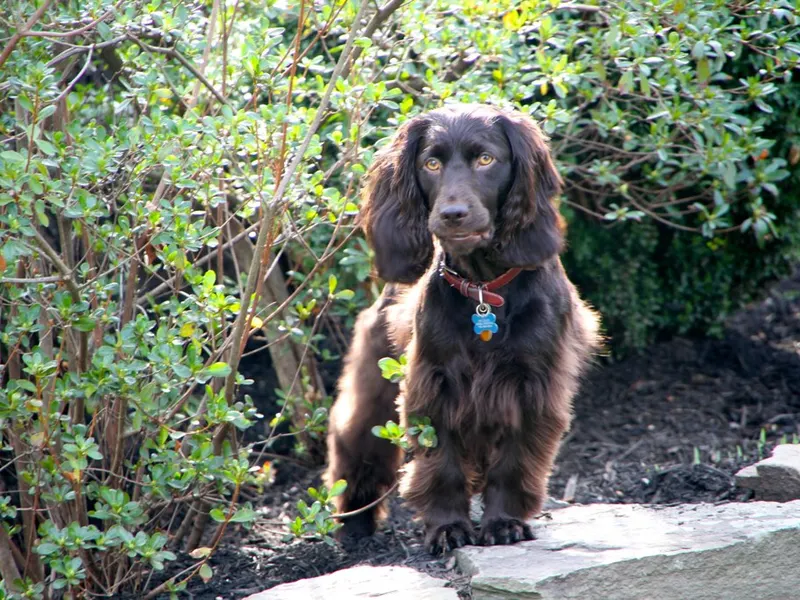
South Carolina's official state dog, the Boykin Spaniel traces its origin to a genuinely humble start: a stray brown spaniel-type dog found on the streets of Spartanburg, South Carolina in the early 1900s, taken in by a local man named Alexander White, who later sent the dog to his hunting companion L.W. "Whit" Boykin. That original dog turned out to have a real natural talent for retrieving, and Boykin began breeding it with other spaniels and retrievers to develop a small, sturdy hunting dog specifically suited to the swamps and flooded rice fields of the South Carolina Lowcountry, where hunters needed a dog compact enough to fit comfortably in a small turkey-hunting boat yet capable of real retrieving work in cold water. That boat-sized practicality is baked directly into the breed's compact, athletic build, genuinely distinct from the larger retrievers developed for similar wetland work elsewhere in the country. Full AKC recognition didn't arrive until 2009, after decades in which the breed remained largely a regional South Carolina hunting secret before wider popularity spread it across the American Southeast and beyond. The breed's curly-to-wavy liver-brown coat and genuinely happy, energetic disposition have made it an increasingly popular family companion well beyond its original Lowcountry hunting grounds.
Common health predispositions
- Hip dysplasia
- Exercise-induced collapse
- Patellar luxation
Temperament
Enthusiastic, people-oriented, and genuinely eager to please, the Boykin Spaniel channels real working retriever drive into an energetic, affectionate household presence, a temperament shaped directly by its origin as an all-purpose Lowcountry hunting companion rather than a purely specialized field dog. Kids and other pets both tend to thrive around a well-exercised Boykin, and the breed's moderate size makes it a genuinely practical fit for households that want retriever-level enthusiasm without a full-sized retriever's bulk. Comfort in tight spaces and vehicles is a genuine holdover from that boat-bred practicality, a legacy of its original role as a compact hunting companion built to travel light.
Living with a Boykin Spaniel
This is a genuinely high-energy sporting breed — 75 minutes of real daily activity, ideally including swimming or retrieving given the Boykin's water-dog roots, suits it far better than casual leash walks alone. Overall grooming demands stay more moderate here than for some other curly-coated sporting breeds, though the curly liver coat still wants a regular brush-through to avoid tangling. Exercise-induced collapse, a genetic condition that surfaces disproportionately in retrieving breeds like this one, deserves real attention alongside standard hip screening, and patellar luxation is the third item worth flagging early with a breeder. A household with real space to run and swim, and genuine enthusiasm for an energetic, people-focused sporting dog, gets the most out of a Boykin Spaniel; a sedentary apartment lifestyle is a tougher match for this breed's real exercise needs. Breed-specific rescue exists in the US, concentrated most heavily in the Southeast given the breed's regional origins, though its growing national popularity has widened rescue availability elsewhere too. Food and routine grooming make up the bulk of ongoing expenses, keeping the overall cost reasonable for a mid-sized sporting dog.
FAQ
Why is the Boykin Spaniel South Carolina's state dog?
The breed originated in South Carolina in the early 1900s, developed by L.W. 'Whit' Boykin from a stray dog found in Spartanburg specifically to hunt turkey and waterfowl in the swamps and flooded rice fields of the Lowcountry, a regional history that earned it official state-dog status.
Why is the Boykin Spaniel so much smaller than a Labrador Retriever?
Its compact size was a deliberate practical choice — hunters in the South Carolina Lowcountry needed a dog small enough to fit comfortably in a turkey-hunting boat while still capable of real retrieving work in cold water, a requirement that shaped the breed's entire build.
When did the Boykin Spaniel gain full AKC recognition?
Full recognition arrived in 2009, relatively late in the breed's history, after decades in which it remained largely a regional South Carolina hunting secret before broader popularity spread it across the wider American Southeast and beyond.
What is exercise-induced collapse in Boykin Spaniels?
It's a genetic condition documented at an elevated rate across several retrieving breeds, including this one, that causes affected dogs to lose muscle control and collapse after intense exercise — a DNA test exists and responsible breeders screen their breeding stock for it.
Is a Boykin Spaniel a good apartment dog?
Not really the best fit — this is a genuinely high-energy sporting breed that does best with real daily exercise, ideally including swimming or retrieving given its water-dog heritage, so a sedentary apartment lifestyle tends to leave a Boykin under-stimulated.
Related on FetchBreed
Whichever breed fits your life, consider adoption or breed-specific rescue first — many purebred and mixed-breed dogs and cats are already waiting for homes.
General breed information, not veterinary advice — consult a vet for your pet's specific health, diet, and behavior needs.