Hound Group
Basset Hound
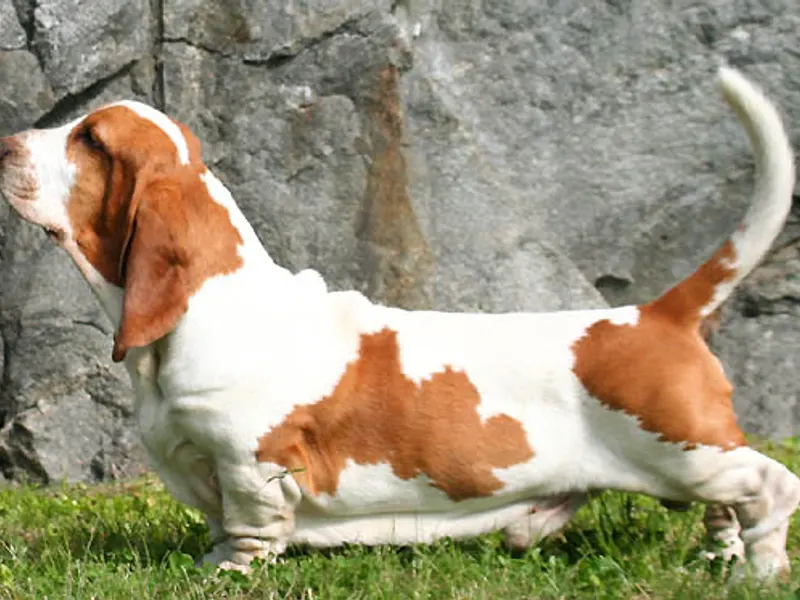
The Basset Hound descends from French scenthounds, likely bred down in size from Bloodhound-type stock by French monks and hunters who wanted a dog slow and low enough for a person on foot to keep pace with while trailing rabbit and hare through dense underbrush — the name comes from the French 'bas,' meaning low. English breeders refined the type in the 19th century, and the breed's short legs are the visible result of achondroplasia, a form of dwarfism deliberately preserved for its practical hunting advantage rather than for looks alone, even though appearance is what most people now associate with the breed. AKC recognition came in 1885, and Basset packs remained a genuine working presence in rabbit hunting on both sides of the Atlantic well into the 20th century before the breed's slow, dignified look and famously droopy expression made it a popular companion and advertising mascot instead. Two size varieties historically existed within the breed — a larger, more athletic 'lapin' type and the shorter, heavier show type most people picture today — though modern breed standards have largely converged on the latter.
Common health predispositions
- Ear infections
- Obesity
- Intervertebral disc disease
Temperament
Basset Hounds are famously low-energy and easygoing, a temperament that reads as laid-back stubbornness more than genuine disobedience — like most scenthounds, a Basset's nose can override recall and training focus almost instantly once it catches an interesting trail. They're notably tolerant and gentle with children, among the highest-rated breeds for that trait, and their pack-hunting history makes them naturally sociable with other dogs. Vocalization runs high; the breed's deep, distinctive bay carries a long way, a trait selected for specifically so hunters on foot could track a working pack at a distance.
Living with a Basset Hound
Only about 30 minutes of gentle activity is needed daily, making the Basset one of the lowest-exercise-need breeds in the AKC roster, though scent-based enrichment matters for mental stimulation given the breed's nose-driven nature. The short coat itself is nearly maintenance-free, but the deep, drooping ears are a different story — they need regular cleaning and thorough drying to head off chronic infections, and the loose, wrinkled skin is prone to fold dermatitis without similar attention. Obesity is a genuine, common problem in the breed — the Basset's low activity level combined with a hearty appetite makes portion control essential — and the same elongated back that helped early breeders achieve the low-slung silhouette puts the breed at real risk for intervertebral disc disease, similar to the Dachshund's spinal vulnerability, though less severe given the Basset's overall heavier bone structure. Regular, low-impact walks rather than jumping games are generally recommended to keep a Basset's joints and back healthy without over-stressing either.
FAQ
Why do Basset Hounds have such long ears?
The breed's long, low-hanging ears were bred deliberately to help stir up ground-level scent particles toward the nose while trailing, a functional trait rather than a cosmetic one — though the same ears trap moisture and require regular cleaning to prevent chronic infections.
Are Basset Hounds easy to train?
Not really — this is a nose-first breed, and once it locks onto an interesting scent, no training cue is going to compete for its attention; trainability ratings sit near the bottom of the scale, and sessions go better with real patience and high-value treats than with repetition alone.
Do Basset Hounds have back problems like Dachshunds?
The long spine and short legs put them at elevated risk for intervertebral disc disease, similar to a Dachshund's vulnerability though usually less severe thanks to the Basset's heavier bone structure — a lean body weight and a ramp or steps instead of furniture-jumping go a long way toward protecting it.
Why do Basset Hounds howl or bay so much?
It's a functional hunting trait, not random noise — the breed's deep, carrying bay was selected for specifically so hunters following the pack on foot could track its location by ear, and that instinct fires readily at anything from a doorbell to boredom indoors.
Is the Basset Hound's short legs a health problem?
The short legs are a form of dwarfism (chondrodystrophy) deliberately preserved for hunting purposes rather than a spontaneous defect, and while the trait itself isn't inherently painful, it does contribute to the breed's elevated back-problem risk, which is why weight management and joint-friendly exercise matter for the breed's long-term comfort.
Related on FetchBreed
Comparisons
- Basset Hound vs Australian Cattle Dog
- Basset Hound vs Australian Shepherd
- Basset Hound vs Beagle
- Basset Hound vs Border Collie
- Basset Hound vs Brittany
- Basset Hound vs Bulldog
- Basset Hound vs Dachshund
- Basset Hound vs English Springer Spaniel
- Basset Hound vs Rhodesian Ridgeback
- Basset Hound vs Samoyed
- Basset Hound vs Siberian Husky
- Basset Hound vs Whippet
Care equipment for a Basset Hound
As an Amazon Associate we earn from qualifying purchases made through these links, at no extra cost to you.
- Dog ear cleaner
The deep, drooping ears need regular cleaning and thorough drying to head off chronic infections, while the short coat itself is nearly maintenance-free.
- Pet ramp
The page flags real disc-disease risk from the elongated back and recommends low-impact walks rather than jumping games.
Whichever breed fits your life, consider adoption or breed-specific rescue first — many purebred and mixed-breed dogs and cats are already waiting for homes.
General breed information, not veterinary advice — consult a vet for your pet's specific health, diet, and behavior needs.