Terrier Group
American Hairless Terrier
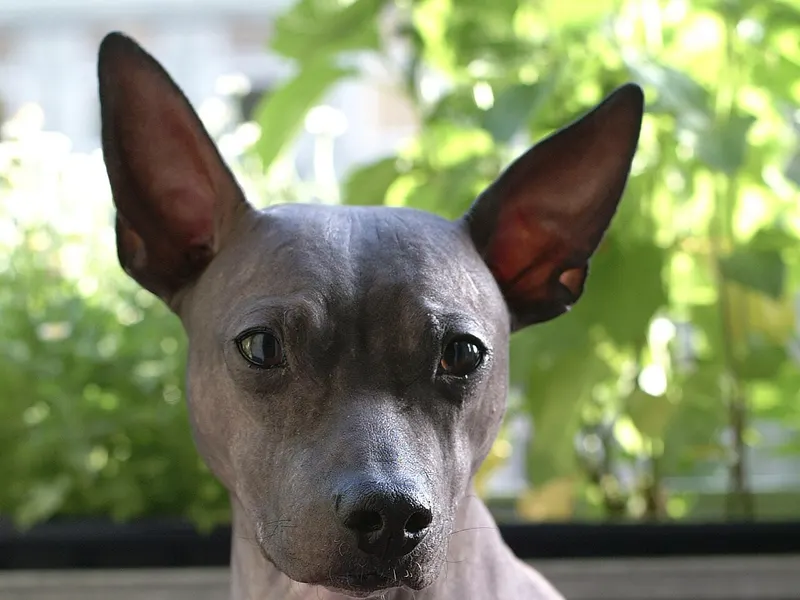
One naturally bald puppy, later named Josephine, showed up unexpectedly in an otherwise ordinary Rat Terrier litter whelped in Louisiana in 1972, and that single dog is the documented foundation of this entire breed — breeders recognized the trait as a genuine spontaneous mutation and deliberately bred from her line to establish it as a stable, heritable characteristic rather than a one-off anomaly. That single-dog origin point gives the American Hairless Terrier one of the more precisely documented genetic founding stories among modern dog breeds, with the hairless trait's exact genetic basis now well understood by breeders and researchers alike. Two varieties exist within the breed, hairless and coated, both eligible under the same breed standard and both capable of appearing within a single litter, since the hairless trait follows a specific recessive inheritance pattern that breeders can predict and select for. AKC recognition came in 2016, over four decades after Josephine's birth, reflecting the extended selective-breeding process required to stabilize the trait across a genetically healthy, diverse enough population before kennel-club recognition became viable.
Common health predispositions
- Sunburn/skin acne (hairless variety)
- Patellar luxation
- Generally healthy
Temperament
Energetic and genuinely intelligent, the American Hairless Terrier carries real Rat Terrier heritage in both its physical build and its lively, people-oriented personality, though it tends to run notably more cooperative and less independent than many other terrier types. Properly socialized, this breed integrates smoothly into a home with kids or other pets already in it. That same intelligence and eagerness to engage translates into fast learning, and many owners find the American Hairless Terrier picks up new skills and household routines quicker than expected for a terrier breed. The breed's small but growing base of American fanciers has actively promoted it in recent years specifically as an allergy-friendly alternative to more established toy and terrier breeds, a pitch that has helped broaden its following well beyond its original Louisiana roots.
Living with a American Hairless Terrier
A full hour of activity suits this energetic little terrier best, paired with genuine mental work given how sharp the breed actually is. Grooming splits sharply along variety lines: hairless individuals need real skin care, sunscreen during outdoor time and moisturizer in dry weather included, while the coated variety asks for little beyond an occasional brush. Standard patellar-luxation screening applies, and the hairless variety carries some added risk of skin acne or minor sunburn without that regular care, though the breed overall is considered healthy. A lively, affectionate terrier with a genuinely unusual documented origin story suits a household willing to handle whichever variety's specific grooming demands come with the puppy. Dedicated breed clubs run rescue efforts in the US, though the still-modest overall population keeps placements somewhat limited. Sun-protection and skin-care products add a small but real line item to the hairless variety's otherwise ordinary small-terrier budget.
FAQ
Who was Josephine the hairless terrier?
Louisiana breeders Edwin and Willie Scott are credited with recognizing the significance of Josephine's mutation and committing to a deliberate breeding program from her line rather than treating the bald puppy as an anomaly to be culled. That commitment took real patience — it took several generations of careful selective breeding before the hairless trait bred true and consistently across litters, well before formal recognition was ever a realistic goal.
Is the American Hairless Terrier considered hypoallergenic?
Not in any guaranteed sense — no dog breed is truly hypoallergenic, since allergic reactions are triggered mainly by proteins in saliva and dander rather than hair itself, but many allergy-sensitive owners do report fewer symptoms around a hairless individual simply because there's far less loose fur circulating dander around the house. The coated variety, by contrast, sheds and carries dander in a fairly ordinary way and offers no particular allergy advantage over other short-coated terrier breeds.
Does a hairless dog need sunscreen?
Yes, genuinely — the hairless variety of this breed needs regular skin care including sunscreen during outdoor time and moisturizing in dry conditions to prevent acne or minor sunburn, since it lacks the natural protection a coat provides.
Is the American Hairless Terrier hypoallergenic?
No dog can honestly claim that label, but the hairless variety sheds essentially nothing, and plenty of allergy-sensitive families report doing noticeably better with one than with a coated breed — still worth confirming by spending real time with the actual dog first.
Is an American Hairless Terrier good with kids?
Usually, once properly socialized — a notably cooperative, people-oriented disposition sets this breed apart from more independent terrier types and tends to translate into an easy fit with children and other household pets.
Did the American Hairless Terrier develop from a genetic mutation?
Yes — the breed traces to a single hairless puppy named Josephine, born in a litter of otherwise coated Rat Terriers in Louisiana in 1972, and breeders selectively bred her hairless trait forward until it became a stable, heritable line, which the AKC eventually recognized as its own breed in 2016, separate from the coated Rat Terrier that remains its closest relative.
Related on FetchBreed
Whichever breed fits your life, consider adoption or breed-specific rescue first — many purebred and mixed-breed dogs and cats are already waiting for homes.
General breed information, not veterinary advice — consult a vet for your pet's specific health, diet, and behavior needs.