Foreign Body Type
Somali
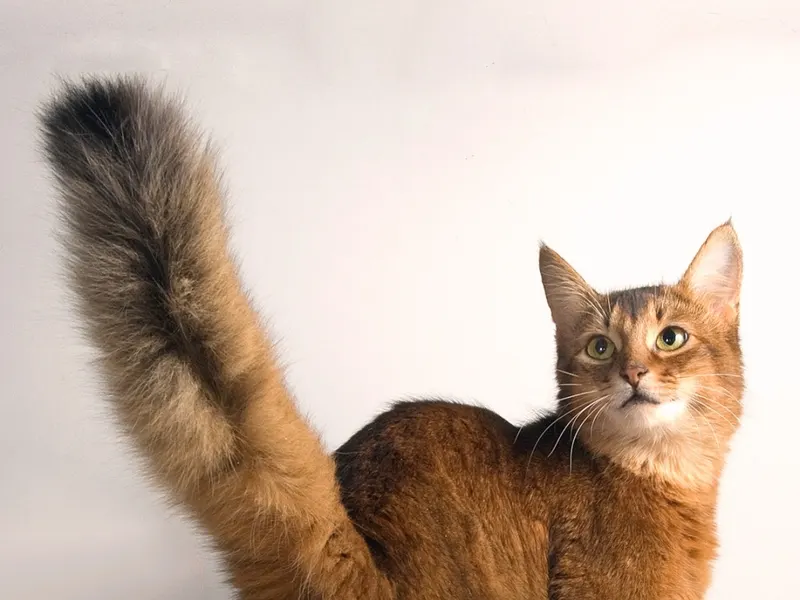
The Somali is, genetically, simply the longhaired Abyssinian — the recessive long-hair gene occasionally surfaced in Abyssinian litters for decades, likely introduced generations earlier through incidental outcrossing, and early Abyssinian breeders often quietly placed the longhaired kittens as pets rather than promote the "flaw." That changed in the 1960s when a small number of breeders, including Evelyn Mague in the US, began deliberately preserving and developing the trait into its own breed, naming it Somali after Somalia's proximity to Ethiopia (Abyssinia) to evoke the parent breed's assumed geographic origin. CFA granted the Somali championship recognition in 1979. Evelyn Mague reportedly named the breed after Somalia specifically because it borders Ethiopia, honoring the Abyssinian's own name while making clear the Somali was understood from the outset as a distinct, deliberately developed variety rather than simply an Abyssinian oddity.
Common health predispositions
- Pyruvate kinase deficiency
- Renal amyloidosis
- Gingivitis
Temperament
Somalis inherit the Abyssinian's high energy, curiosity, and near-constant need for mental and physical engagement — this is an active, intelligent breed that investigates cabinets, climbs to the highest available point in a room, and generally does poorly in a low-enrichment household. Affection comes on the cat's schedule rather than constant lap-seeking, and Somalis stay playful well into adulthood and usually sociable with other pets, echoing the Abyssinian's dog-like curiosity and engagement with everything happening around it. Many Somali owners describe the breed as unusually communicative through body language and soft chirping vocalizations, using a wider range of expressive sounds than a typical shorthaired breed to signal interest, excitement, or mild protest.
Living with a Somali
The medium-long, ticked coat — each hair banded with several alternating colors, the same agouti pattern that defines the Abyssinian, just longer — needs more regular brushing than the Abyssinian's short coat, ideally a few times weekly, particularly around the ruff and tail. Health concerns mirror the Abyssinian closely given the near-identical genetics: pyruvate kinase deficiency (an inherited blood disorder, DNA-testable) and renal amyloidosis are both documented, and gingivitis is also relatively common in the breed. Because Somalis are so active, tall cat trees, puzzle feeders, and real daily play sessions are worth the effort — skip them and a bored Somali is prone to the same destructive mischief-making documented in the Abyssinian. Because the Somali's ticked coat pattern is genetically identical to the Abyssinian's, kittens can sometimes be born within Abyssinian litters when both parents carry the recessive long-hair gene, meaning breeders working with Abyssinian lines need to track long-hair carrier status carefully even if they have no intention of producing Somalis.
FAQ
Is the Somali just a longhaired Abyssinian?
Genetically, essentially yes — the Somali carries the same ticked coat pattern and near-identical genetics as the Abyssinian, differing mainly in coat length, which comes from a recessive long-hair gene that periodically surfaced in Abyssinian litters before breeders decided to develop it into its own recognized breed.
Does the Somali need more grooming than the Abyssinian?
Yes, noticeably — the medium-long coat needs regular brushing a few times a week, particularly around the ruff and tail, compared with the Abyssinian's short coat, which needs only occasional attention.
What health testing matters most for Somali cats?
Pyruvate kinase deficiency screening is important given the breed's close Abyssinian ancestry — it's an inherited blood disorder with an available DNA test, and reputable breeders test their stock to avoid producing affected kittens, alongside general awareness of the breed's documented predisposition to renal amyloidosis.
Why is it called the Somali if it's related to the Abyssinian?
The name was chosen to evoke Somalia's geographic proximity to Ethiopia (historically Abyssinia), the region the Abyssinian breed's name references, rather than indicating any actual documented connection between the breed and Somalia itself.
Can a Somali kitten appear in an Abyssinian litter?
Yes — an Abyssinian pair that each silently carries a hidden copy of the recessive long-hair gene can produce a longhaired Somali kitten in an otherwise shorthaired litter, and that quiet, occasional surprise is essentially how the breed got its start decades ago.
Is the Somali as vocal as the Abyssinian?
Similarly communicative, though expressed somewhat differently — many Somali owners describe the breed using a range of soft chirps and body language to signal interest or mild protest, an expressive style shared with its Abyssinian relative.
What are the recognized Somali coat colors?
CFA recognizes ruddy, red (sometimes called sorrel), blue, and fawn, the same base palette as the Abyssinian since the two breeds share their gene pool aside from coat length. Ruddy remains the most commonly seen color in both breeds, while blue and fawn are rarer and can take breeders longer to place in a litter with the depth of ticking judges look for on a show bench.
Related on FetchBreed
Care equipment for a Somali
As an Amazon Associate we earn from qualifying purchases made through these links, at no extra cost to you.
- Steel grooming comb
Unlike the Abyssinian's short coat, this page says the Somali's longer ticked coat needs brushing a few times weekly, particularly around the ruff and tail.
- Tall cat tree
Because Somalis are so active, tall cat trees and real daily play are described as worth the effort — skip them and a bored Somali turns to mischief.
- Puzzle feeder
Named in the same sentence as the cat trees, and for the same reason.
Whichever breed fits your life, consider adoption or breed-specific rescue first — many purebred and mixed-breed dogs and cats are already waiting for homes.
General breed information, not veterinary advice — consult a vet for your pet's specific health, diet, and behavior needs.