Semi-cobby Body Type
Munchkin
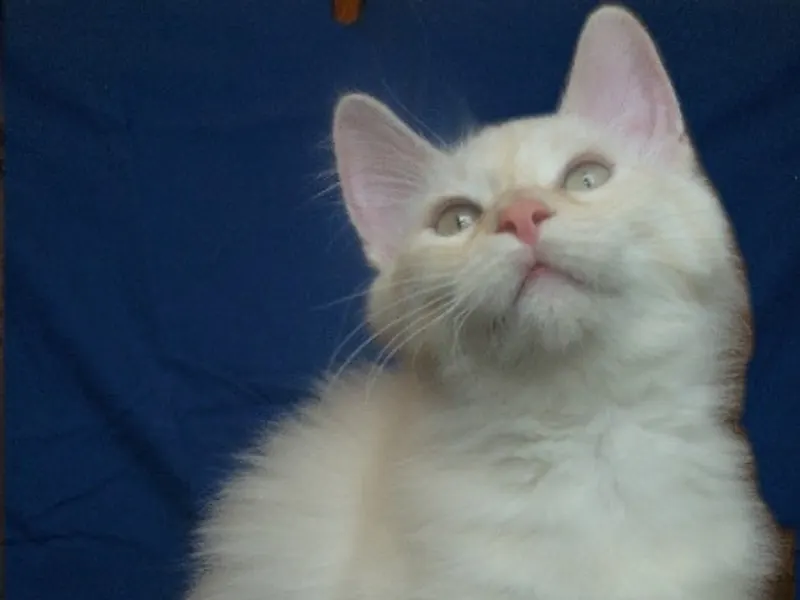
The Munchkin's short-legged trait, caused by a form of achondroplasia-like dwarfism affecting long-bone growth, appeared spontaneously in a stray cat named Blackberry found pregnant in Louisiana in 1983; her rescuer, Sandra Hochenedel, kept two of the short-legged kittens, and the trait bred true in subsequent generations. The breed proved immediately controversial within the cat fancy — critics argued that deliberately breeding for a skeletal mutation raised the same welfare concerns as short-legged dog breeds — and TICA's decision to grant the Munchkin advanced-new-breed status in 1995 was made only after specific health studies found the mutation didn't appear to cause the same degree of joint and mobility problems documented in short-legged dog breeds, though the debate has never fully settled. CFA has never recognized the Munchkin for championship competition, citing ongoing skeletal-mutation concerns. The breed's rise in visibility online through the 2010s and 2020s, especially on social media where the short-legged look drew widespread attention, has if anything intensified rather than resolved the ethical debate, since increased demand has drawn in less careful breeders alongside the more health-conscious established ones.
Common health predispositions
- Lordosis (spinal curvature)
- Pectus excavatum (concave chest)
- Osteoarthritis risk debated among vets tied to the short-leg mutation
Temperament
Munchkins are typically described as playful, sociable, and surprisingly fast and agile despite their short legs — the breed retains a normal-length torso and full range of typical cat behaviors, including jumping onto furniture, though generally to somewhat lower heights than a standard-legged cat manages easily. They tend to be curious and outgoing, often described by owners as behaving like any other cat aside from a distinctive low-to-the-ground gait, and most settle into households with kids or resident pets without difficulty. Munchkins often adopt a distinctive upright sitting posture, propping themselves on their haunches similar to a prairie dog, likely related to the same skeletal proportions responsible for their shortened legs, and many owners consider it one of the breed's most endearing quirks.
Living with a Munchkin
Munchkins inherit their coat length from whatever domestic cats contributed to a given breeding line, so litters can produce anything from a low-maintenance short coat to a fuller one needing regular brushing. The central, genuinely debated health consideration is the skeletal mutation itself: lordosis (an abnormal curvature of the spine) and pectus excavatum (a concave chest) are both documented at an elevated rate in the breed, and while many Munchkins live full, active, apparently pain-free lives, prospective owners should go in with open eyes about the ongoing scientific and ethical debate rather than assume the breed's health is fully settled science. Because the short-leg trait is dominant and lethal in the homozygous form (meaning a kitten inheriting two copies of the gene doesn't survive), responsible Munchkin breeders always pair a short-legged cat with a standard-legged cat rather than two short-legged cats together, a genetically necessary practice rather than a stylistic choice.
FAQ
Is it ethical to breed Munchkin cats?
It's genuinely debated — critics argue that deliberately breeding for a skeletal-shortening mutation raises similar welfare concerns as short-legged dog breeds, while proponents point to studies suggesting Munchkins don't show the same degree of joint problems; CFA has never recognized the breed for championship competition specifically citing these ongoing concerns, while TICA does recognize it.
Can Munchkin cats jump and climb normally?
Largely yes — Munchkins retain a normal-length torso and generally normal cat behavior and agility, including jumping and climbing, though they typically manage somewhat lower heights than a standard-legged cat given their shortened leg bones.
What is lordosis in Munchkin cats?
An abnormal curvature of the spine documented at an elevated rate in the breed, one of the health considerations tied to the same skeletal mutation responsible for the Munchkin's short legs — it's part of why the breed's ethics and long-term health remain genuinely debated within veterinary and cat-fancy circles.
Does CFA recognize the Munchkin breed?
No — CFA has never granted the Munchkin championship recognition, citing concerns about deliberately breeding for a skeletal mutation, while TICA does recognize the breed, reflecting a genuine, unresolved difference of opinion among major cat registries.
Why do Munchkin cats sit up on their haunches?
It's a widely reported, distinctive posture likely connected to the same skeletal proportions responsible for the breed's short legs, similar in appearance to a prairie dog's upright stance, and many owners consider it one of the Munchkin's most recognizable and endearing behaviors.
Can two Munchkin cats be safely bred together?
No — because the short-leg gene is lethal in its homozygous form, meaning kittens that inherit two copies don't survive, responsible breeders always pair a short-legged Munchkin with a standard-legged cat rather than breeding two short-legged Munchkins together.
Related on FetchBreed
Whichever breed fits your life, consider adoption or breed-specific rescue first — many purebred and mixed-breed dogs and cats are already waiting for homes.
General breed information, not veterinary advice — consult a vet for your pet's specific health, diet, and behavior needs.