Foreign Body Type
Egyptian Mau
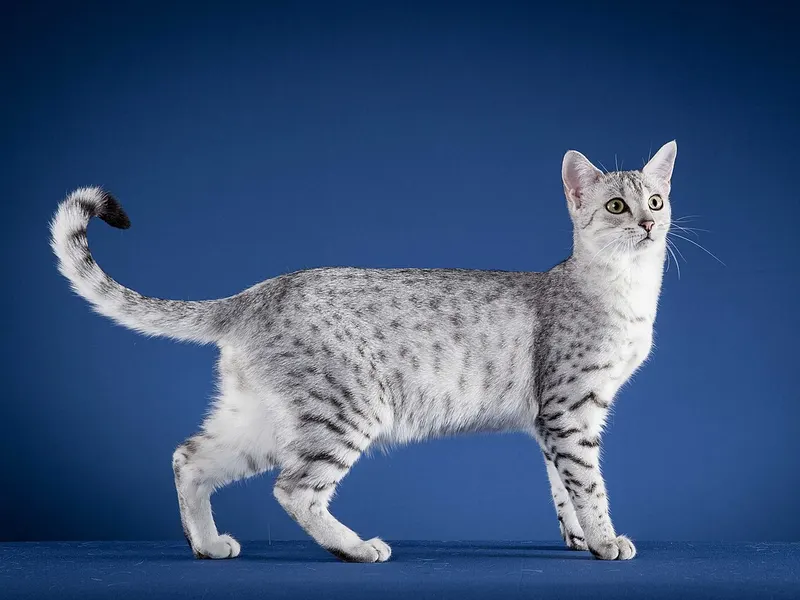
The Egyptian Mau is often described as the only naturally spotted domestic cat breed, meaning its spotted coat pattern occurs through random natural genetics rather than being deliberately bred in from a wild ancestor the way a Bengal's or Savannah's is. The modern breed traces to a small number of spotted street cats rescued in Cairo in the 1950s by exiled Russian princess Nathalie Troubetzkoy, who brought several to the United States in 1956 and began a careful breeding program; nearly every Mau registered today descends from that founding handful of cats, giving the breed a notably narrow genetic base. The name "Mau" is the ancient Egyptian word for cat, and the breed's spotted look and upright posture are frequently linked, if loosely, to cats depicted in ancient Egyptian art. Because the founding population was so small, Egyptian Mau breeders in later decades worked with Egyptian street cats again on a limited, carefully managed basis specifically to widen the gene pool beyond Troubetzkoy's original founding cats, a deliberate health-focused effort distinct from casual outcrossing.
Common health predispositions
- Hypertrophic cardiomyopathy
- Bladder stones (uncommon)
Temperament
Egyptian Maus are known for real physical speed — they're often cited as the fastest domestic cat breed, capable of short bursts up to roughly 30 miles per hour, a trait tied to a distinctive loose flap of skin along the flank that extends their stride during a full run. They tend to be more reserved with strangers than many breeds, sometimes taking real time to warm up to unfamiliar people, but they form close, loyal bonds with their own households and are notably vocal, using a range of chirps and chortling sounds distinct from a typical meow. The breed is known among fanciers for an unusually expressive body language, including a worried-looking brow wrinkle across the forehead that appears when the cat is startled or anxious, a distinctive facial trait specifically noted in the breed standard.
Living with a Egyptian Mau
Weekly attention to the short, spotted coat is plenty to keep shedding under control. Because the breed's population descends from such a narrow founding gene pool, responsible breeders pay close attention to outcrossing and health testing to avoid concentrating hereditary problems, and cardiac screening for hypertrophic cardiomyopathy is a routine part of that vigilance. Maus are athletic and benefit genuinely from vertical climbing space and active play given their real speed and agility, and their somewhat reserved nature around strangers means a calm, gradual introduction process matters more here than for a naturally outgoing breed. Given the breed's real athleticism, Egyptian Maus benefit noticeably from tall cat trees and dedicated running space, and owners sometimes report their Mau enjoying supervised leash walks or a securely enclosed outdoor catio more than a typical breed would.
FAQ
Is the Egyptian Mau really the fastest cat breed?
It's widely cited as such — the breed is capable of short sprints up to around 30 miles per hour, aided by a distinctive flap of loose skin along its flank that extends the length of its stride during a full run, a structural trait relatively unique among domestic breeds.
Are Egyptian Mau cats related to ancient Egyptian cats?
The connection is more evocative than scientifically documented — the breed's spotted coat and upright posture resemble cats depicted in ancient Egyptian art, and the name Mau is the ancient Egyptian word for cat, but the modern breed's direct lineage traces only to a small group of Cairo street cats rescued in the 1950s, not an unbroken line from antiquity.
Is the Egyptian Mau's coat pattern natural or bred in?
Natural — unlike breeds such as the Bengal or Savannah, whose spotted coats were deliberately introduced through wild-species crosses, the Egyptian Mau's spots occur through ordinary domestic cat genetics, making it one of the few naturally (rather than deliberately) spotted breeds.
Do Egyptian Maus warm up to strangers?
Usually, but not immediately — the breed tends to be reserved and cautious with unfamiliar people at first, taking more time than an outgoing breed to relax, though most Maus become affectionate and trusting once they're comfortable with a person.
How many original cats founded the modern Egyptian Mau breed?
A very small number — nearly every registered Egyptian Mau today traces back to the handful of Cairo street cats princess Nathalie Troubetzkoy brought to the US in 1956, which is why later breeders made deliberate efforts to widen the gene pool through additional, carefully managed imports.
Why does an Egyptian Mau's forehead look worried?
The breed standard specifically notes a distinctive brow wrinkle pattern that can appear more pronounced when the cat is startled, anxious, or highly alert, a natural facial structure trait rather than a sign of a health problem.
Related on FetchBreed
Lists this breed appears in
Care equipment for a Egyptian Mau
As an Amazon Associate we earn from qualifying purchases made through these links, at no extra cost to you.
- Tall cat tree
Given the breed's real athleticism, the page says Maus benefit noticeably from tall cat trees and dedicated running space. Weekly attention to the short coat is called plenty, so no grooming tool appears here.
- Cat harness and leash
The page notes owners sometimes report their Mau enjoying supervised leash walks more than a typical breed would.
- Screened catio enclosure
The alternative the page names in that same sentence, for a securely enclosed outdoor space.
Whichever breed fits your life, consider adoption or breed-specific rescue first — many purebred and mixed-breed dogs and cats are already waiting for homes.
General breed information, not veterinary advice — consult a vet for your pet's specific health, diet, and behavior needs.