Oriental Cats
6 breeds in this group.
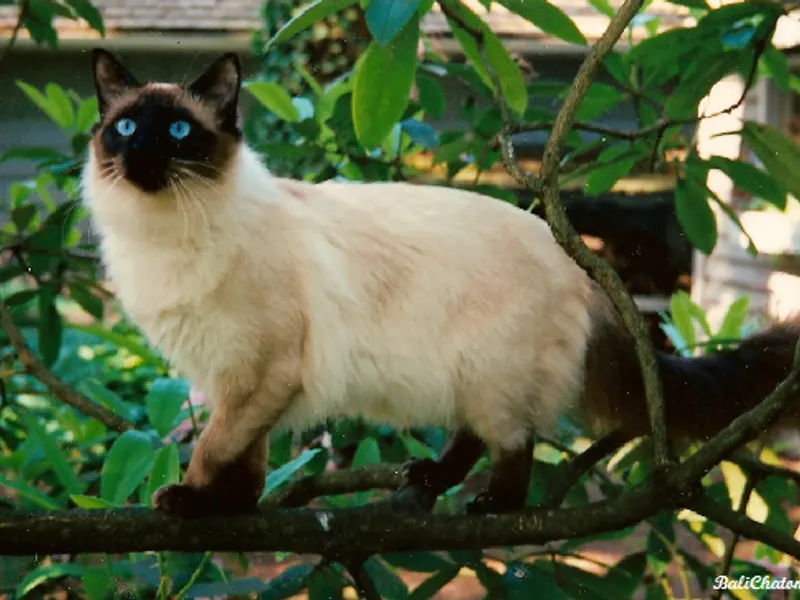
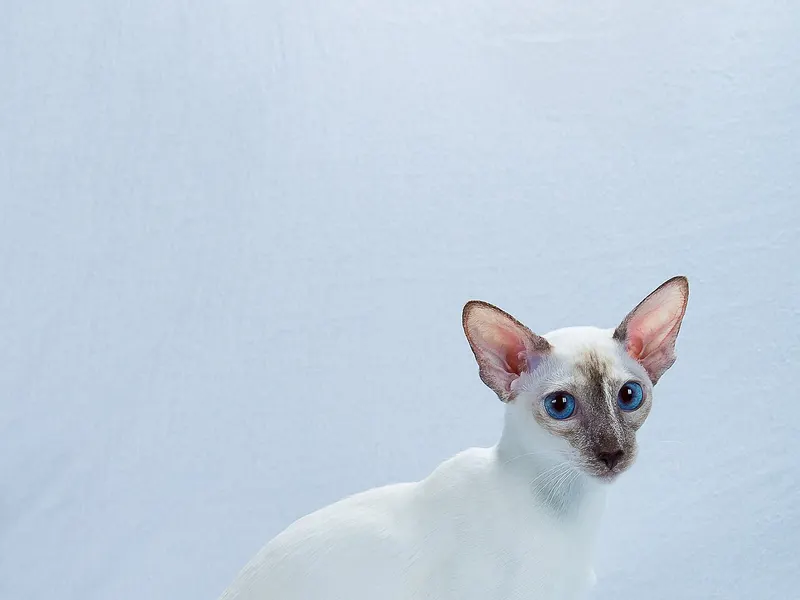
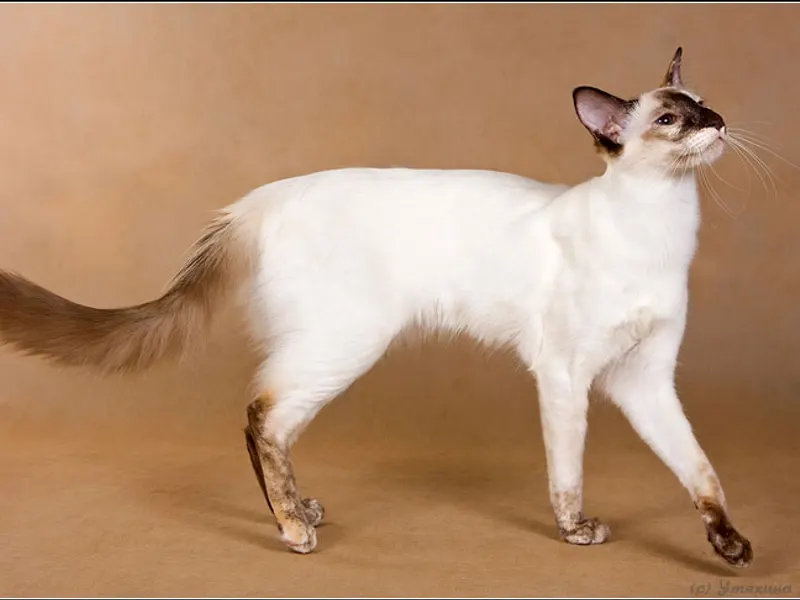
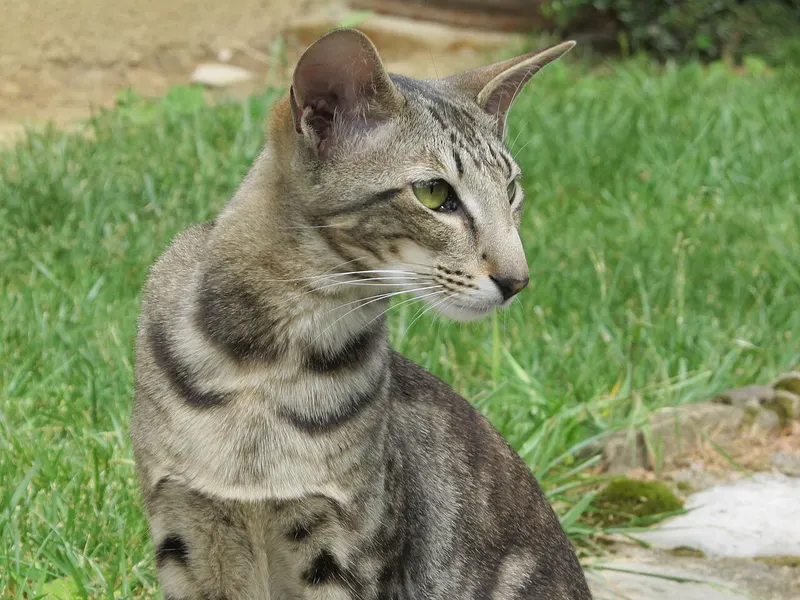
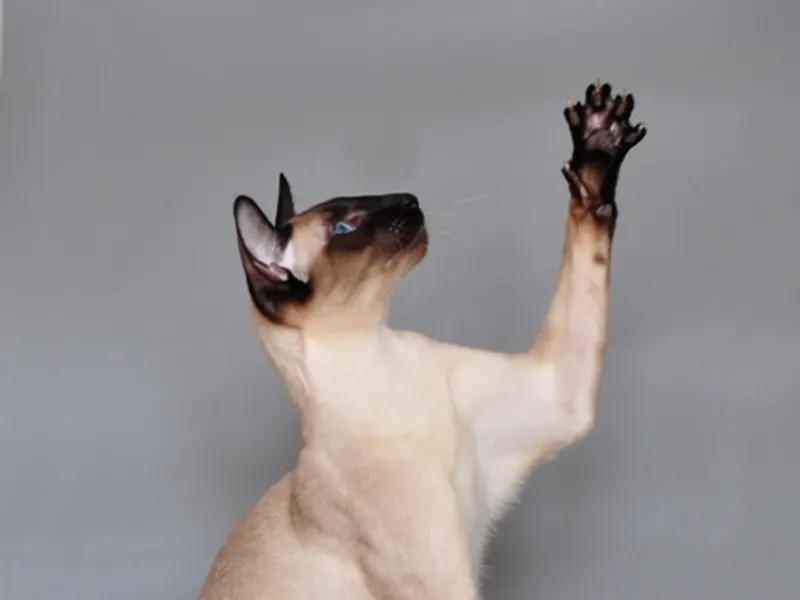
Oriental describes the extreme end of the cat fancy's slender-body spectrum — an even longer, more tubular torso than the "foreign" category, an acutely wedge-shaped head, very large, wide-set ears, and almond-shaped, slanted eyes — and in practice nearly every breed in this small category traces directly back to the Siamese, either as a direct descendant or as the Siamese itself under a different coat or color classification. It's a body type built almost entirely through deliberate twentieth-century Western show breeding rather than natural regional development, which sets it apart from most other body-type categories on this site that blend older landraces with newer deliberate breeds. The Siamese itself has documented roots in Siam (modern Thailand), referenced in the same Tamra Maew manuscript tradition that also describes the Korat, with old point-colored cats reportedly kept in Siamese royal households and temples for generations before the breed was exported to Britain and the U.S. starting in the late nineteenth century. Crucially, the extremely narrow, tubular body and dramatically wedge-shaped head associated with the modern show Siamese is a twentieth-century Western refinement rather than the original imported type — early Siamese cats photographed and described in the late 1800s and early 1900s had a noticeably more moderate, rounder build closer to what's now sold separately as the "traditional" or "applehead" Siamese by breeders who deliberately kept the older type rather than following the extreme-breeding trend, which is a genuinely useful distinction for anyone specifically wanting the historic look rather than the modern show standard. The Oriental Shorthair and Oriental Longhair are, genetically, essentially Siamese cats without the restrictive color-point gene — bred from the same foundation stock and sharing an identical body type and temperament, but selected to express solid colors, tabby patterns, and other coat variations across the whole body rather than the pointed pattern (dark coloring restricted to the face, ears, legs, and tail) that defines a "true" Siamese by most registries' color standards. This means an Oriental Shorthair and a Siamese are, in a meaningful sense, the same breed wearing different coats, which is worth knowing since it explains why the two share not just body type but also the same famously vocal, people-oriented, high-energy temperament — Orientals and Siamese alike are widely considered among the most talkative and demanding-of-attention cat breeds in the fancy, prone to loud, persistent vocalizing to solicit interaction, and generally poor candidates for an owner wanting a quiet, independent cat. The Balinese is the long-haired version of the Siamese specifically, carrying the same pointed color pattern and body type but with a semi-long, silky coat that emerged from a spontaneous recessive long-hair gene occasionally appearing in Siamese litters, first noticed and deliberately bred as a separate variety starting in the 1950s and 60s, named for the graceful movement of Balinese temple dancers rather than for any actual connection to Bali. The Javanese fills a similar role as the long-haired counterpart to the Oriental Shorthair's non-pointed color range, essentially the Balinese's counterpart minus the restriction to pointed coloring — the naming convention across this category (Siamese/Balinese for pointed cats, Oriental Shorthair/Javanese for non-pointed) can be genuinely confusing since different registries draw these lines slightly differently, and it's worth checking a specific organization's standard if breed-showing distinctions matter to a prospective owner. The Colorpoint Shorthair fills the remaining gap in most registries' classification system: it's used for Siamese-pattern cats whose specific point colors (red, cream, tortoiseshell, and certain lynx-point patterns) fall outside the narrower traditional four colors (seal, blue, chocolate, lilac) that some registries reserve for the "Siamese" name specifically, meaning it's again genetically continuous with the Siamese line but categorized separately purely on a color technicality tied to registry history rather than any meaningful difference in body or temperament. Because this entire category descends from one shared foundation, prospective owners can generalize across it more reliably than in almost any other body-type hub on this site: expect a highly vocal, intensely people-oriented, high-energy cat that tends to bond strongly with one or two people, dislikes being left alone for long stretches, and often does better in a household prepared for near-constant social engagement than one hoping for a low-maintenance, background pet — the build may vary by coat length and color classification, but the underlying temperament runs remarkably consistent across nearly every breed grouped here. Because this entire category descends from a shared Siamese foundation, it's worth being specific about the one meaningful difference that does exist across it: coat pattern and color restriction rather than temperament or build. A "true" Siamese under most major registries' standards is restricted to the classic pointed pattern in one of a small number of recognized colors, while the Oriental Shorthair and Oriental Longhair carry the identical body and temperament in essentially any solid color, tabby pattern, or particolor combination imaginable — which is genuinely useful for anyone drawn to the Siamese temperament and build but not to the specific pointed look, since an Oriental offers that same personality in an enormous range of coat options instead. The category's vocal, highly social temperament deserves a fuller, more practical description than "talkative" alone conveys, since it shapes day-to-day life with these breeds more than almost any other trait discussed on this site. Siamese and Oriental cats are frequently reported by owners and behaviorists alike to vocalize specifically to solicit interaction — meowing at a closed door, following an owner room to room while narrating the trip, or protesting loudly when left alone — and this isn't generally trainable away the way some unwanted behaviors are, since it reflects the breed's underlying need for near-constant social engagement rather than a habit that can be redirected. Owners considering this category should honestly assess whether their household can provide that level of interaction, since a Siamese or Oriental left alone for long stretches on a regular basis is more prone to anxiety-related behavior problems than most other breeds discussed on this site. Health themes across the group include a documented, if not fully explained, elevated rate of certain conditions in Siamese specifically — some vestibular and neurological issues, and a form of progressive retinal atrophy — that responsible breeders now screen for, alongside the crossed-eye trait (strabismus) and a genuinely distinctive kinked-tail trait, both historically common in the breed and both now selectively bred against in most modern lines, though older or more traditional-type Siamese occasionally still show one or both traits, generally considered a cosmetic rather than a health concern. Kitten socialization matters even more for this category than for most others, given how central social engagement is to the group's long-term temperament and wellbeing — breeders of Siamese and Oriental lines typically emphasize early, extensive human handling and interaction well before a kitten goes to its new home, and prospective owners should ask directly about a breeder's specific socialization practices rather than assuming any kitten from this lineage will automatically show the breed's famously outgoing temperament without that early investment. Multi-cat households considering this category should weigh the group's strong personality and territorial tendencies directly, since Siamese and Oriental cats, precisely because of how intensely they bond with their people, can show real jealousy or competitiveness when a new cat joins an established household, and slow, deliberate introductions matter more here than for some of the more naturally easygoing breeds discussed on this site's semi-cobby and cobby hubs. Voice range and individual variation within this category is worth a brief added note, since not every Siamese or Oriental is equally vocal — some individual cats within these breeds are noticeably quieter than the breed's general reputation suggests, and meeting a specific kitten's parents, when possible, offers a more reliable read on that particular line's actual vocal tendency than the breed's overall reputation alone. The word "Siamese" itself simply reflects the breed's association with old Siam, and it's worth noting the country renamed itself Thailand in 1939, meaning the breed's name preserves an older national identity that the country of origin itself no longer uses. Thailand's own cat fancy organizations have, in recent decades, worked to reclaim and formally document the older Thai cat varieties, including the more moderate traditional Siamese type, partly as a cultural preservation effort distinct from the Western show fancy's more extreme modern standard. Ear size and shape in this category serve a genuine functional role beyond appearance, since the breed's characteristically large, wide-set ears are believed by some breed historians to have offered a real thermoregulatory advantage in the breed's warm native Southeast Asian climate, similar to the way large ears function in several other animal species adapted to hot regions. Because breed-specific rescue organizations for Siamese and Oriental cats exist in many regions, adopting an adult cat from one of these groups offers a genuinely well-informed alternative to buying a kitten, since an adult cat's actual vocal intensity, activity level, and social needs are already fully apparent, letting a prospective owner make a more confident assessment of household fit than is possible when choosing a very young kitten still developing its adult temperament. Because kittens of this lineage typically show early signs of the breed's characteristic vocal, people-focused temperament well before reaching full adult size, a breeder's early observations of an individual kitten's personality often prove a genuinely reliable predictor of that same cat's adult temperament, more so than is typical for some less behaviorally consistent breeds elsewhere in the fancy.