Sporting Group
Welsh Springer Spaniel
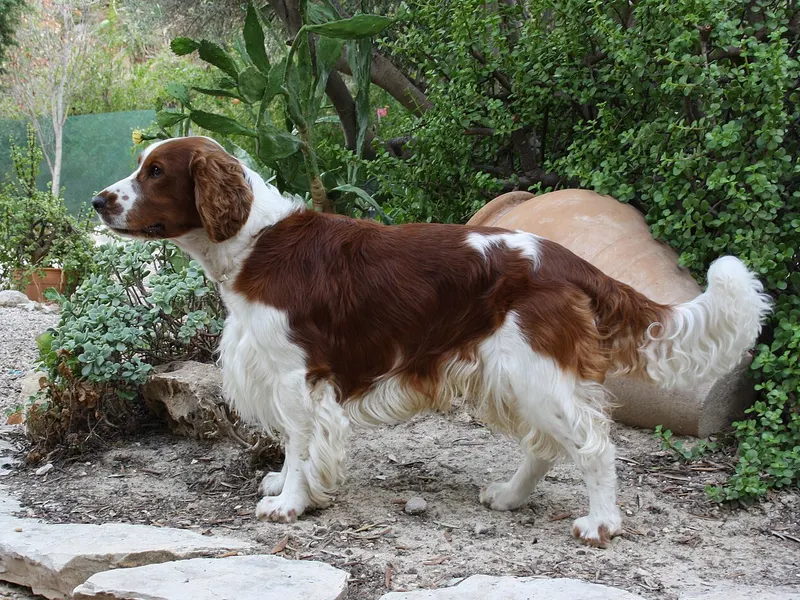
Distinct from its more common English Springer Spaniel cousin despite the shared "Springer" name and general flushing-spaniel role, the Welsh Springer Spaniel developed in Wales over centuries as its own regional type, with red-and-white coloring that sets it apart at a glance and that breed historians trace to some of the oldest spaniel stock recorded in British sporting literature. The breed nearly faded from wider recognition during the 19th century as English Springer and Cocker Spaniel types gained more attention, kept alive largely through dedicated Welsh breeders working independently of the more fashionable English spaniel scene. The breed's red-and-white coloring is thought to serve a genuine practical function in the field as well as a visual identifier, making a working dog easier for a hunter to spot at a distance against green cover than a darker-coated spaniel would be. AKC recognition came in 1906. Genetic and historical research generally treats the Welsh Springer as a genuinely distinct, older lineage rather than simply a regional variant of the English Springer Spaniel, with some breed historians pointing to red-and-white spaniel types depicted in British art and literature that predate the English Springer's own more codified development by a considerable margin.
Common health predispositions
- Hip dysplasia
- Progressive retinal atrophy
- Autoimmune thyroiditis
Temperament
Affectionate and devoted, the Welsh Springer Spaniel tends to bond closely with its family while showing real reserve around strangers, a somewhat more one-household-focused temperament than the more universally outgoing English Springer. Most individuals are excellent with children and generally sociable with other dogs, reflecting the breed's cooperative flushing-and-retrieving working history. Early, consistent socialization matters more for this breed's stranger-wariness than it does for some other spaniel breeds, given how much the Welsh Springer's temperament leans toward reserve rather than universal friendliness. Once that trust is established, however, most individuals settle into a genuinely devoted, biddable household presence, and the same cooperative instincts that made the breed effective at flushing game translate readily into obedience and scent-work training at home. The breed's distinctive feathered tail, sometimes called a "swishing" or "scutty" tail by British breed fanciers, tends to wag in a genuinely enthusiastic circular motion when the dog is excited, a small but visually distinctive trait long-time owners come to recognize instantly.
Living with a Welsh Springer Spaniel
An hour of real activity most days, ideally including retrieving or scent games, keeps this genuinely sporty spaniel satisfied. The straight, medium-length red-and-white coat, with its feathering around the ears and legs, wants a brushing session several times a week to stay free of tangles. Hip dysplasia and progressive retinal atrophy show up often enough in breed health surveys to take seriously, and autoimmune thyroiditis along with epilepsy round out the conditions worth discussing with a breeder before committing to a puppy. A family wanting a devoted, working-capable spaniel with genuine one-household loyalty, and prepared for a bit more initial reserve around strangers than some other spaniel breeds show, tends to do well here. Given the breed's genuinely small US population relative to its English Springer cousin, Welsh Springer Spaniel rescue is uncommon, and prospective adopters often need real patience or should expect to work through a breeder waitlist instead. Monthly costs run moderate for a sporting breed this size, and the grooming time commitment for the feathered coat is a genuine ongoing factor worth budgeting time for as much as money.
FAQ
Is a Welsh Springer Spaniel the same as an English Springer Spaniel?
No — despite sharing the Springer name and a similar flushing-spaniel working role, they're distinct breeds with separate development histories; the Welsh Springer is red-and-white with a somewhat more reserved temperament and a considerably smaller US population than its English cousin.
Is a Welsh Springer Spaniel good with strangers?
Less immediately outgoing than many other spaniel breeds — the Welsh Springer tends toward real reserve with unfamiliar people, making early, consistent socialization particularly important for this specific breed.
How old is the Welsh Springer Spaniel breed?
Genuinely old — breed historians generally treat it as a distinct, older lineage than the English Springer Spaniel, pointing to red-and-white spaniel types depicted in British art and sporting literature that predate the English Springer's own more codified development.
How much grooming does a Welsh Springer Spaniel need?
A real ongoing commitment — the feathering around the ears and legs tangles readily, so the straight, medium-length coat needs several brushing sessions a week to stay presentable.
Why is Welsh Springer Spaniel rescue so uncommon in the US?
The breed's overall US population is genuinely small compared to more common spaniel breeds, which means fewer dogs cycle through rescue and prospective adopters often need real patience or should expect to work through a breeder waitlist instead.
Related on FetchBreed
Whichever breed fits your life, consider adoption or breed-specific rescue first — many purebred and mixed-breed dogs and cats are already waiting for homes.
General breed information, not veterinary advice — consult a vet for your pet's specific health, diet, and behavior needs.