Non-Sporting Group
Tibetan Terrier
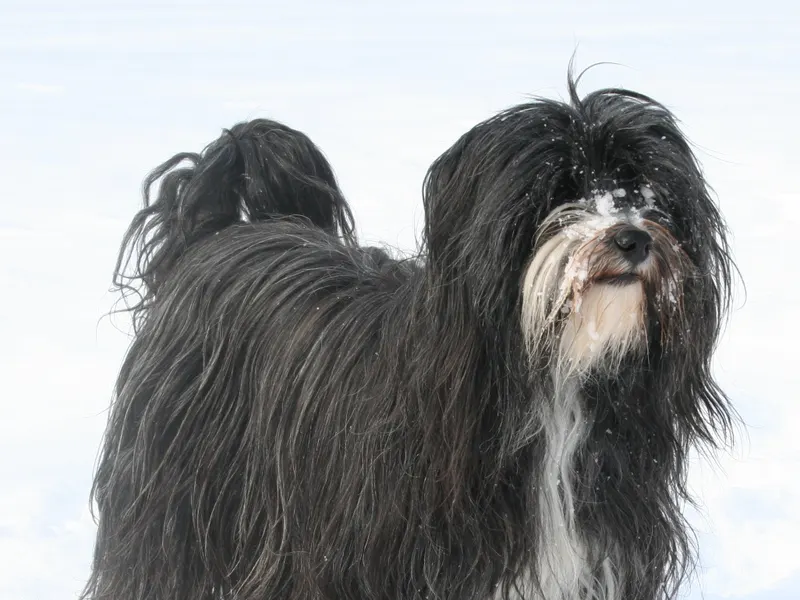
Despite the name, the Tibetan Terrier isn't a terrier at all in any working sense — the "terrier" label was applied by early Western travelers in Tibet simply because the breed's size roughly matched European terrier breeds they were familiar with, not because it shared any ratting or den-hunting function. Tibetan monasteries and households instead kept and bred these dogs for centuries as good-luck companions and watchdogs, developing a distinctive long, dense double coat and broad, flat feet that historians generally connect to the breed's need to move confidently across snowy, mountainous Himalayan terrain, functioning almost like natural snowshoes. Dr. Agnes Greig, a British physician working in India in the early 20th century, is widely credited with bringing the breed to Western attention after receiving one as a gift and subsequently establishing a breeding program that helped introduce the Tibetan Terrier outside its home region. The breed's coat, while long and dense, is genuinely more weather-functional than purely decorative, insulating the dog against the harsh temperature swings of the Himalayan plateau in a way that shaped the coat's density well before Western show breeders ever selected for appearance alone. AKC recognition came in 1973. The breed was traditionally never sold in Tibet but only given as gifts, considered to bring good fortune to the receiving household, a cultural practice distinct from the more transactional history of most Western working and companion breeds.
Common health predispositions
- Progressive retinal atrophy
- Lens luxation
- Neuronal ceroid lipofuscinosis (breed-linked storage disease)
Temperament
Loyal, intelligent, and genuinely versatile, the Tibetan Terrier carries a temperament shaped by centuries of general household companionship and watchdog duty rather than any single specialized working function. Most individuals bond closely with family and can be reserved with strangers, quick to alert but not typically aggressive about it. The breed's long history as a treasured monastery and household companion, never bred purely for appearance in a show-ring sense until relatively recently, shows up as a genuinely balanced, adaptable temperament well suited to varied living situations.
Living with a Tibetan Terrier
An hour of daily activity suits this moderately energetic breed well, and the Tibetan Terrier generally adapts to a range of living situations from apartments to houses with real yard space. Grooming is a serious ongoing commitment with this breed: the long, fine, profuse double coat mats without at least several brushing sessions a week, which is why plenty of pet households settle for a shorter maintenance trim over full show length; the reward is a coat that sheds comparatively little given its density. Progressive retinal atrophy and lens luxation are both documented conditions to screen for, and neuronal ceroid lipofuscinosis — a rare, breed-linked neurological storage disease — is a genuine concern specific enough to this breed that a DNA carrier test exists and is well worth requesting from a breeder. A household genuinely willing to commit to the substantial grooming routine, and genuinely drawn to the breed's balanced temperament and unusual cultural backstory, is the household most likely to thrive with a Tibetan Terrier. Breed-specific rescue exists through dedicated Tibetan Terrier clubs in the US, a reasonable option given the breed's modest but stable population. Monthly costs run moderate to higher for a mid-sized breed once the substantial grooming routine is factored into the total, alongside standard food and veterinary expenses.
FAQ
Is a Tibetan Terrier actually a terrier breed?
No, not in any working sense — the 'terrier' label was applied by early Western travelers simply because the breed's size roughly matched European terrier breeds they knew, not because it shared any ratting or den-hunting function; the Tibetan Terrier's actual history is as a monastery and household companion.
Why does a Tibetan Terrier have such large, flat feet?
Historians generally connect the breed's broad, flat feet to the need to move confidently across snowy, mountainous Himalayan terrain, functioning almost like natural snowshoes for the dog.
Could you ever buy a Tibetan Terrier in Tibet historically?
No — the breed was traditionally never sold, only given as gifts believed to bring good fortune to the receiving household, a cultural practice genuinely distinct from the more transactional history of most Western working and companion breeds.
How much grooming does a Tibetan Terrier need?
Plan on a real ongoing commitment — the long, fine, profuse double coat mats without several brushing sessions a week at minimum, which is why many pet owners settle on a shorter maintenance trim instead of full show length.
Who introduced the Tibetan Terrier to the West?
Dr. Greig's efforts led to UK Kennel Club recognition in 1937, and the breed was registered there simply as the Tibetan Terrier despite having no actual terrier function — a naming choice Western fanciers made based purely on the dog's terrier-like size rather than any deliberate rebranding effort. Every kennel club that has recognized the breed since, including the AKC decades later, has carried that same original naming quirk forward unchanged.
Related on FetchBreed
Whichever breed fits your life, consider adoption or breed-specific rescue first — many purebred and mixed-breed dogs and cats are already waiting for homes.
General breed information, not veterinary advice — consult a vet for your pet's specific health, diet, and behavior needs.