Working Group
Standard Schnauzer
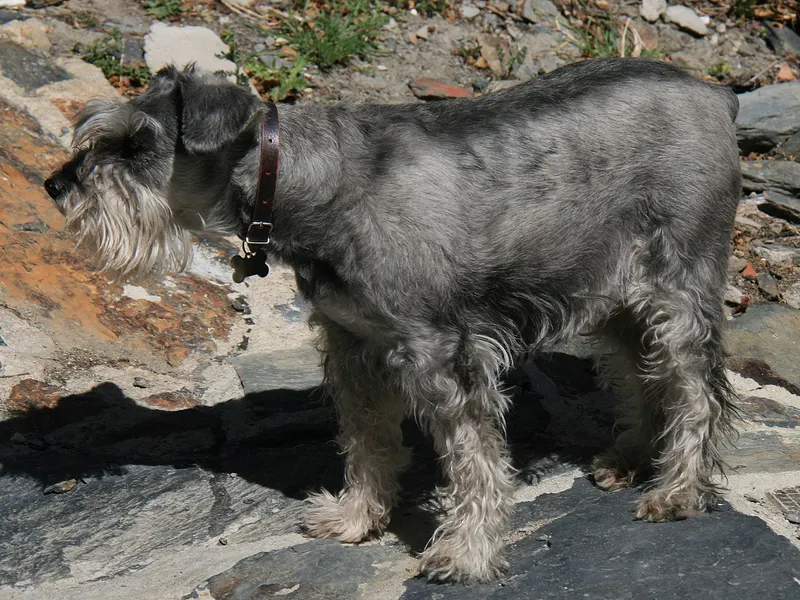
Rather than sitting between the other two sizes, the Standard Schnauzer is actually where the breed started — both the smaller Miniature and the larger Giant Schnauzer were bred down or up from this original stock. German artists, including Albrecht Dürer, depicted dogs closely resembling it in works dating back several centuries, evidence of just how long this type has existed in German life, working as an all-purpose farm dog, ratter, and guard dog well before any formal standard was written; its name traces to the German word "Schnauze," or snout, a nod to the breed's bearded muzzle. The AKC recognized the Standard Schnauzer in 1904.
Common health predispositions
- Hip dysplasia
- Von Willebrand's disease
- Cataracts
Temperament
As the foundation for two other breeds, the Standard Schnauzer carries a maxed-out trainability rating and real working intelligence, and it shows in the breed's strong record across AKC obedience, agility, and other working-dog disciplines. Kids are generally a safe bet with this breed, and loyalty to its own family runs deep, though real watchdog instincts and a fair dose of wariness toward strangers come along with that farm-guarding ancestry. Small, fast-moving animals can trigger the breed's old ratting instincts, so other pets are usually fine but not guaranteed.
Living with a Standard Schnauzer
A bored Standard Schnauzer is a genuinely inventive Standard Schnauzer, and an hour of daily exercise with real mental engagement built in is what keeps that intelligence from finding its own, less welcome outlets. Between hand-stripping or clipping appointments every several weeks, the wiry double coat wants regular brushing to hold its texture, and the reward for that effort is a dog that sheds only lightly — a real point in the breed's favor for allergy-sensitive households, though confirming with the actual dog is still smart. Von Willebrand's disease, hip dysplasia, and cataracts round out the short list of conditions worth asking a breeder about. Because this is genuinely the root stock behind the Miniature and Giant varieties, breed researchers studying the Schnauzer group often treat the Standard as the genetic baseline for understanding how the other two sizes diverged over generations of selective breeding.
FAQ
Is the Standard Schnauzer the original Schnauzer breed?
Yes — the Standard Schnauzer is the foundational size from which both the smaller Miniature Schnauzer and the larger Giant Schnauzer were later developed, rather than being a middle size bred between the other two.
Where does the name Schnauzer come from?
It derives from the German word 'Schnauze,' meaning snout or muzzle, a direct reference to the breed's distinctive bearded facial hair, one of its most recognizable physical features across all three Schnauzer sizes.
Are Standard Schnauzers hypoallergenic?
No breed earns that label honestly, but the wiry coat's low shedding makes the Standard Schnauzer a genuinely reasonable option for allergy-sensitive households to consider — reasonable enough to be worth a trial visit with the actual dog before deciding.
How much grooming does a Standard Schnauzer need?
Similar to its Miniature and Giant relatives — plan on hand-stripping or professional clipping every several weeks to keep the wiry coat's texture correct, with regular brushing at home carrying it between those appointments.
Are Standard Schnauzers easy to train?
Very much so — this breed's maxed-out trainability score reflects genuine working intelligence, and Standard Schnauzers show up regularly among the stronger performers in AKC obedience, agility, and other working-dog disciplines.
How big does a Standard Schnauzer get?
Medium — typically 30 to 50 pounds and 17.5 to 19.5 inches at the shoulder, sitting between the smaller Miniature and larger Giant varieties that were bred down and up from this original stock.
How long do Standard Schnauzers live?
This medium working breed often reaches 13 to 16 years, a genuinely long run tied to its sturdy build and a documented health-concern list that's comparatively short next to many other working breeds.
Are Standard Schnauzers good family dogs?
Yes, generally — the breed is loyal, trainable, and good with kids, though its real watchdog instincts and working intelligence mean it does best in a household ready to provide consistent structure and mental engagement.
How much exercise does a Standard Schnauzer need?
A genuine hour daily, with real mental engagement built in — this breed's working intelligence needs a job or structured activity, not just a walk, to stay well-adjusted and out of mischief.
Do Standard Schnauzers get along with other pets?
Usually fine, though the breed's old ratting instincts occasionally resurface around anything small and quick, which is why small pets specifically benefit from an early, gradual introduction rather than a sudden one.
Is a Standard Schnauzer a good first dog?
High trainability makes the breed genuinely approachable, but real watchdog instincts and working drive mean it isn't a passive companion — expect to provide consistent training and exercise from day one.
What colors do Standard Schnauzers come in?
Solid black and salt-and-pepper are the two recognized colors within the breed standard, both cosmetic variations with no established link to temperament, and both requiring the same hand-stripping or clipping routine to maintain proper texture.
Do Standard Schnauzers do well with children?
Yes, generally — the breed's loyal, trainable temperament makes it a solid family choice, and its sturdier medium size holds up well to typical household activity better than the smaller Miniature variety might.
Is the Standard Schnauzer a rare breed in the U.S.?
Relatively, yes — it's considerably less common than the Miniature Schnauzer, meaning prospective buyers should expect a smaller pool of breeders and potentially a longer wait for a puppy from a reputable source.
Related on FetchBreed
Whichever breed fits your life, consider adoption or breed-specific rescue first — many purebred and mixed-breed dogs and cats are already waiting for homes.
General breed information, not veterinary advice — consult a vet for your pet's specific health, diet, and behavior needs.