Terrier Group
Rat Terrier
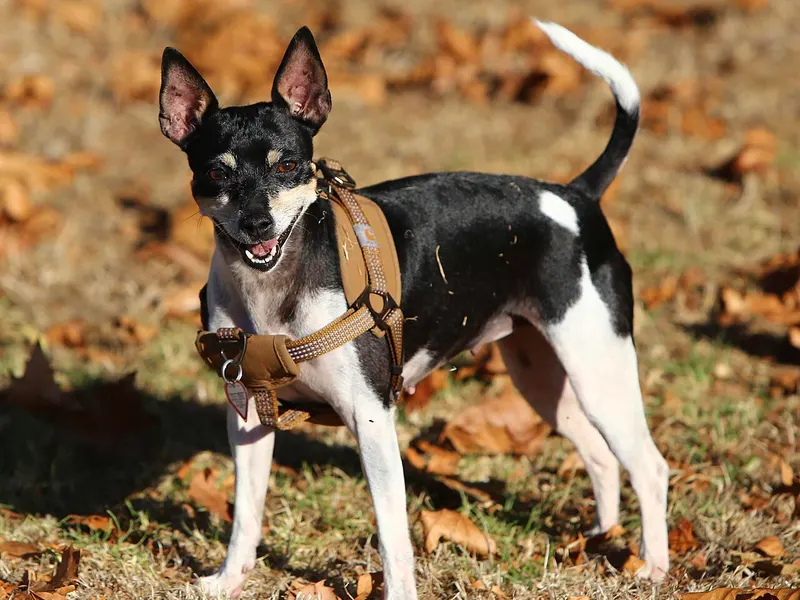
Working-class American farmers assembled the Rat Terrier in the 19th and early 20th centuries from a practical mix of English terriers, Whippet, Beagle, and Italian Greyhound blood, aiming for a dog fast and tenacious enough to keep barns and grain stores clear of vermin. President Theodore Roosevelt reportedly kept Rat Terriers at the White House and gave the breed its name after one reportedly cleared a rat infestation there. The breed nearly vanished mid-century as chemical pest control replaced working farm dogs, and it survived mainly through rural breeders who valued the dog's abilities over any show-ring standard — UKC recognition came in 1999, decades before the AKC followed. Regional type variation was significant in the breed's early decades, with hairless individuals occasionally appearing from Chihuahua ancestry and a distinct "Teddy Roosevelt" type eventually splitting off as its own separate UKC breed in 1999, recognized for a naturally bobbed or short tail. The broader Rat Terrier itself gained full AKC recognition only in 2013, a remarkably late date for a breed with such deep 19th-century American roots.
Common health predispositions
- Legg-Calvé-Perthes disease
- Patellar luxation
- Allergies
Temperament
Bred purely for function rather than temperament on paper, Rat Terriers ended up sharp, alert, and genuinely funny dogs — quick to bond with their people and quick to notice everything happening around them. The vermin-hunting instinct is still very much intact; small pets like hamsters or rabbits are at real risk around an unsupervised Rat Terrier, though the breed generally does fine with cats it's grown up alongside. They're eager to please and pick up commands quickly, a legacy of needing to work independently on a farm without constant handler direction.
Living with a Rat Terrier
Sixty minutes a day covers most Rat Terriers' exercise needs, split between a real walk and some off-leash running if a securely fenced space is available — this breed moves fast and chases on sight, so recall training deserves early priority. Coat care could hardly be simpler: a short, smooth single coat needs only occasional brushing and produces little of the grooming workload that larger terriers demand. The breed is generally long-lived and hardy, though Legg-Calvé-Perthes disease, patellar luxation, and skin allergies turn up often enough in veterinary literature to be worth budgeting for, and reputable breeders should be able to speak to the specific lines behind a given puppy's health history. This breed suits an active household that wants a genuinely low-maintenance coat without sacrificing personality — first-time owners generally do fine with a Rat Terrier provided the vermin-chasing instinct and recall training get taken seriously from puppyhood. Breed-specific rescues exist regionally, though because the breed was historically a working farm dog rather than a show breed, mixed-heritage "Rat Terrier type" dogs turn up often in general shelters too and are worth considering alongside purebred options.
FAQ
Is a Rat Terrier the same as a Jack Russell Terrier?
No — they're separate breeds with different origins. Rat Terriers were developed on American farms from a broader mix including sighthound blood, while Jack Russells trace to British fox-hunting terriers; the two look superficially similar but come from distinct working traditions.
Do Rat Terriers get along with cats?
Often yes if raised together, but the breed's vermin-hunting drive means smaller pets like hamsters or gerbils are genuinely at risk around an unsupervised Rat Terrier regardless of how it treats the household cat.
How long do Rat Terriers live?
Fifteen to eighteen years is typical, among the longer lifespans of any AKC breed — a small frame combined with a gene pool historically selected for working soundness rather than conformation extremes tends to add up to real longevity.
Is there a hairless Rat Terrier?
Occasionally — the American Hairless Terrier, now its own separate AKC breed, actually originated from a naturally hairless puppy born in a litter of otherwise normal-coated Rat Terriers in the 1970s, and the hairless trait still occasionally surfaces in Rat Terrier lines today.
What's a Teddy Roosevelt Terrier?
A closely related but separately UKC-recognized breed developed from Rat Terrier stock selected specifically for a naturally short or bobbed tail and a slightly different, more compact build — some breeders and registries still treat it as a Rat Terrier variety rather than a fully distinct breed.
Is the Rat Terrier the same breed as the American Hairless Terrier?
They're closely related but distinct: the American Hairless Terrier descended directly from a hairless mutation within Rat Terrier litters and gained separate AKC recognition in 2016, while the coated Rat Terrier itself wasn't AKC-recognized until 2013 despite a much older American farm-dog history stretching back over a century as an all-purpose vermin hunter.
Related on FetchBreed
Whichever breed fits your life, consider adoption or breed-specific rescue first — many purebred and mixed-breed dogs and cats are already waiting for homes.
General breed information, not veterinary advice — consult a vet for your pet's specific health, diet, and behavior needs.