Working Group
Pyrenean Mastiff
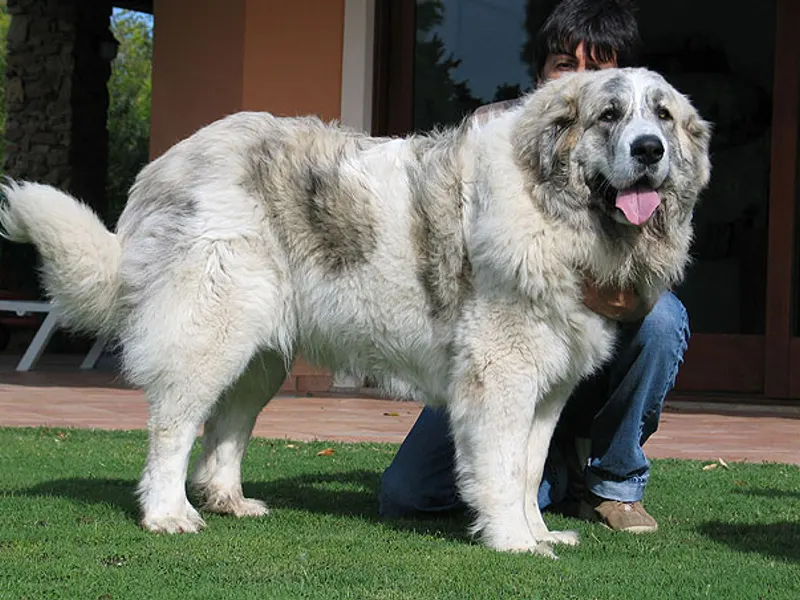
Spanish shepherds in the Pyrenees mountains developed this giant livestock guardian over centuries specifically to protect sheep flocks from wolves and bears, working alongside the more internationally famous Great Pyrenees as a related but genuinely distinct breed adapted to the Spanish side of the mountain range rather than the French side. Real size mattered enormously for this working role — a Pyrenean Mastiff needed to physically intimidate and, if necessary, fight off large predators, and the breed's massive bone structure and imposing bulk reflect that direct functional demand rather than any cosmetic breeding goal. The breed nearly disappeared in Spain during the mid-20th century as traditional shepherding declined and wolf populations in much of the country were sharply reduced, removing much of the breed's original working purpose, before dedicated Spanish breed clubs worked through the later 20th century to rebuild a stable population and formalize a modern breed standard. The Pyrenean Mastiff remains genuinely rare outside Spain even today, holding AKC Foundation Stock Service status rather than full group recognition, and prospective American owners should expect real difficulty sourcing a puppy domestically.
Common health predispositions
- Hip/elbow dysplasia
- Gastric dilatation-volvulus (bloat)
- Entropion
- Shortened lifespan typical of giant breeds
Temperament
Calm and genuinely gentle with its own family despite its massive size, the Pyrenean Mastiff carries a working livestock-guardian temperament built around patient, low-key vigilance rather than constant activity. Real protectiveness runs deep, and unfamiliar people or animals tend to get a genuinely cool reception, a trait directly inherited from centuries spent guarding flocks against predators without close human direction. That independent guardian mindset shows up clearly in training, where drilling and repetition accomplish far less than a patient, consistent approach — an owner expecting a purely obedient companion dog is likely to find the Pyrenean Mastiff's real self-reliance surprising.
Living with a Pyrenean Mastiff
Don't expect much running around from a breed built for standing watch — around 45 unhurried minutes covers the exercise needs of a dog whose real job was always patient vigilance rather than constant motion. Managing the substantial shedding from the dense, thick, weather-resistant double coat takes regular brushing sessions. A frame this massive puts hip and elbow dysplasia squarely on the checklist, and bloat (gastric dilatation-volvulus) is a genuine threat for any deep-chested giant breed, alongside entropion and the shortened lifespan that comes with sheer size in this weight class generally. This is fundamentally not an apartment dog or a first large breed — real space, ideally actual livestock or property worth guarding, and genuine experience with a large, independent-minded guardian are what a Pyrenean Mastiff actually needs from its household. Importing directly from Spain is how most American owners end up finding a puppy, since the tiny handful of established North American breeders can't meet what little domestic demand exists. Between the sheer volume of food a dog this size eats and what it costs to source one in the first place, budget well above what a typical large breed runs.
FAQ
What's the difference between a Pyrenean Mastiff and a Great Pyrenees?
They're closely related livestock guardian breeds that developed on opposite sides of the Pyrenees mountains — the Great Pyrenees on the French side and the Pyrenean Mastiff on the Spanish side — sharing similar guardian instincts but genuinely distinct breed standards and somewhat different builds.
Is a Pyrenean Mastiff a good first dog?
Rarely a wise choice — the sheer size, independence, and guardian-bred wariness toward strangers really call for an owner who's already handled a large breed, and this isn't a fit for apartment living or a first-timer's learning curve.
Why did the Pyrenean Mastiff almost disappear?
As traditional Spanish shepherding declined through the mid-20th century and wolf populations in much of the country dropped sharply, the breed's original working purpose largely vanished, and it took dedicated Spanish breed clubs working through the later 20th century to rebuild the population.
How much exercise does a Pyrenean Mastiff need?
Less than its giant size might suggest — around 45 minutes of unhurried daily activity generally covers it, reflecting the low-key, patient vigilance the breed was actually bred to provide rather than any high-intensity working role.
Can you find a Pyrenean Mastiff puppy in the US?
Only with real difficulty — the breed remains genuinely rare outside Spain, holding AKC Foundation Stock Service status rather than full recognition, so most American owners end up importing directly or working with one of very few established domestic breeders.
How does the Pyrenean Mastiff differ from the Great Pyrenees?
Both descend from livestock-guardian stock native to the mountain range straddling France and Spain, but the Pyrenean Mastiff is a separate, heavier Spanish breed with a more massive head and a darker, patched coat pattern, while the Great Pyrenees, called the Pyrenean Mountain Dog in Europe, is the lighter-boned, predominantly white French counterpart bred along the range's other side.
Related on FetchBreed
Lists this breed appears in
Whichever breed fits your life, consider adoption or breed-specific rescue first — many purebred and mixed-breed dogs and cats are already waiting for homes.
General breed information, not veterinary advice — consult a vet for your pet's specific health, diet, and behavior needs.