Toy Group
Pekingese
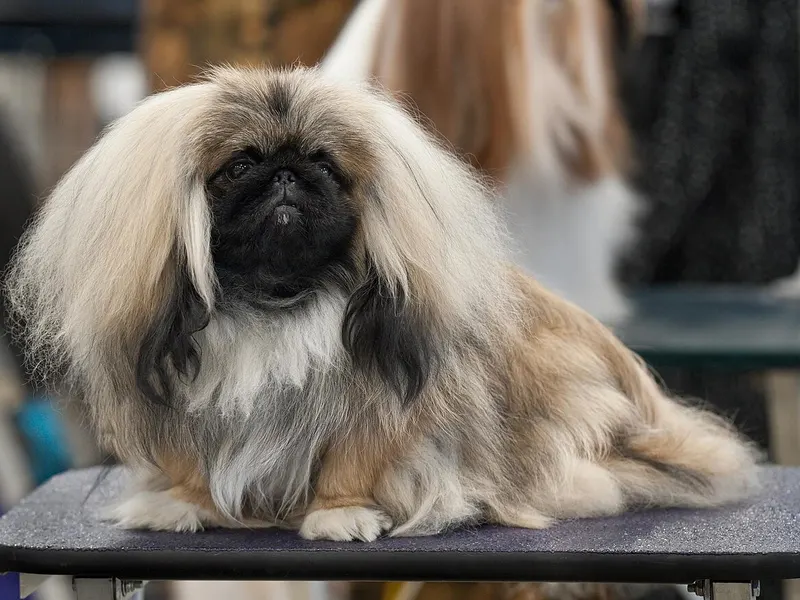
The Pekingese has roots in the imperial court of ancient China, where the breed was considered sacred and, according to long-standing legend, descended from a lion that begged a Buddha to shrink it down to the size of a butterfly while keeping its lion's heart — a story that fits neatly with the breed's traditional nickname, the "lion dog." For centuries, ownership was restricted to Chinese royalty, and folklore holds that stealing one could carry the death penalty, though the precise historical accuracy of that claim is debated among breed historians. British troops looted the Summer Palace in 1860 during the Second Opium War, and five Pekingese dogs found there were brought back to England, including one presented to Queen Victoria and named Looty — an origin story unusually well documented for how a breed first reached the West. The AKC recognized the Pekingese in 1906.
Common health predispositions
- Brachycephalic airway syndrome
- Intervertebral disc disease
- Corneal ulcers
Temperament
Centuries spent as sacred imperial companions rather than working animals shaped a Pekingese temperament that's dignified, confident, and sometimes genuinely stubborn — this is a small dog with an outsized sense of self-importance, and goodWithKids ratings run on the lower end in part because Pekingese don't tolerate rough handling well and can respond defensively if provoked. Training requires real patience; the breed's independent streak and general disinterest in pleasing a handler for its own sake mean trainability ratings sit toward the bottom of the toy-breed range. Pekingese tend to bond closely with one or two people and can be reserved, occasionally standoffish, with strangers and unfamiliar dogs.
Living with a Pekingese
This breed needs very little in the way of formal exercise — about 20 minutes of gentle daily activity covers it, both because of low natural energy and because the flattened face shared with other brachycephalic breeds makes strenuous exertion and hot weather genuinely risky. Brachycephalic airway syndrome is a serious, well-documented concern in the breed, and heat intolerance follows directly from it; Pekingese need careful monitoring in warm weather rather than casual outdoor time. The mane-like area over the shoulders is where the long, coarse double coat mats fastest, so that section needs the closest brushing attention even though the whole coat sheds more than its glamorous look suggests. Intervertebral disc disease, linked to the breed's long back relative to its short legs, and corneal ulcers, a risk tied to the breed's prominent, exposed eyes, are both documented health concerns worth discussing with a vet or breeder. Because of the breed's significant brachycephalic health risks, prospective owners are increasingly encouraged to research a breeder's health-testing practices and to understand the ongoing veterinary needs a flat-faced breed like this one tends to carry through its life.
FAQ
What does the Pekingese 'lion dog' legend mean?
Traditional Chinese folklore holds that the breed descended from a lion that asked a Buddha to shrink it to the size of a butterfly while keeping its lion's heart, a story that fits with the breed's long-standing nickname and its historically sacred status in the imperial court.
How did Pekingese dogs first reach the West?
British troops looted the Chinese imperial Summer Palace in 1860 during the Second Opium War, and five Pekingese found there were brought back to England, including one given to Queen Victoria and named Looty — an unusually well-documented origin point for how the breed left China.
Are Pekingese good with children?
Better suited to older, gentler kids than to toddlers — this breed can react defensively if handled roughly, so a household able to teach calm, respectful interaction is a much better fit than one hoping for a tolerant, rough-and-tumble playmate.
Why can't Pekingese exercise much?
Their flattened face narrows the airway, a condition called brachycephalic airway syndrome, making strenuous activity and hot weather genuinely risky rather than a minor inconvenience — most Pekingese need only about 20 minutes of gentle daily activity.
Are Pekingese easy to train?
Not especially — centuries as sacred imperial companions rather than working dogs produced a breed with real independence and limited interest in pleasing a handler, so trainability ratings run toward the bottom of the toy-breed range.
How much grooming does a Pekingese need?
Considerable — the long, coarse double coat mats without regular brushing, and the mane-like fur over the shoulders in particular needs consistent attention to avoid becoming a tangled mess.
How long do Pekingese typically live?
Around 12 to 14 years, a fairly typical lifespan for a small breed, though brachycephalic-related health issues mean many Pekingese need more consistent veterinary attention through those years than a longer-nosed small breed would.
Is the Pekingese good for apartment living?
Compact living suits the breed well given how little exercise it actually needs, though its watchful, sometimes vocal nature means training around excessive barking carries extra weight in close-quarters housing.
How big does a Pekingese get?
Small — typically 7 to 14 pounds and 6 to 9 inches at the shoulder, a compact, low-slung build that historically suited the breed's role as a lap dog carried within imperial Chinese palace robes.
Do Pekingese get along with other pets?
Reasonably, in a calm household — the breed is moderately sociable with familiar animals but can be reserved or standoffish with unfamiliar dogs, consistent with its generally independent, self-possessed temperament.
Are Pekingese prone to obesity?
Yes, genuinely — the breed's low exercise tolerance combined with a hearty appetite makes weight management a real, ongoing concern, and extra weight makes the already-present brachycephalic breathing challenges meaningfully worse.
Related on FetchBreed
Whichever breed fits your life, consider adoption or breed-specific rescue first — many purebred and mixed-breed dogs and cats are already waiting for homes.
General breed information, not veterinary advice — consult a vet for your pet's specific health, diet, and behavior needs.