Herding Group
Old English Sheepdog
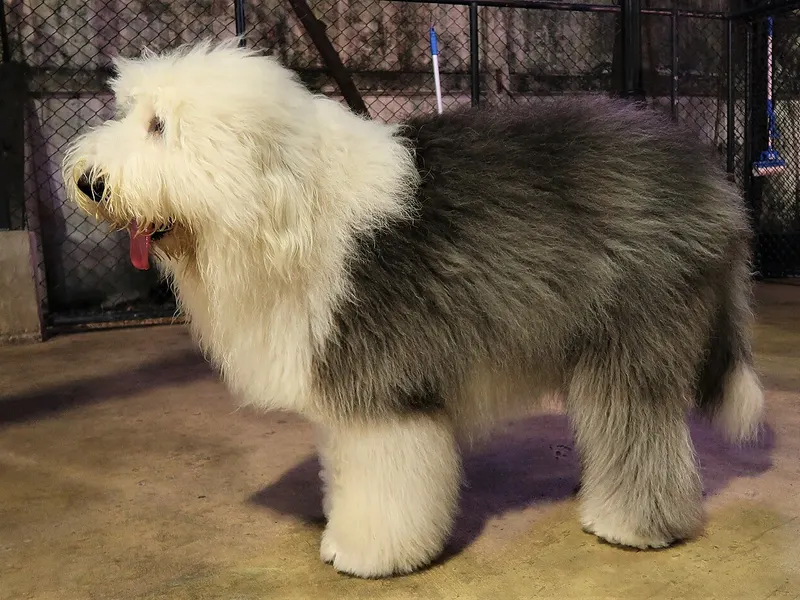
English farmers in the West Country developed the Old English Sheepdog in the 19th century primarily as a drover's dog, tasked with driving sheep and cattle to market over long distances rather than the closer, tighter herding work associated with breeds like the Border Collie. The breed's traditional docked tail — the source of its old nickname "Bobtail" — was historically tied to English tax law, which exempted working dogs from certain levies while pet dogs were taxed, giving drovers a practical financial incentive to dock their dogs' tails as visible proof of working status; that practice has become far less common as tail-docking laws have tightened in much of the world. The breed's thick, shaggy coat provided genuine protection from weather and rough terrain during long droving trips, a practical origin for what's now primarily a show-ring and companion trait. The AKC recognized the breed in 1888, and it later became a well-known advertising mascot for Dulux paint in the United Kingdom.
Common health predispositions
- Hip dysplasia
- Cataracts
- Congenital deafness
Temperament
Bred to work independently over long distances moving livestock, the Old English Sheepdog developed a temperament that's affectionate, playful, and notably good-natured — remarkably gentle and patient for such a large breed, and a genuinely strong match for households with kids or other pets already in the mix. Trainability is solidly good, though the breed's independent droving heritage means it isn't quite as automatically obedient as some closely-directed herding breeds. Old English Sheepdogs are generally friendly with strangers rather than reserved, a temperament that reflects their historical role moving livestock through public roads and markets rather than guarding isolated property.
Living with a Old English Sheepdog
Forty-five minutes of daily activity is a moderate, manageable requirement for a breed this size, though the coat is where the real time commitment lives: the profuse, shaggy double coat mats easily without near-daily brushing, and many pet owners keep the coat trimmed shorter than the dramatic full-length show coat specifically to make home grooming realistic. Breed health surveys point to hip dysplasia, cataracts, and congenital deafness as the conditions most worth screening for. Because the coat traditionally covers the eyes entirely, some trimming around the face matters for the dog's actual vision and comfort, not just appearance, and owners who let the coat grow completely natural need to watch for eye irritation from constant hair contact. The breed's size and dense coat also mean genuine heat sensitivity in warmer climates, and owners in hot regions often plan cooling strategies and shorter, more frequent walks rather than long midday exercise. Despite the demanding coat care, the Old English Sheepdog's famously easygoing, playful temperament has kept it a consistently popular family breed for well over a century.
FAQ
Why was the Old English Sheepdog's tail traditionally docked?
English tax law once exempted working dogs from certain levies while taxing pet dogs, giving drovers a practical financial incentive to dock their dogs' tails as visible proof of working status — the origin of the breed's old nickname, 'Bobtail.' The practice has become far less common as docking laws have tightened in much of the world.
How much grooming does an Old English Sheepdog need?
A very significant, near-daily commitment — the profuse, shaggy double coat mats quickly if brushing lapses even briefly, which is exactly why most pet owners settle for a shorter, easier-to-manage cut rather than chasing the breed's dramatic floor-length show look.
Are Old English Sheepdogs good with kids?
Yes, notably so — despite their large size, the breed is famously gentle and patient, with goodWithKids ratings near the top of the scale, a temperament that reflects centuries of working closely and calmly around livestock and people in public settings.
Why do Old English Sheepdogs have hair over their eyes?
It's part of the breed's traditional profuse coat, though many owners trim around the face for the dog's actual comfort and vision rather than leaving it fully natural, since constant hair contact against the eyes can cause irritation.
Do Old English Sheepdogs handle hot weather well?
Not particularly — the breed's dense, shaggy double coat makes it more heat-sensitive than its working history might suggest, and owners in warm climates typically plan cooling strategies and shorter, cooler-hour walks rather than long midday exercise.
How much exercise does an Old English Sheepdog need?
About 45 minutes daily, a moderate, manageable amount for a breed this size — the demanding part of ownership is the coat, not the exercise schedule.
How big does an Old English Sheepdog get?
Large — typically 60 to 100 pounds and 20 to 22 inches at the shoulder, with a bulky, shaggy coat that makes the breed look even larger than its actual frame.
Was there a real Dulux paint dog?
Yes — a real Old English Sheepdog became the face of Dulux paint advertising in the United Kingdom starting in the early 1960s, an association so enduring that the breed is still sometimes informally called the 'Dulux dog' in Britain decades later.
How long do Old English Sheepdogs live?
Typically 10 to 12 years, a fairly standard range for a large breed, and proactive hip and hearing screening are the main preventive priorities responsible breeders focus on.
Is an Old English Sheepdog a good first dog?
The friendly, easygoing temperament itself is approachable enough, but the near-daily grooming commitment is a genuine barrier that trips up a lot of first-time owners who underestimate it going in.
Do Old English Sheepdogs bark much?
Not excessively — the breed's vocalization runs moderate, and while it will bark at something genuinely notable, it isn't among the more persistently vocal herding breeds in this database.
Related on FetchBreed
Lists this breed appears in
Care equipment for a Old English Sheepdog
As an Amazon Associate we earn from qualifying purchases made through these links, at no extra cost to you.
- Slicker brush
The profuse shaggy coat mats easily without near-daily brushing, this page says.
- Dog grooming clippers
The page notes many pet owners keep the coat trimmed shorter than the show coat specifically to make home grooming realistic.
- Rounded-tip grooming scissors
Trimming around the face is described as mattering for the dog's actual vision and comfort, not just appearance.
- Cooling mat
Real heat sensitivity is flagged here for the size-plus-dense-coat combination in warmer climates.
Whichever breed fits your life, consider adoption or breed-specific rescue first — many purebred and mixed-breed dogs and cats are already waiting for homes.
General breed information, not veterinary advice — consult a vet for your pet's specific health, diet, and behavior needs.