Sporting Group
Norrbottenspets
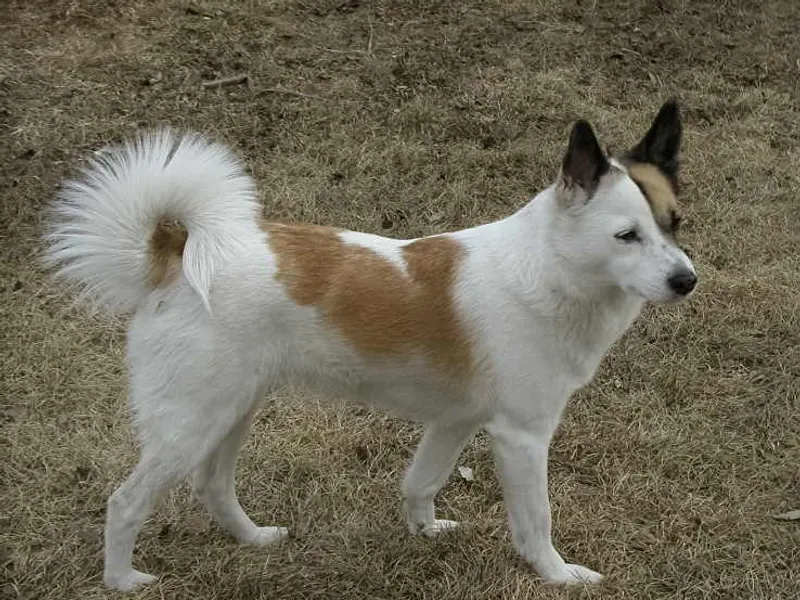
Hunters in Sweden's Norrbotten region developed this small spitz breed over centuries for hunting game birds and small game across northern Scandinavia's forests, and by the mid-20th century agricultural changes and shifting hunting practices had squeezed demand for the type so hard that only a genuinely small handful of dogs survived, prompting dedicated Swedish and Finnish breeders to begin a rebuilding effort starting in the 1960s. That near-extinction and recovery is a central part of the Norrbottenspets's modern identity, and Sweden today recognizes the breed as a genuine national heritage type reflecting its deep ties to traditional Norrlandic hunting culture. The AKC didn't add the breed to its Sporting Group until 2020, a surprisingly late formal step given how far back the Norrbottenspets's actual Scandinavian hunting history genuinely goes. Stateside, awareness of it barely extends beyond a small pocket of bird-hunting enthusiasts already tuned into Nordic spitz-type hunting breeds.
Common health predispositions
- Generally very healthy breed
- Patellar luxation (uncommon)
Temperament
Alert, energetic, and genuinely eager, the Norrbottenspets carries real bird-hunting drive in a compact, agile frame, a working intensity built through centuries of use pointing and flushing game across Scandinavian forest terrain. At home, most individuals turn out genuinely affectionate and sociable, a somewhat more approachable temperament than some other primitive-type hunting breeds show. Real intelligence and eagerness to please translate into strong trainability too, and the breed is often noted by Nordic hunting enthusiasts as quicker to pick up commands than its relatively modest international profile might suggest. Swedish and Finnish breed clubs continue actively promoting the Norrbottenspets specifically to maintain the genetic diversity rebuilt so carefully after the breed's mid-20th-century near-disappearance.
Living with a Norrbottenspets
Energy runs high in this hunting breed, and a genuine 75 minutes daily is what it takes to satisfy it, ideally with an actual bird-hunting or scent-work outlet rather than plain exercise alone. Coat maintenance is refreshingly easy — an occasional brush handles the short, dense, weather-resistant fur just fine. Health-wise the Norrbottenspets does genuinely well, a real payoff from its careful mid-20th-century population rebuild off a relatively broad founding base, with only occasional patellar luxation worth a passing mention to a breeder. Real energy and genuine sociability suit an active hunting or outdoor-focused household rather than a sedentary one. Domestic litters stay scarce given the breed's recent 2020 AKC recognition, and working with Scandinavian import contacts is a realistic backup plan for anyone not willing to wait indefinitely. Between the low grooming demands and the breed's overall hardiness, ongoing costs land on the affordable end for a sporting breed this size.
FAQ
Did the Norrbottenspets almost go extinct?
Yes, genuinely — the breed came remarkably close to disappearing by the mid-20th century as agricultural and hunting-practice changes reduced demand for it, dwindling to a small handful of surviving dogs before dedicated Swedish and Finnish breeders rebuilt the population starting in the 1960s.
When did the AKC recognize the Norrbottenspets?
Not until 2020 — a surprisingly late formal step for a breed whose actual Scandinavian hunting history in Sweden's Norrbotten region stretches back several centuries before that.
Is the Norrbottenspets a healthy breed?
Yes, genuinely so — the careful, broad-based mid-20th-century population rebuild left the breed with few serious inherited concerns, patellar luxation being about the only item worth flagging to a breeder.
What does a Norrbottenspets hunt?
Traditionally game birds and small game across northern Scandinavia's forests, work that shaped the breed's compact, agile build and genuine pointing and flushing instincts still very much intact in the breed today.
Is a Norrbottenspets good with families?
Generally yes — most individuals are genuinely affectionate and sociable at home, a somewhat more approachable temperament than some other primitive-type hunting breeds show, combined with real trainability that suits an active family.
How big does a Norrbottenspets get?
A genuinely small hunting breed, typically 20 to 33 pounds and 15.5 to 18.5 inches at the shoulder, compact enough to move nimbly through dense forest undergrowth while flushing birds, closer in build to a spitz-type companion dog than to a larger, heavier-boned pointing breed.
Is the Norrbottenspets related to other Nordic spitz breeds?
Yes, distantly — it shares broader Scandinavian spitz ancestry with breeds like the Swedish Lapphund and Norwegian Buhund, though it developed along its own specialized path as a dedicated bird-hunting dog rather than the more all-purpose herding and camp-guarding roles those cousins historically filled.
What colors does a Norrbottenspets come in?
Mostly white with red, yellow, or reddish-brown patches, a pattern that gives the breed real practical visibility for hunters tracking it through dense Scandinavian forest cover, unlike the more uniformly dark or solid colors common among several other Nordic spitz-type breeds.
Related on FetchBreed
Whichever breed fits your life, consider adoption or breed-specific rescue first — many purebred and mixed-breed dogs and cats are already waiting for homes.
General breed information, not veterinary advice — consult a vet for your pet's specific health, diet, and behavior needs.