Working Group
Giant Schnauzer
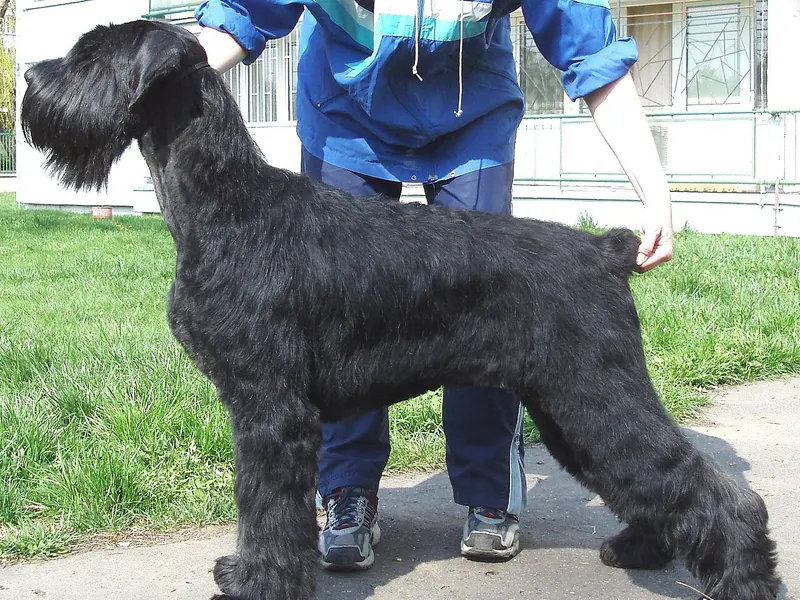
Germany's brewers and cattle drovers needed something bigger than the standard Schnauzer to guard wagons and stock yards, and by the late 1800s Bavarian and Württemberg breeders had scaled the type up using Bouvier des Flandres, Great Dane, and rough-coated sheepdog blood. The result kept the trademark wiry coat, beard, and eyebrows but added real size and working drive. World War I interrupted development, and the breed's numbers stayed thin outside German-speaking Europe for decades; it wasn't until the mid-20th century that Giant Schnauzers gained traction in the US as police and personal-protection dogs. That working pedigree still shows — this is a dog bred to think independently and act on its own judgment, not merely execute commands. The Pinscher-Schnauzer Klub in Germany formalized breed standards for all three Schnauzer sizes in the early 20th century, and the Giant variety specifically earned recognition as a distinct breed in 1925, decades after the Standard Schnauzer had already been established as a type. Munich's beer-hall district is frequently cited as the breed's original working ground, where Giant Schnauzers reportedly guarded delivery wagons loaded with beer barrels against theft overnight — a job requiring both size and a dog alert enough to work unsupervised for hours.
Common health predispositions
- Hip dysplasia
- Autoimmune thyroiditis
- Bloat
Temperament
Intelligence and stubbornness arrive in the same package here. A Giant Schnauzer learns fast, often faster than its handler expects, but that same quick mind gets bored with repetition and will start improvising if training feels pointless. Loyalty runs deep and territorial instincts are strong, which makes early, deliberate socialization essential rather than optional — an unsocialized Giant Schnauzer can default to suspicion of strangers and other dogs. With its own family, most owners describe a dog that's watchful but not anxious, playful in short bursts, and genuinely tuned in to household routines. The breed's police and personal-protection work in mid-20th-century Germany relied on a temperament that could distinguish genuine threats from routine activity without constant handler direction, and that same discerning judgment remains a defining trait in well-bred modern lines, even those raised purely as family companions rather than working dogs.
Living with a Giant Schnauzer
This isn't a breed that thrives on a walk around the block. Ninety minutes of real daily work — structured training, a job, hard physical exertion — keeps a Giant Schnauzer's mind occupied enough to stay out of trouble; under-exercised individuals tend to invent their own entertainment, which owners rarely enjoy. The wiry double coat needs hand-stripping or clipping roughly every 6-8 weeks along with regular brushing between sessions to prevent matting around the beard and legs, and loose hair shed is minimal enough that allergy-sensitive households sometimes do better with the breed than with a heavy-shedding dog, though no dog is ever fully allergen-free. Hip dysplasia, autoimmune thyroiditis, and bloat all appear in the breed's health record, and given the guarding heritage, it's worth checking whether local housing or insurance policies name large guardian breeds before committing. This is a breed that suits an experienced, physically active owner far better than a first-time dog owner or a household hoping for a low-maintenance companion — the combination of size, intelligence, and guarding drive rewards real structure and punishes neglect. Rescue organizations dedicated specifically to Giant Schnauzers and the broader Schnauzer family exist in most regions and are worth checking before buying from a breeder, since working-line dogs surrendered by owners who underestimated the exercise and training commitment are not uncommon.
FAQ
Are Giant Schnauzers good with kids?
They can be, especially when raised with children from puppyhood, but their size and strong-willed nature mean supervision matters more here than with a naturally softer breed — training the dog and coaching the kids both count.
Do Giant Schnauzers need a job?
Functionally, yes. This breed was built for structured work, and without an outlet — obedience sport, protection training, serious hiking, anything demanding — a Giant Schnauzer tends to find its own project, which usually means something the owner didn't sign up for.
How much grooming does a Giant Schnauzer actually need?
Plan on hand-stripping or clipping every 6-8 weeks plus brushing a couple of times a week in between; skip it and the wiry coat mats fast, especially around the furnishings on the legs and face.
Is a Giant Schnauzer the same as a Standard Schnauzer, just bigger?
Not quite — while the Giant shares the same wiry coat and general silhouette as the Standard and Miniature Schnauzers, it was developed with additional Bouvier des Flandres, Great Dane, and rough-coated sheepdog blood specifically to add size and working capability, making it a genuinely distinct breed rather than a simple size variant.
How much does a Giant Schnauzer cost to keep monthly?
Budget roughly $110-180 a month once food, routine vet care, and professional grooming every 6-8 weeks are factored in — the grooming line item alone tends to surprise new owners coming from a short-coated breed.
Do Giant Schnauzers do well in dog sports?
Very well — the breed excels in obedience, protection sport, and agility given its combination of intelligence, physical capability, and genuine enjoyment of structured work, making organized dog sports one of the better outlets for its considerable drive.
Related on FetchBreed
Care equipment for a Giant Schnauzer
As an Amazon Associate we earn from qualifying purchases made through these links, at no extra cost to you.
- Terrier stripping knife
Hand-stripping or clipping roughly every six to eight weeks is what this page prescribes for the wiry double coat.
- Steel grooming comb
Matting around the beard and legs is named here specifically, and a comb is the tool for both.
Whichever breed fits your life, consider adoption or breed-specific rescue first — many purebred and mixed-breed dogs and cats are already waiting for homes.
General breed information, not veterinary advice — consult a vet for your pet's specific health, diet, and behavior needs.