Herding Group
German Shepherd Dog
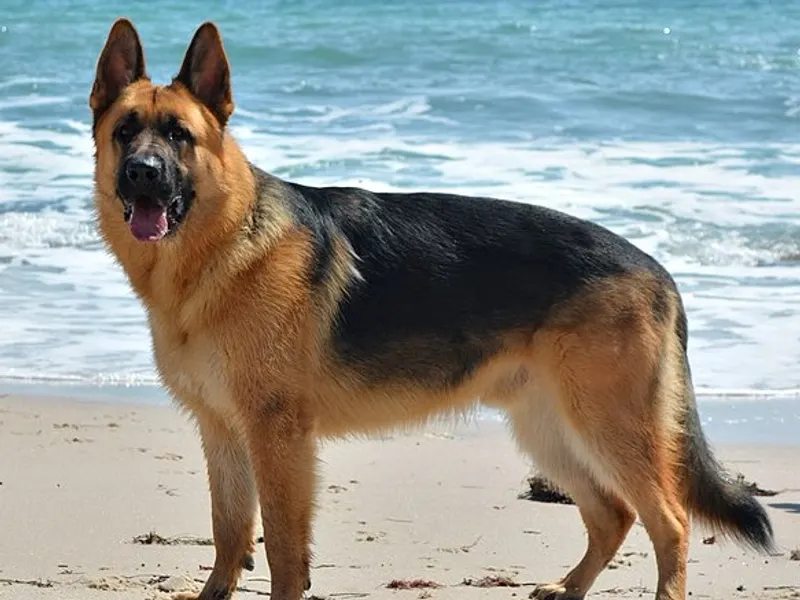
Captain Max von Stephanitz standardized the German Shepherd Dog in 1899 by consolidating regional German herding dogs into a single working breed, explicitly prioritizing utility over appearance — his founding sire, Horand von Grafrath, was chosen for intelligence and working ability, not looks. That utilitarian philosophy carried the breed from sheep herding into police, military, and service-dog work through the 20th century, and it remains the standard against which most working-dog training programs measure trainability today. The breed briefly carried the name 'Alsatian' in Britain and 'Shepherd Dog' in America during and after World War I, when anti-German sentiment made the original name politically unpalatable; the AKC restored 'German Shepherd Dog' to the official name in 1931.
Common health predispositions
- Hip/elbow dysplasia
- Degenerative myelopathy
- Bloat
Temperament
German Shepherds combine very high trainability with a naturally protective, watchful streak — they bond closely with their household but are typically reserved rather than immediately friendly with strangers, a trait breeders selected for deliberately given the breed's guarding roots. This is not a dog that does well without a job; under-stimulated GSDs commonly develop anxiety-driven behaviors like excessive barking or destructiveness. Well-bred, well-socialized lines are stable and confident rather than nervous, but the breed does have documented lines with fear-based reactivity, which is why temperament testing and meeting the parents matters more here than for many breeds. Structured activities like nose work, IGP/schutzhund, or advanced obedience give the breed's working intelligence a legitimate outlet, and many trainers specifically recommend a 'job' beyond walks — even simple tasks like carrying a backpack on hikes — to satisfy the breed's need for purposeful work.
Living with a German Shepherd Dog
GSDs need 75+ minutes of real physical and mental work daily — herding-bred dogs of this caliber get bored on leash walks alone and do better with structured training, dog sports (IGP, agility, nose work), or a job to do. The medium double coat sheds heavily and constantly, colloquially nicknamed the 'German shedding dog' by owners, and shedding season means daily brushing rather than weekly. Degenerative myelopathy, a progressive spinal cord disease with a known genetic marker, is a serious concern specific to this breed along with hip/elbow dysplasia and bloat risk from its deep chest — DM-tested breeding stock and slow-feed bowls to reduce bloat risk are both worth asking about before buying a puppy. Working-line GSDs (bred for police/military/sport work) and show-line GSDs (bred for the conformation ring, often with a more sloped topline) differ meaningfully in both drive and, some veterinary orthopedists argue, structural soundness — a working-line dog is a poor fit for a household that wanted a calmer companion, and a prospective owner should ask specifically which lineage a puppy comes from rather than assuming all GSDs are alike. The breed's herding heritage also means many individuals do best with a consistent daily routine; GSDs are known to be sensitive to disruption in schedule or household stability.
FAQ
Are German Shepherds good for first-time dog owners?
Not typically recommended — the breed's combination of high energy, high intelligence, and a protective temperament requires consistent training and socialization that an inexperienced owner can struggle to provide, and an under-trained GSD can develop serious behavioral issues.
What is degenerative myelopathy?
A progressive disease of the spinal cord that causes hind-leg weakness and eventual paralysis, typically appearing in older dogs. It has a known genetic marker that reputable breeders can test for, though a positive marker doesn't guarantee the dog will develop the disease.
Do German Shepherds get along with other pets?
It varies more than in many breeds — some GSDs coexist fine with cats and other dogs they're raised with, but the breed's herding and protective instincts mean early, deliberate introductions matter more than they would for a naturally gregarious retriever-type breed.
What's the difference between working-line and show-line German Shepherds?
Working lines are bred primarily for drive and performance in police, military, or sport contexts and tend to be higher-energy; show lines are bred toward the conformation standard, including a more sloped topline that some orthopedic veterinarians have raised soundness concerns about. Ask a breeder which lineage a puppy comes from before assuming a general breed description applies evenly.
Who standardized the German Shepherd Dog breed?
Captain Max von Stephanitz, a former German cavalry officer, is credited with founding the breed in 1899 after purchasing a wolf-like herding dog named Hektor at a dog show, and he spent decades afterward promoting the breed specifically as a versatile working dog for police, military, and herding roles rather than primarily as a show breed.
Related on FetchBreed
Comparisons
- German Shepherd Dog vs Australian Cattle Dog
- German Shepherd Dog vs Australian Shepherd
- German Shepherd Dog vs Belgian Malinois
- German Shepherd Dog vs Border Collie
- German Shepherd Dog vs Collie
- German Shepherd Dog vs German Shorthaired Pointer
- German Shepherd Dog vs Golden Retriever
- German Shepherd Dog vs Goldendoodle
- German Shepherd Dog vs Labradoodle
- German Shepherd Dog vs Labrador Retriever
- German Shepherd Dog vs Pembroke Welsh Corgi
- German Shepherd Dog vs Shetland Sheepdog
Care equipment for a German Shepherd Dog
As an Amazon Associate we earn from qualifying purchases made through these links, at no extra cost to you.
- De-shedding tool
The page repeats the owners' nickname, German shedding dog, and says shedding season means daily brushing rather than weekly.
Whichever breed fits your life, consider adoption or breed-specific rescue first — many purebred and mixed-breed dogs and cats are already waiting for homes.
General breed information, not veterinary advice — consult a vet for your pet's specific health, diet, and behavior needs.