Foundation Stock Group
Formosan Mountain Dog
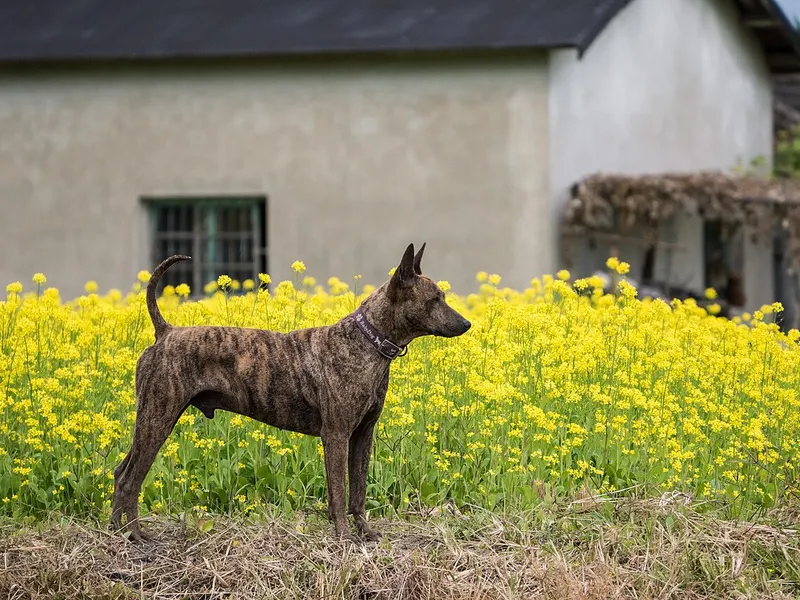
This landrace breed developed largely without deliberate human selective breeding across the mountainous terrain of Taiwan, where it existed for centuries as a semi-wild or village dog surviving on natural selection and general utility to local communities rather than any formal breeding program, giving it a genuinely different origin story from most Western breeds shaped by targeted selective breeding for specific traits. Taiwanese conservation and cultural organizations began formal efforts to document, protect, and standardize the Formosan Mountain Dog only in more recent decades, motivated partly by real concern that indiscriminate crossbreeding with imported Western dogs was eroding the landrace's distinct genetic identity. The breed carries real cultural significance in Taiwan today as a recognized symbol of the island's indigenous natural heritage, and Taiwanese breed societies actively promote both domestic ownership and international recognition as part of that broader preservation effort. The Formosan Mountain Dog remains genuinely rare outside Taiwan and holds no AKC recognition, appealing mainly to owners specifically interested in landrace and primitive-type breeds.
Common health predispositions
- Generally healthy landrace breed
- Hip dysplasia less common than in many purebreds
Temperament
Alert, genuinely intelligent, and notably self-sufficient, the Formosan Mountain Dog carries real landrace hardiness shaped by generations of natural selection rather than deliberate temperament breeding, a background that shows up as a dog with strong survival instincts and real problem-solving ability. Loyalty to its own family runs deep once a bond is established, though genuine wariness toward strangers and other dogs is common, reflecting the breed's semi-wild village-dog history rather than any formally bred guarding trait. Real athleticism and agility come naturally too, useful traits for a dog whose ancestors navigated Taiwan's genuinely rugged mountain terrain without human assistance. Taiwanese conservation groups increasingly use the Formosan Mountain Dog in search-and-rescue and working-dog demonstrations specifically to showcase the breed's real natural capability to a domestic and international audience.
Living with a Formosan Mountain Dog
This is a genuinely athletic landrace breed that wants real activity — figure on 75 minutes daily plus actual mental engagement given how naturally intelligent and independent-minded it is. Coat care is refreshingly simple: the short, dense fur needs little beyond an occasional brush. As a landrace shaped mainly by natural selection rather than deliberate breeding for appearance, the Formosan Mountain Dog is widely considered generally healthy, with a notably lower rate of hip dysplasia than many purebred dogs of similar size, though as with any less formally documented breed, comprehensive health-registry data remains limited. A more self-directed dog than most, cool toward strangers and used to making its own calls, this breed needs an experienced owner rather than someone hoping for reflexive obedience out of the box. Locating one outside Taiwan takes real effort given how rare the breed stays internationally, and most interested US owners end up working through specialist import channels or dedicated online communities rather than conventional breeders. Day-to-day costs stay modest given the breed's general hardiness and minimal grooming needs, but shipping and import paperwork add a real, separate expense for anyone pursuing one from outside Taiwan.
FAQ
What is a landrace breed?
A landrace is a breed that developed largely through natural selection and general environmental adaptation rather than deliberate human breeding programs — the Formosan Mountain Dog is a genuine example, having existed for centuries as a semi-wild or village dog across Taiwan's mountainous terrain.
Is the Formosan Mountain Dog AKC recognized?
No formal AKC status exists for this breed, and its footprint stays vanishingly small beyond Taiwan, where locally it carries real cultural weight as a recognized symbol of the island's indigenous natural heritage rather than a formally standardized show breed.
Is a Formosan Mountain Dog good with strangers?
Often genuinely wary, reflecting the breed's semi-wild village-dog history rather than any deliberately bred guarding trait — this is a dog that bonds deeply with its own family but doesn't default to easy trust with unfamiliar people.
How healthy is the Formosan Mountain Dog?
Generally quite healthy — as a landrace shaped mainly by natural selection rather than breeding for appearance, it shows a notably lower rate of hip dysplasia than many purebred dogs of similar size, though comprehensive health-registry data remains limited.
Can you get a Formosan Mountain Dog in the US?
Not easily — its rarity beyond Taiwan means most interested American owners end up working through specialist import channels or dedicated online communities rather than any conventional domestic breeder network.
What does the Formosan Mountain Dog actually look like?
A medium-sized, wedge-headed dog with erect triangular ears, a tightly curled or sickle tail, and a short, dense coat usually in brindle, black, white, or sesame — a lean, athletic silhouette that closely mirrors other East Asian primitive-type dogs shaped mainly by function rather than any deliberate cosmetic breeding program.
Related on FetchBreed
Whichever breed fits your life, consider adoption or breed-specific rescue first — many purebred and mixed-breed dogs and cats are already waiting for homes.
General breed information, not veterinary advice — consult a vet for your pet's specific health, diet, and behavior needs.