Hound Group
Cirneco dell'Etna
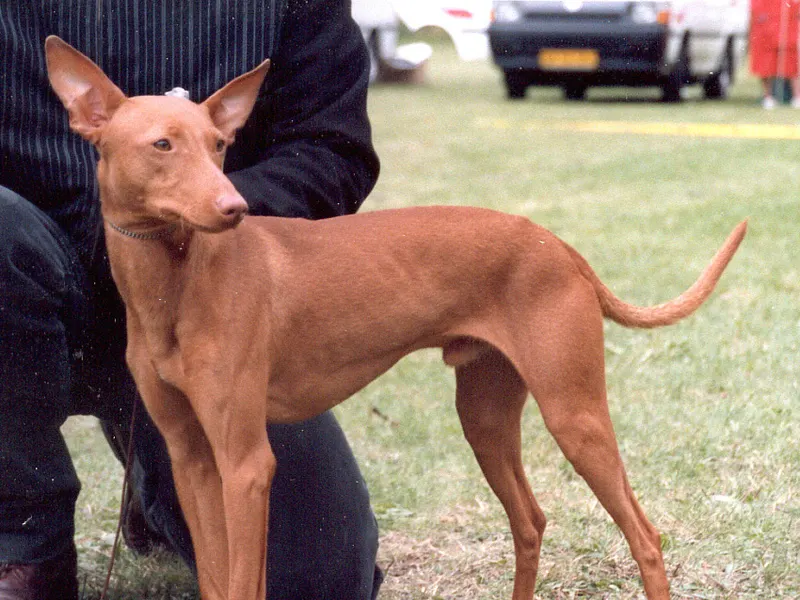
Ancient coins minted in Sicily as far back as the 5th century BCE depict small, prick-eared hunting dogs that breed historians and archaeologists widely believe represent an early form of the Cirneco dell'Etna, giving this breed one of the more concretely documented ancient lineages among AKC hound breeds, quite unlike breeds whose old age is more speculative than physically evidenced. The name references Mount Etna, the active volcano dominating eastern Sicily near where the breed developed and has been used for centuries to hunt rabbit across the region's harsh, rocky volcanic terrain, a landscape that shaped the breed's lean, agile build and genuine heat tolerance. Sicilian hunters traditionally worked the Cirneco largely independently rather than in coordinated packs, a working style that left the breed with real self-sufficiency and confidence distinct from more pack-oriented scent hounds developed elsewhere in Europe. Despite its long documented history, the Cirneco dell'Etna remained almost entirely unknown outside Sicily until the mid-20th century, when Italian breed enthusiasts began actively promoting and standardizing it for wider recognition. AKC recognition came in 2015, and the breed remains genuinely rare in the US even now, appealing mostly to a small circle of dedicated sighthound-and-scenthound enthusiasts drawn to its unusual combination of ancient pedigree and modern obscurity.
Common health predispositions
- Patellar luxation
- Generally few documented hereditary issues
Temperament
Independent, intelligent, and genuinely self-assured, the Cirneco dell'Etna carries a working confidence shaped by centuries of hunting largely on its own initiative across difficult volcanic terrain rather than under close pack direction. Italian breed clubs promoting the Cirneco internationally through the mid-to-late 20th century emphasized preserving exactly this working temperament rather than softening it for the show ring, a preservation effort that shows in how much real hunting drive still runs through the modern breed. At home, that same dog tends to soften considerably, genuinely gentle and affectionate with its own people, though wariness toward strangers is common enough that early socialization matters for producing a well-adjusted adult. That independent streak means training rewards patience over repetition, and an owner expecting reflexive obedience from a breed shaped by centuries of solo hunting decisions is likely to be surprised by how much the Cirneco thinks for itself.
Living with a Cirneco dell'Etna
An hour of genuine daily activity suits this athletic, agile hound well, and secure fencing matters given real prey drive and the breed's natural inclination to hunt small animals independently. The short, glossy coat asks for almost nothing beyond an occasional brush-over. This is a genuinely healthy breed by most accounts — limited but consistently positive veterinary literature points to patellar luxation as close to the only condition worth routine screening for, a shorter list than most AKC breeds carry. A household drawn to an ancient, independent-minded hound with real athleticism and minimal grooming demands, and prepared for genuine reserve toward strangers, tends to do well with a Cirneco dell'Etna. Given the breed's continued rarity in the US, dedicated rescue is essentially nonexistent, and prospective owners work almost exclusively with the small number of established breeders. Monthly costs run reasonably moderate given the low grooming needs and generally sound health, though the breed's rarity can push acquisition costs higher than for more common hound breeds.
FAQ
Is the Cirneco dell'Etna really depicted on ancient coins?
Yes — Sicilian coins minted as far back as the 5th century BCE show small, prick-eared hunting dogs that breed historians and archaeologists widely believe represent an early form of this breed, giving it a more concretely documented ancient lineage than most breeds claiming similar age.
What does 'Cirneco dell'Etna' mean?
It references Mount Etna, the active volcano dominating eastern Sicily near where the breed developed, hunting rabbit for centuries across the region's harsh, rocky volcanic terrain.
Is the Cirneco dell'Etna a healthy breed?
Generally yes, and notably so — the available veterinary literature points to patellar luxation as close to the only condition worth routine screening for, a considerably shorter health-issue list than most AKC breeds carry.
Is the Cirneco dell'Etna good with strangers?
Not automatically — genuine wariness toward unfamiliar people is common enough given the breed's history hunting largely on its own initiative, which is why early, consistent socialization matters for producing a well-adjusted adult.
How much exercise does a Cirneco dell'Etna need?
Around an hour of genuine daily activity suits this athletic, agile breed well, and secure fencing is essential given its real, independent prey drive toward small animals.
How old is the Cirneco dell'Etna as a breed?
Very old — most breed historians trace it to sighthounds brought to Sicily by Phoenician traders roughly two thousand years ago, and it developed in relative isolation on the slopes of Mount Etna hunting rabbits over rough volcanic terrain, a history that left it looking remarkably similar to dogs depicted in ancient Sicilian coins and artifacts.
Related on FetchBreed
Whichever breed fits your life, consider adoption or breed-specific rescue first — many purebred and mixed-breed dogs and cats are already waiting for homes.
General breed information, not veterinary advice — consult a vet for your pet's specific health, diet, and behavior needs.