Sporting Group
Chesapeake Bay Retriever
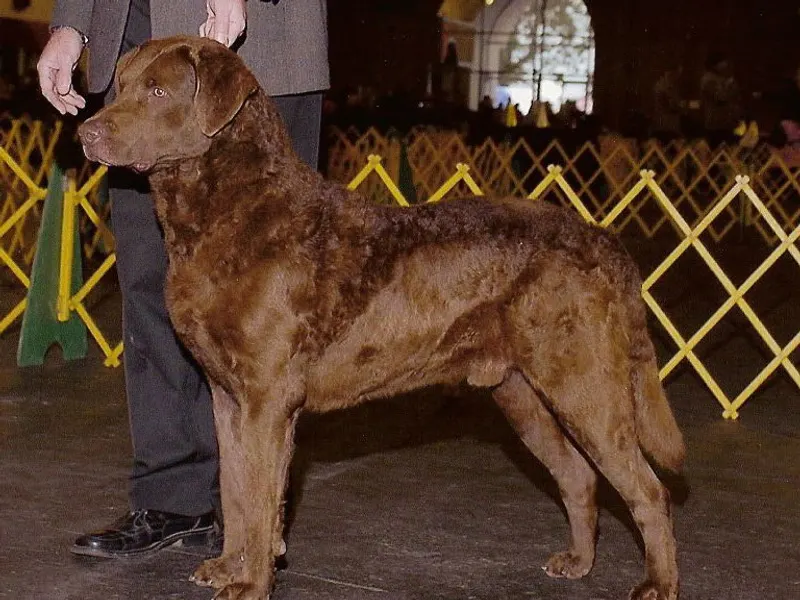
The Chesapeake Bay Retriever's origin traces to 1807, when two Newfoundland-type puppies were rescued from a shipwrecked English brig off the Maryland coast and later bred into local retrieving stock around the Chesapeake Bay; watermen wanted a dog tough enough to retrieve waterfowl through the Bay's icy, rough winter waters all day, and the breed's harsh, oily, water-resistant coat and unusually powerful build were selected specifically for that punishing work rather than for appearance. The AKC recognized the breed in 1878, making it one of the older American-developed sporting breeds in the registry, and it remains an official state dog of Maryland, a rare honor tied directly to its documented origin along the Chesapeake Bay.
Common health predispositions
- Hip dysplasia
- Progressive retinal atrophy
- Bloat
Temperament
The 'Chessie' is noticeably more independent and protective than its Sporting-group retriever cousins, with a temperament shaped by working alone with a single waterman in demanding conditions rather than in the more social gun-dog packs some other retrievers came from; the breed is loyal and affectionate with its own family but tends toward genuine reserve with strangers, a trait that makes it a better natural watchdog than a Labrador or Golden. Trainability is good but requires a firmer, more consistent hand, since the breed's independent streak means it won't always defer automatically the way a more biddable retriever will. Chessies also tend to bond most strongly with one household or handler, and rehoming an adult dog can be a genuinely harder adjustment for this breed than for the more universally adaptable Labrador or Golden.
Living with a Chesapeake Bay Retriever
About 75 minutes of vigorous exercise, ideally including swimming, suits the breed's working heritage well — Chessies were built for exactly that kind of demanding, cold-water retrieving work. The distinctive wavy, oily double coat is genuinely low-maintenance for how much protection it provides, needing only weekly brushing, though it sheds heavily and carries a stronger natural 'doggy' odor than smooth-coated breeds due to the oils that make it water-resistant. Hip dysplasia and progressive retinal atrophy, an inherited eye condition causing gradual vision loss, are both documented in the breed, and bloat risk from the deep chest applies here as it does across most large sporting and working breeds. The breed's coat comes in shades described as sedge, deadgrass, and brown, all selected historically to blend into the marsh grasses and reeds of the Chesapeake Bay rather than for any cosmetic show-ring preference, a reminder of how thoroughly function drove this breed's development. A small white patch on the chest, feet, or chin is accepted within the breed standard, another practical holdover that helped watermen visually track individual dogs in low light. Because the breed is less common than the Labrador or Golden, Chesapeake puppies also tend to be harder to find from reputable breeders and often come with longer waitlists.
FAQ
Is a Chesapeake Bay Retriever a good guard dog?
More so than most retriever breeds — the Chessie's history working independently for a single waterman gave it a genuinely more reserved, watchful temperament toward strangers than the Labrador or Golden Retriever, making it a reasonable natural watchdog despite its retriever classification.
Why does a Chesapeake Bay Retriever's coat smell stronger than other retrievers'?
The breed's harsh, wavy, oily coat evolved specifically for water resistance and insulation in cold Chesapeake Bay waters, and those same natural oils produce a stronger characteristic odor than the drier coats of Labradors or Goldens — regular but not over-frequent bathing helps manage it without stripping the coat's protective oils.
Are Chesapeake Bay Retrievers easy to train?
Trainable but more independent-minded than a Labrador — Chessies respond well to consistent, confident handling but are less automatically eager to please, a reflection of their history working alone in demanding conditions rather than in closely supervised gun-dog settings.
Is the Chesapeake Bay Retriever a state symbol?
Yes — it's the official state dog of Maryland, a designation tied directly to its documented origin developing along the Chesapeake Bay from a pair of shipwrecked Newfoundland-type puppies in the early 1800s.
How did the Chesapeake Bay Retriever breed begin?
The founding story is unusually specific for a dog breed: two Newfoundland-type puppies survived an 1807 shipwreck off the Maryland coast and were raised and bred into local retrieving stock, with their toughness and water ability so valued by Chesapeake Bay watermen that the resulting type was deliberately developed into today's breed.
What makes the Chesapeake Bay Retriever's coat different from a Labrador's?
The Chesapeake's coat is oily, wavy, and noticeably harsher to the touch than a Labrador's short dense coat, an adaptation that traces to the breed's origin retrieving waterfowl in the icy, choppy waters of the Chesapeake Bay, and that oily texture sheds water more effectively, letting the dog work repeatedly in cold water without becoming waterlogged.
Related on FetchBreed
Whichever breed fits your life, consider adoption or breed-specific rescue first — many purebred and mixed-breed dogs and cats are already waiting for homes.
General breed information, not veterinary advice — consult a vet for your pet's specific health, diet, and behavior needs.