Herding Group
Briard
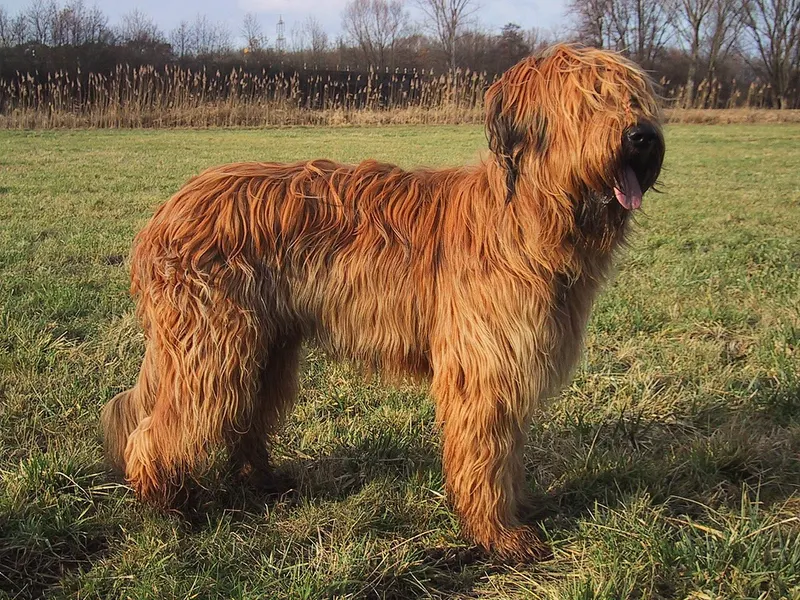
France's Briard developed over centuries as an all-purpose farm dog, both herding and guarding livestock, and the breed's working versatility carried it into a genuinely different role in the early 20th century: Napoleon's armies reportedly used dogs of this type as sentries, and later, during World War I, Briards served formally with the French military finding wounded soldiers on battlefields and carrying supplies, work credited with keeping the breed's population from collapsing during a period when many working farm-dog breeds declined sharply in France. One of the breed's most distinctive physical traits, a double dewclaw on each rear leg, is required by the breed standard and is generally believed to have helped the dog maintain stability while working across rough, uneven pasture terrain. The AKC recognized the Briard in 1928.
Common health predispositions
- Hip dysplasia
- Bloat
- Congenital stationary night blindness
Temperament
Bred for both herding and guarding duties, the Briard carries a temperament that's protective and watchful with strangers but genuinely affectionate and playful with its own family, producing solidly good compatibility with children who are part of the household. Trainability is good but requires real consistency; the breed's history working with considerable independence on French farms means Briards don't automatically defer the way some more closely handled herding breeds do. Having spent centuries doing both jobs at once, the Briard carries real wariness toward unfamiliar people and animals, which is exactly why early, thorough socialization matters so much for this breed specifically.
Living with a Briard
An hour of daily exercise, including mentally engaging work like herding-style games or training, suits the Briard's working intelligence well. The long, coarse double coat needs substantial regular brushing to prevent matting, and while it isn't the very highest-maintenance coat in the herding group, it's a genuine, ongoing time commitment given the coat's length and density. Hip dysplasia and bloat, a serious risk tied to the breed's deep chest, are both documented concerns, and congenital stationary night blindness, an inherited condition affecting vision specifically in low light, has been closely enough studied in the Briard that DNA testing for the responsible gene exists. The breed's distinctive double rear dewclaws require regular nail trimming just like any other claw, since they don't wear down naturally from ground contact the way front paw nails sometimes do. Given the Briard's protective instincts and substantial size, consistent socialization and training from puppyhood matter more for this breed than for many companion-oriented dogs, and prospective owners should expect a genuine, ongoing training commitment rather than a one-time puppy class.
FAQ
Why does a Briard have double dewclaws on its back legs?
It's a distinctive trait required by the breed standard, generally believed to have helped the dog maintain stability while working across rough, uneven pasture terrain in its original farm-guarding and herding role.
Did Briards serve in wars?
Yes — Briards served with the French military during World War I, finding wounded soldiers on battlefields and carrying supplies, work credited with helping sustain the breed's population during a period when many working farm-dog breeds in France declined sharply.
Are Briards good guard dogs?
Very much so — centuries spent both herding and guarding French farms left the breed with real protective instincts and a natural wariness toward strangers, though that watchfulness needs thorough, early socialization to stay appropriate rather than tipping into excess suspicion.
How much grooming does a Briard need?
A substantial, ongoing commitment — the long, coarse double coat needs regular brushing to prevent matting, though it's not quite as demanding as some of the very highest-maintenance herding-breed coats.
What is congenital stationary night blindness in Briards?
An inherited condition specifically affecting a dog's vision in low light, studied closely enough in the Briard that a DNA test exists for the responsible gene, letting reputable breeders screen breeding stock and avoid producing affected puppies.
How much exercise does a Briard need?
About an hour daily, including mentally engaging work — the breed's herding intelligence means training games and structured activity pay off more than a simple walk alone.
How big does a Briard get?
Large — typically 55 to 100 pounds and 22 to 27 inches at the shoulder, a substantial build reflecting the breed's dual role guarding and herding livestock across French farmland.
Is a Briard a good family dog?
Yes, for the right household — the breed is genuinely affectionate and playful with its own family and generally good with children who are part of the home, though its protective instincts call for consistent socialization from puppyhood.
How long do Briards live?
Ten to 12 years is normal for a large breed like this, and breeders who build hip and eye screening into their routine health testing tend to produce dogs that reach that range in better shape.
Is a Briard a good first dog?
Protective instincts, substantial size, and independent herding intelligence together call for consistent, confident handling — the kind an experienced dog owner brings more readily than a true beginner does.
What colors do Briards come in?
Black, gray, and various shades of tawny all fall within the breed standard, none of them carrying any documented connection to the dog's actual temperament or working ability.
Do Briards do well with other pets?
Reasonably, with proper socialization — the breed's guarding instincts mean genuine caution around unfamiliar animals is normal, but a Briard raised alongside other household pets from puppyhood generally adapts well.
Is the Briard a rare breed?
Relatively, yes, at least outside France — the breed remains far less commonly bred in the U.S. than many other herding breeds, meaning prospective owners should expect a longer search and possible waitlist for a puppy.
Related on FetchBreed
Lists this breed appears in
Whichever breed fits your life, consider adoption or breed-specific rescue first — many purebred and mixed-breed dogs and cats are already waiting for homes.
General breed information, not veterinary advice — consult a vet for your pet's specific health, diet, and behavior needs.