Working Group
Black Russian Terrier
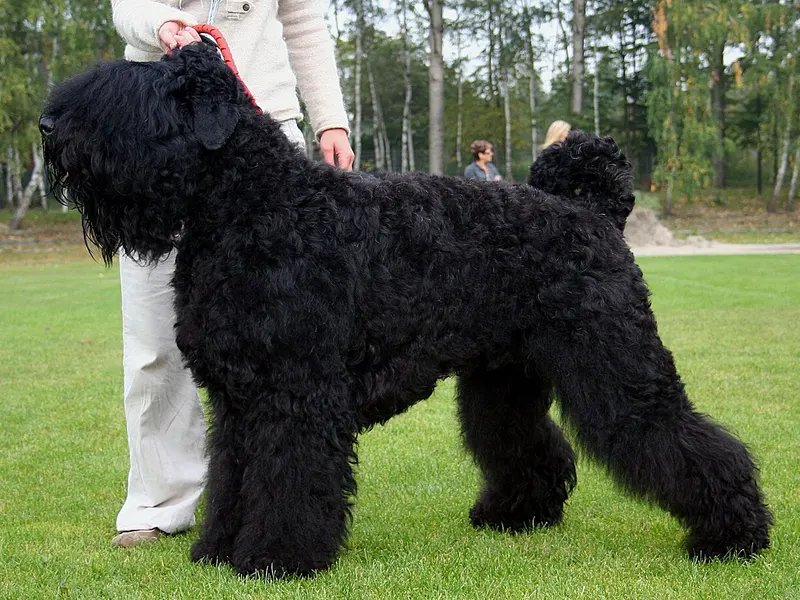
The Soviet military's Red Star Kennel developed the Black Russian Terrier in the years following World War II, deliberately crossing around 17 different breeds including the Giant Schnauzer, Rottweiler, and Airedale Terrier to produce a working military and guard dog suited to harsh climate conditions and demanding service work — the breed's name is somewhat misleading, since it isn't a true terrier by ancestry despite the classification. The program's goals were purely functional rather than aesthetic, prioritizing hardiness, trainability, and imposing size, and the breed remained largely confined to Soviet military and police use for decades before spreading internationally after the Cold War ended. AKC recognition followed in 2004. The Red Star Kennel's breeding program was headquartered at a Soviet military facility and operated with genuinely systematic, scientific rigor uncommon in most breed-development programs, testing working ability across multiple generations before settling on the final cross combination. The breed remained essentially unknown outside the USSR until the late 1980s, when glasnost-era openness allowed the first breeding pairs to be exported to Western Europe and eventually the US.
Common health predispositions
- Hip/elbow dysplasia
- Subaortic stenosis
- Progressive retinal atrophy
Temperament
Purpose-built for serious working roles, the Black Russian Terrier is confident, courageous, and genuinely protective, a temperament that reflects its military-guardian design rather than a casual companion breeding program. With its own family, most individuals are calm and affectionate, sometimes surprisingly gentle given the breed's imposing size and working intensity, but strangers and unfamiliar dogs can meet real suspicion without deliberate socialization starting early. A first-time owner hoping for a naturally easygoing dog is likely to find this breed a poor match — training and structure matter from day one. The systematic Soviet breeding program behind this breed prioritized working stability under stress over flashiness or showiness, and that engineering shows up in the modern dog as genuine steadiness even in situations that might rattle a more excitable breed, a trait valued highly in the original military and police applications.
Living with a Black Russian Terrier
Sixty minutes of structured daily exercise, ideally combined with training work that engages the breed's considerable intelligence, keeps a Black Russian Terrier both physically and mentally satisfied. The coarse, wiry double coat needs regular brushing plus periodic trimming to manage length and prevent matting, though shedding itself stays fairly light, a modest upside for allergy-sensitive owners who should still spend time with the specific dog before assuming compatibility. Given the size and serious guarding instincts bred deliberately into the line, local housing and insurance policies are worth checking before bringing a puppy home, and hip/elbow dysplasia, subaortic stenosis, and progressive retinal atrophy are the other conditions worth asking a breeder about directly. A household able to provide consistent structure, led by an experienced owner genuinely committed to training, is what this breed needs — a first-time owner or anyone hoping for instant warmth toward strangers should look elsewhere. Black Russian Terrier rescue remains quite limited in the US given the breed's small population, typically coordinated informally through the national breed club rather than dedicated rescue infrastructure.
FAQ
Is a Black Russian Terrier actually a terrier?
Not by ancestry — despite the name, the breed was developed from a mix of around 17 breeds including Giant Schnauzer, Rottweiler, and Airedale Terrier for Soviet military use, and functions more like a large guardian working breed than a true terrier.
Are Black Russian Terriers good with kids?
With their own family and proper socialization, many are calm and affectionate around children, but the breed's size and serious guarding instincts mean supervision and early training matter significantly more than with a naturally soft family breed.
How much grooming does a Black Russian Terrier need?
Regular brushing plus periodic professional trimming keeps the coarse, wiry coat manageable, though loose shedding itself stays fairly minimal compared to many double-coated breeds of similar size.
When did the Black Russian Terrier reach the West?
Not until the late 1980s — the breed remained essentially confined to the USSR's military and police programs until the glasnost period of Soviet openness allowed the first breeding pairs to be exported, reaching the US shortly after.
How many breeds went into creating the Black Russian Terrier?
Around 17 different breeds contributed to the original Red Star Kennel program, including the Giant Schnauzer, Rottweiler, and Airedale Terrier as the most significant influences, in a deliberately systematic breeding effort testing working ability across generations.
Do Black Russian Terriers make good family pets, or are they strictly working dogs?
Many now live successfully as family companions, particularly with experienced owners who provide consistent structure, though the breed's serious size and protective instincts mean it suits a household prepared for a genuine guardian dog rather than a purely social companion.
Related on FetchBreed
Lists this breed appears in
Whichever breed fits your life, consider adoption or breed-specific rescue first — many purebred and mixed-breed dogs and cats are already waiting for homes.
General breed information, not veterinary advice — consult a vet for your pet's specific health, diet, and behavior needs.