Herding Group
Beauceron
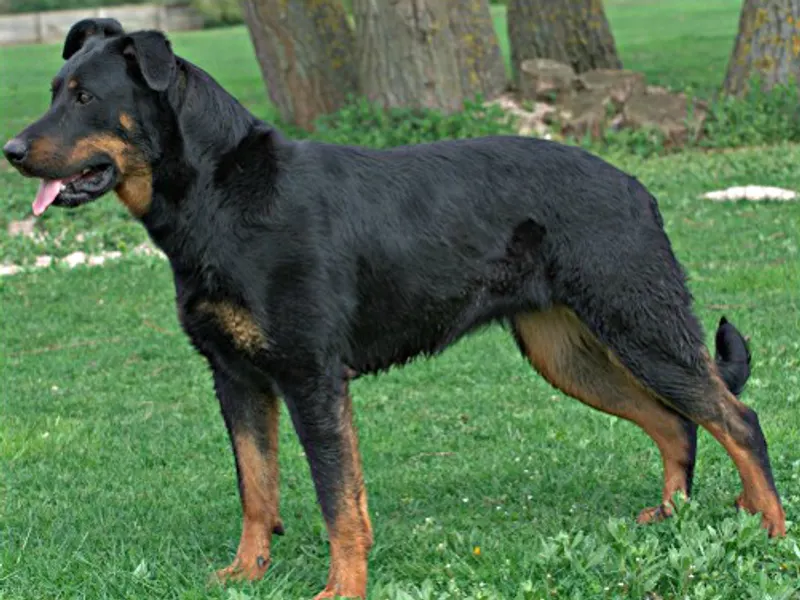
French shepherds in the plains around Beauce have relied on this breed for centuries to herd and guard sheep, and written references to a dog matching the Beauceron's description date back to at least the 1500s, making it one of France's oldest herding breeds, distinct from its rough-coated cousin the Briard by its short, smooth coat and notably larger, more powerful build. The breed took on a second working role during both World Wars, serving French forces as a messenger dog, minesweeper, and Red Cross search dog, duties that further reinforced selection for a stable, confident, highly trainable temperament. AKC recognition, through Foundation Stock Service before full recognition, came relatively recently despite the breed's long working history. Napoleon reportedly favored the breed, and French military records from both World Wars document Beaucerons serving in genuinely dangerous roles, including running messages across active front lines and locating wounded soldiers for Red Cross units, work that carried real casualty risk for the dogs involved. The French national breed club, the Club des Amis du Beauceron, has maintained unusually strict health-testing requirements for registered breeding stock since the mid-20th century, a rigor some breed historians credit for the Beauceron's comparatively strong overall health record among large working breeds.
Common health predispositions
- Hip dysplasia
- Bloat
- Progressive retinal atrophy
Temperament
Confidence without aggression describes the Beauceron well — this is a breed bred to guard and herd independently, which produces a dog that's naturally watchful and protective but not reflexively hostile when handled and socialized properly. Beaucerons are exceptionally intelligent and trainable, often excelling in obedience and protection sports, though that same intelligence means an under-stimulated dog will find its own outlets, usually destructive ones. With family, most individuals are affectionate and genuinely eager to work, a trait that makes the breed rewarding for an owner willing to put in consistent training time. The breed's role locating wounded soldiers during wartime demanded genuine independent judgment under stressful, chaotic conditions, and that same self-directed problem-solving ability persists in the modern Beauceron as a dog that thinks through a situation rather than waiting passively for instruction, a trait that makes obedience training genuinely more interesting than repetitive drilling.
Living with a Beauceron
Casual walks alone won't cut it — this breed's genuine working drive calls for 90 minutes of vigorous daily exercise combined with training or an actual job. The short, coarse double coat sheds moderately and needs regular brushing, though nothing close to the labor a long-coated herding breed demands. Given the size and serious guarding instincts, it's worth confirming local housing and insurance policies allow the breed before committing. The single most useful question a prospective owner can put to a breeder is a direct one: has this specific line been actively screened for hip dysplasia, bloat, and progressive retinal atrophy? An experienced, active owner who genuinely wants a working partner, not a passive companion, will get the most out of this breed — a sedentary household, or anyone unwilling to provide real daily structure, is a poor match. Beauceron rescue in the US runs through a small but dedicated national breed club, and given the breed's still-modest American population, prospective adopters should expect to wait or consider working directly with a breeder instead.
FAQ
Are Beaucerons good for first-time dog owners?
Not usually — this is a highly intelligent, high-drive working breed that needs consistent training and real exercise, and an inexperienced owner without time for both can end up with a genuinely difficult dog.
What's the difference between a Beauceron and a Briard?
Both are old French herding breeds, but the Beauceron has a short, smooth coat and a notably larger, more powerful build, while the Briard carries the long, shaggy coat most people picture for a French sheepdog.
Did Beaucerons serve in wars?
Yes — the breed worked as messenger dogs, minesweepers, and Red Cross search dogs for French forces during both World Wars, service that reinforced its reputation for trainability and stability under pressure.
Did Beaucerons serve in dangerous wartime roles?
Yes, genuinely dangerous ones — French military records document Beaucerons running messages across active front lines and locating wounded soldiers for Red Cross units during both World Wars, work that carried real risk to the dogs involved.
Did Napoleon actually own a Beauceron?
The claim is widely repeated among French breed enthusiasts, though like much oral breed history from that era, it rests more on tradition than on a documented record connecting a specific dog to the emperor by name. What's better documented is that Beaucerons served extensively in the French military during both World Wars, a role with a far more solid paper trail than the earlier Napoleon-era anecdotes.
Are Beaucerons good with other dogs?
With proper socialization, many do fine with familiar dogs, though the breed's guarding instincts mean introductions to unfamiliar dogs deserve careful management, and same-sex tension can occasionally surface as it does in several protective working breeds.
Related on FetchBreed
Whichever breed fits your life, consider adoption or breed-specific rescue first — many purebred and mixed-breed dogs and cats are already waiting for homes.
General breed information, not veterinary advice — consult a vet for your pet's specific health, diet, and behavior needs.