Foundation Stock Group
American Bulldog
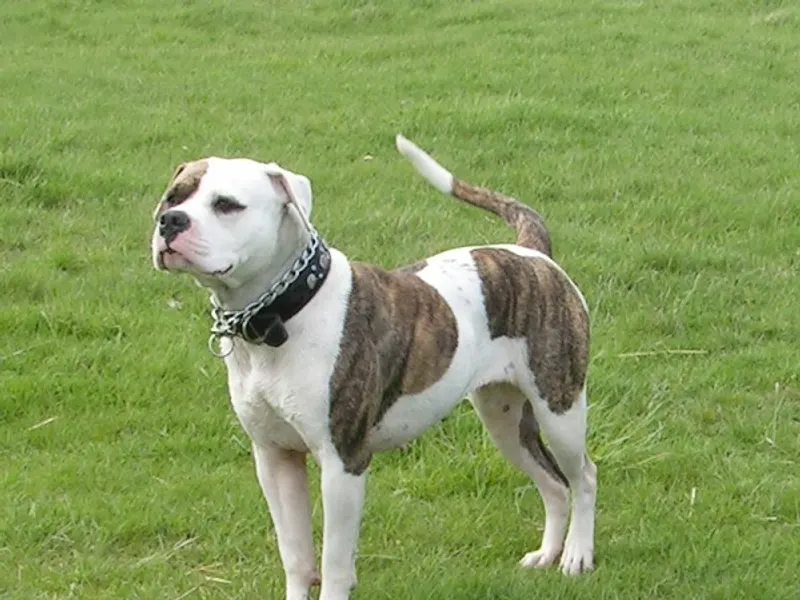
Southern US farmers kept working bulldog-type dogs for generations, using them for catching feral hogs, guarding property, and general farm work, and the modern American Bulldog largely traces to breeder John D. Johnson's efforts in the 1970s to preserve and standardize surviving farm bulldog lines that had nearly disappeared after World War II. Two general types emerged from slightly different foundation lines — a bigger-boned Johnson or classic type and a leaner, more athletic performance type sometimes called the Scott type — both still recognized informally within the breed today. The United Kennel Club recognized the American Bulldog in 1999; the AKC has not granted full recognition, and the breed remains in the Foundation Stock Service. Breeder Alan Scott's parallel efforts in the same era focused on producing a leaner, more athletic working line distinct from John D. Johnson's bigger-boned foundation dogs, and the resulting Scott-Johnson naming convention for the breed's two general types persists in breeder terminology today even though most modern American Bulldogs carry some blend of both lines. The breed's working role historically included hog-catching and cattle-driving on Southern farms, a physically demanding job that shaped its athletic build.
Common health predispositions
- Hip/elbow dysplasia
- Ichthyosis
- Cranial cruciate ligament tears
Temperament
American Bulldogs are typically confident, athletic, and genuinely affectionate with their own family, a combination that reflects the breed's working farm-dog history rather than a purely companion-focused breeding program. Protective instincts run real, and most individuals are naturally watchful of strangers without being reflexively aggressive when properly socialized. This is a physically powerful, high-drive breed, and undertrained or under-socialized individuals can become a genuine handful — early, consistent training matters more here than with a naturally laid-back breed. The breed's dual heritage from both the bigger-boned Johnson line and the leaner Scott performance line means individual temperament can lean toward either a calmer, more deliberate guardian disposition or a higher-energy, more athletically driven personality, and asking a breeder which lineage dominates in a specific litter gives real insight into what to expect.
Living with a American Bulldog
Athletic performance lines still run through much of this breed, and 60 minutes of vigorous daily activity is closer to what it actually needs than a casual stroll. Grooming stays simple, just occasional brushing for the short, smooth coat, but the bigger ongoing consideration is legal: American Bulldogs are frequently swept into breed-specific legislation targeting bully-type dogs by appearance, regardless of an individual dog's actual temperament, so confirming local housing and insurance rules ahead of time matters. Hip and elbow dysplasia, ichthyosis, a skin condition, and cranial cruciate ligament tears round out what's worth asking a breeder about. This breed suits an active family with secure fencing and genuine commitment to training and socialization — it's a poor fit for an inexperienced owner or a household unwilling to verify local breed-specific legislation before committing. American Bulldog rescue is relatively accessible given the breed's larger US population compared to some other breeds in this batch, with dedicated breed rescues operating in many regions alongside frequent shelter placements.
FAQ
Is the American Bulldog AKC recognized?
Not yet with full recognition — the breed sits in the AKC's Foundation Stock Service program, while the United Kennel Club has recognized it fully since 1999.
Are American Bulldogs banned anywhere?
In some municipalities, yes, often as part of broader breed-specific legislation targeting bully-type breeds by appearance rather than the American Bulldog by name specifically, so local research matters before committing to the breed.
How much exercise does an American Bulldog need?
A genuine 60 minutes of vigorous daily activity suits this athletic working breed well; under-exercised individuals tend to channel that energy into less welcome behaviors around the house.
What's the difference between Johnson and Scott type American Bulldogs?
The Johnson or "classic" type tends toward a bigger-boned, more mastiff-like build, while the Scott or "performance" type is leaner and more athletic, reflecting the two breeders' somewhat different foundation lines from the mid-20th-century revival — most modern American Bulldogs blend traits from both.
Is the American Bulldog easy to find through rescue?
Relatively, yes — given its larger US population compared to some rarer breeds, American Bulldogs and American Bulldog mixes appear fairly often in both breed-specific rescues and general shelters.
Are American Bulldogs good with other pets in the household?
With early socialization, many do well with familiar household pets, though the breed's working farm-dog background included catching feral hogs, and unfamiliar small animals can trigger a stronger prey response than a purely companion-bred breed might show.
How is the American Bulldog different from the English Bulldog?
The American Bulldog is taller, more athletic, and considerably less exaggerated in facial structure than the modern English Bulldog, reflecting its history as a working farm dog used for catching feral hogs and guarding property in the rural American South well into the 20th century, long after the English Bulldog had shifted almost entirely toward a show and companion role.
Related on FetchBreed
Lists this breed appears in
Whichever breed fits your life, consider adoption or breed-specific rescue first — many purebred and mixed-breed dogs and cats are already waiting for homes.
General breed information, not veterinary advice — consult a vet for your pet's specific health, diet, and behavior needs.