Working Group
Alaskan Malamute
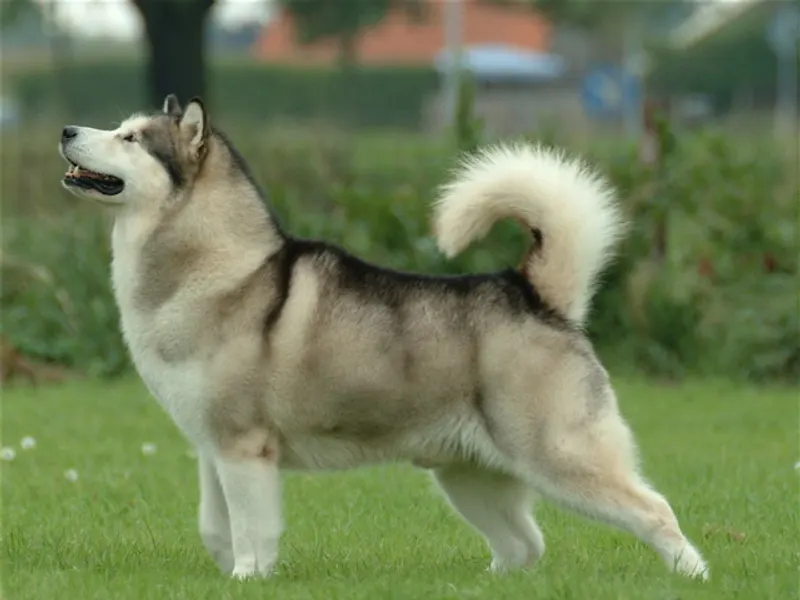
The Alaskan Malamute takes its name from the Mahlemut, an Inupiaq people of Alaska's upper Kobuk River region who bred these dogs over centuries specifically for hauling heavy freight across the Arctic — power and endurance mattered more to their work than speed, which is the key distinction between the Malamute and the leaner, faster Siberian Husky it's often confused with. Malamutes served on Byrd's Antarctic expeditions in the 1930s and in military sled-dog units during World War II, work that demonstrated the breed's pulling capacity under genuinely extreme conditions. AKC recognition came in 1935, and the breed standard still explicitly rewards the powerful, deep-chested build suited to freight-hauling over the more streamlined racing conformation prized in sprint sled breeds.
Common health predispositions
- Hip dysplasia
- Hypothyroidism
- Inherited polyneuropathy
Temperament
Malamutes were bred to work in teams under a musher's direction rather than to guard a home or bond exclusively with one person, and that history shows up as a temperament that's friendly and largely indifferent to strangers — this is not a watchdog breed despite its size and wolfish look. The flip side of centuries spent hauling loads and hunting seals with Arctic communities is a genuine prey drive and strong pack instinct, meaning goodWithOtherPets compatibility runs low, particularly with small animals and sometimes with unfamiliar dogs of the same sex. Malamutes are intelligent but independent-minded working dogs, not naturally deferential, and training goes best with an owner who can stay patient and consistent rather than expecting Labrador-level automatic compliance.
Living with a Alaskan Malamute
This is a serious-commitment breed on the exercise front: figure on 90 minutes of real daily activity, and a bored, under-exercised Malamute reliably turns that energy toward digging, escaping, or destructive chewing rather than settling quietly. The thick double coat blows out twice a year in dramatic seasonal sheds that call for daily brushing during those stretches, on top of a steady baseline of shedding the rest of the year. Hip dysplasia and hypothyroidism are both documented in the breed at meaningful rates, and an inherited polyneuropathy affecting nerve and muscle function has been specifically tracked in some Malamute lines, giving reputable breeders a reason to screen for it. Despite the northern build, the breed's dense coat makes hot, humid climates genuinely harder on a Malamute than most people expect, and owners in warm regions typically plan around shaded rest areas and cooler-hour walks. Malamutes are also notable diggers by instinct — a holdover from ancestors who dug snow dens for warmth — and a securely fenced yard with dig-proofing at the base of the fence line heads off a common escape route.
FAQ
What's the difference between an Alaskan Malamute and a Siberian Husky?
Both are Arctic sled breeds, but they were bred for different jobs — the Malamute for hauling heavy freight over long distances, favoring power and endurance, and the Husky for faster, lighter-load sprint racing, favoring speed. The Malamute is typically larger and heavier-boned as a result.
Are Alaskan Malamutes good guard dogs?
No — the breed's working history involved cooperating with a team and a musher rather than guarding territory, and Malamutes are generally friendly toward strangers, making them poor watchdogs despite their imposing size.
Do Malamutes get along with cats and small dogs?
Often not reliably — the breed retains genuine prey drive from its hunting and sled-team history, and goodWithOtherPets compatibility ratings run low, especially with small animals; early, careful introduction matters a great deal here.
Do Malamutes shed a lot?
Constantly, and then some — on top of steady year-round shedding, the thick double coat blows out dramatically twice annually, and those stretches basically demand daily brushing to keep the loose undercoat from taking over the house.
Why do Malamutes dig so much?
It's an instinctive behavior inherited from ancestors that dug snow dens for insulation and warmth in the Arctic; a securely fenced yard with the fence line dug in or reinforced at the base heads off the breed's tendency to dig its way out.
Do Alaskan Malamutes need a cold climate to be happy?
Not strictly, but they do best with genuine consideration for the heat — the dense double coat that insulates against Arctic cold works against the dog in warm regions, so shaded rest areas, air conditioning, and cooler-hour exercise all matter more for a Malamute than for most breeds.
Are Alaskan Malamutes vocal?
They don't bark much, but they howl, a trait closer to their wolf-adjacent Arctic heritage than to typical domestic barking, and many Malamute owners describe the breed's vocalizations as closer to a conversation than an alarm.
How big does an Alaskan Malamute get?
Typically 75 to 85 pounds and 23 to 25 inches at the shoulder for a standard adult, though some individual lines run larger; the breed's powerful, deep-chested build reflects its original job hauling heavy freight rather than the leaner build of sprint-racing sled breeds.
How long do Alaskan Malamutes live?
Commonly 10 to 14 years, a solid range for a large working breed, especially when hip health and hypothyroidism are actively screened for by the breeder rather than left unaddressed.
Is the Alaskan Malamute a good breed for a first-time owner?
A novice without a clear exercise and training plan usually struggles here — this breed's size, independence, and genuine strength really do call for confident, already-experienced handling.
What jobs do Alaskan Malamutes still do today?
Freight-pulling and weight-pull competitions remain the breed's most direct connection to its original working role, and some Malamutes also work in skijoring or recreational sledding, sports that let the breed's genuine hauling instinct find a legitimate modern outlet.
Related on FetchBreed
Comparisons
- Alaskan Malamute vs Akita
- Alaskan Malamute vs Bernese Mountain Dog
- Alaskan Malamute vs Boxer
- Alaskan Malamute vs Cane Corso
- Alaskan Malamute vs Doberman Pinscher
- Alaskan Malamute vs Great Dane
- Alaskan Malamute vs Great Pyrenees
- Alaskan Malamute vs Mastiff
- Alaskan Malamute vs Newfoundland
- Alaskan Malamute vs Portuguese Water Dog
- Alaskan Malamute vs Rottweiler
- Alaskan Malamute vs Saint Bernard
Lists this breed appears in
Care equipment for a Alaskan Malamute
As an Amazon Associate we earn from qualifying purchases made through these links, at no extra cost to you.
- Undercoat rake
The coat here blows out twice a year in seasonal sheds the page says call for daily brushing during those stretches.
- Elevated mesh dog cot
Owners in warm regions are described as planning around shaded rest areas; a raised mesh bed is how airflow gets under a dog this densely coated.
Whichever breed fits your life, consider adoption or breed-specific rescue first — many purebred and mixed-breed dogs and cats are already waiting for homes.
General breed information, not veterinary advice — consult a vet for your pet's specific health, diet, and behavior needs.