Long & Substantial Cats
3 breeds in this group.
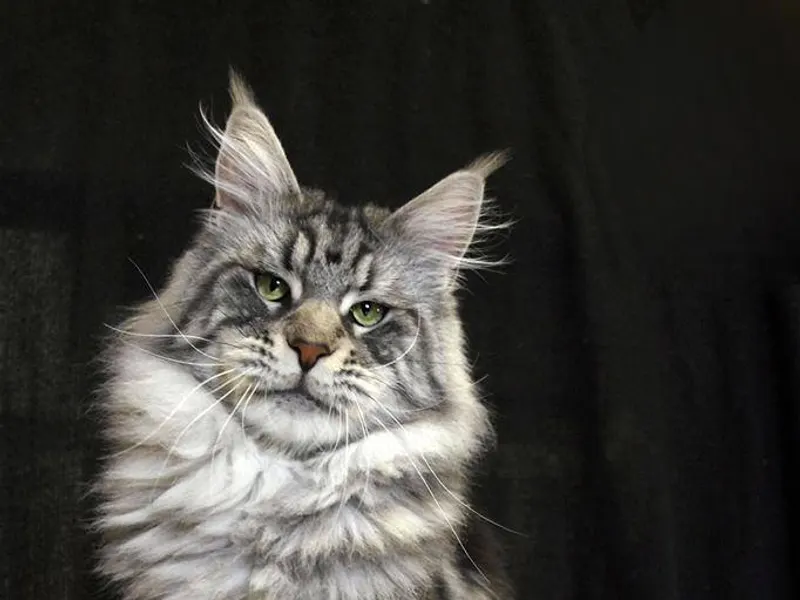
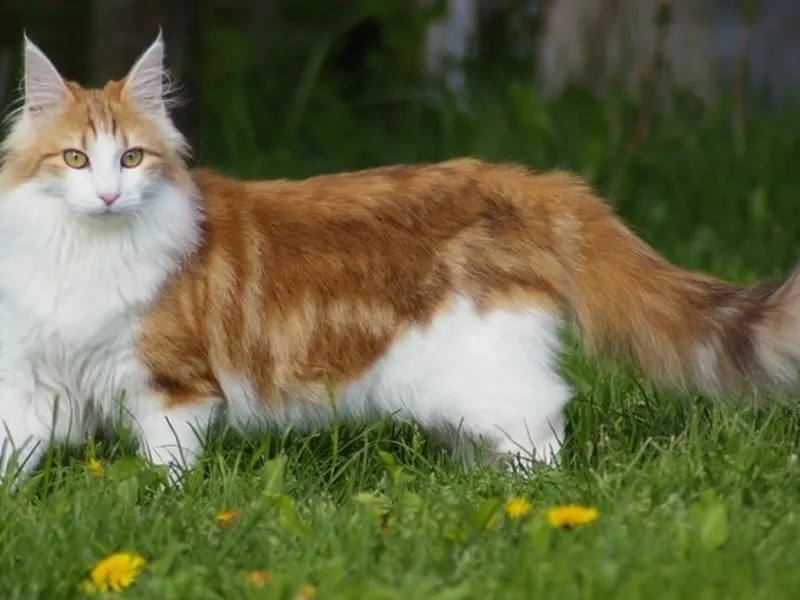
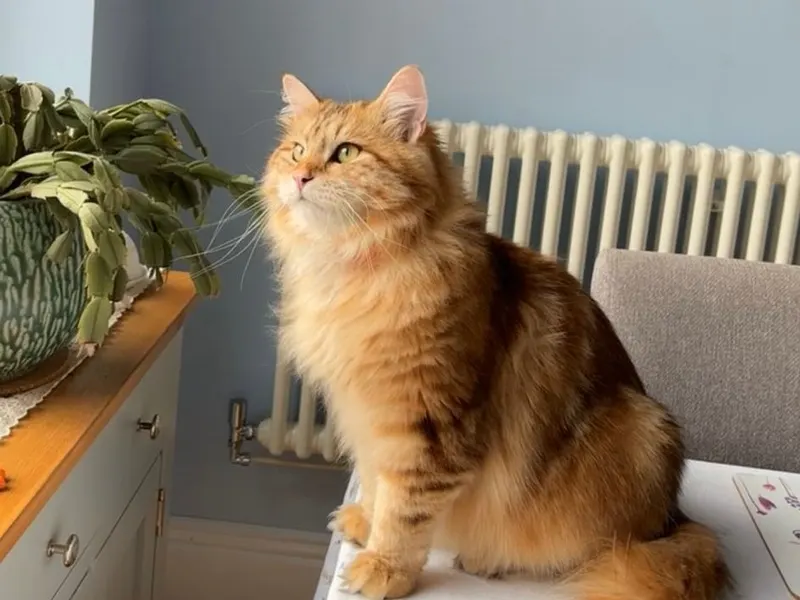
Long and Substantial is a small but distinctive body-type category reserved for large, powerfully built cats with long, muscular bodies, broad chests, and a coat and frame clearly adapted to cold-climate survival rather than to the deliberate show-ring extremes seen in categories like Oriental or Rex — every breed here is a natural landrace that developed through generations of practical, largely un-engineered selection in a harsh northern climate, which sets this category apart as one of the few on this site where "big" reflects genuine environmental adaptation rather than a chosen aesthetic. The Maine Coon is the largest generally recognized domestic cat breed and one of very few breeds genuinely native to North America, developed in the state of Maine over generations of cats surviving harsh New England winters, likely from a mix of local farm and ship's cats with some long-haired ancestry introduced through European trading vessels docking in New England ports during the colonial and early American period. Its exact origin carries more folklore than most breeds — a persistent but genetically impossible legend claims descent from a cross between a domestic cat and a raccoon, inspired by the breed's bushy, ringed-looking tail and common brown tabby coloring, which is worth debunking clearly since cats and raccoons cannot interbreed at all; a more plausible, if still not fully verified, theory credits Marie Antoinette's cats, allegedly sent ahead to Maine during a failed escape attempt from revolutionary France, though most cat historians treat this as charming legend rather than documented fact too. What is well documented is the breed's practical cold-weather engineering: large, tufted paws that function almost like snowshoes, a heavy water-resistant coat, and a long, bushy tail the cat can wrap around its face and body for warmth while sleeping outdoors — all genuinely functional adaptations rather than cosmetic show traits, which is a meaningful distinction from several breeds in other body-type categories on this site whose most extreme features were bred in for appearance rather than survival. The Norwegian Forest Cat developed under strikingly similar climate pressures a continent away, as a landrace surviving Scandinavian winters for centuries, referenced in Norwegian folklore and mythology going back to Viking-era sagas, where large, forest-dwelling cats are described in terms that plausibly match the modern breed's size and coat. Norway has taken active steps to preserve the breed as a piece of national heritage — a formal breeding and conservation program began in Norway in the 1930s specifically to protect the landrace from being absorbed into the broader domestic and Persian gene pool as those more commercially bred cats spread into Scandinavian towns and cities, and the breed carries genuinely similar cold-weather adaptations to the Maine Coon (a dense, water-shedding double coat and large paws) despite the two breeds having developed independently on opposite sides of the Atlantic, a strong example of convergent evolution shaped by similar environmental pressure rather than shared ancestry. The Siberian, the category's third and geographically most eastern member, developed as a landrace across Russia over what breed historians believe is a very long, largely undocumented period, likely many centuries, surviving Siberian and broader Russian winters with an even denser triple-layered coat than either the Maine Coon or Norwegian Forest Cat carry, built to withstand genuinely extreme cold. The Siberian has picked up an additional, more recent reputation worth mentioning honestly: it's frequently marketed as hypoallergenic, based on some limited studies suggesting certain Siberian cats produce lower levels of the Fel d 1 protein primarily responsible for human cat allergies than the average domestic cat — but this finding varies considerably between individual cats within the breed rather than holding uniformly across every Siberian, and allergy sufferers considering the breed specifically for this reason should treat it as a possibility worth testing with a specific cat (through a supervised visit before committing) rather than a guaranteed trait of the breed as a whole. All three breeds in this category share a temperament profile that tracks reasonably well with their shared cold-climate working-cat history: they tend to be confident, adaptable, and notably good with other pets and children relative to some more reserved or high-strung breeds elsewhere in the fancy, likely reflecting generations of selection for cats that could function as practical, sociable farm and barn cats rather than as pampered indoor-only companions from the outset. Their size and dense coats mean genuinely more substantial grooming needs than a typical shorthaired cat — all three benefit from weekly brushing at minimum, more during seasonal coat blows — and their larger frames mean they take longer to reach full physical maturity than most cats, with Maine Coons in particular often not reaching full adult size until three to five years of age, a detail worth knowing so an owner doesn't mistake a still-growing two-year-old for the cat's eventual full size. Grooming for these three breeds, despite their shared large size and dense coats, differs enough in practical detail to spell out individually. The Maine Coon's coat is famously described as "shaggy" rather than uniformly long, longer over the ruff, stomach, and britches (the hind legs) than over the back and shoulders, and this uneven length actually resists matting somewhat better than a uniformly long Persian-style coat, though weekly brushing at minimum remains standard advice, more often during the breed's notable spring shed. The Norwegian Forest Cat carries a true double coat with a dense, wooly undercoat beneath long, coarse guard hairs, and this breed sheds its undercoat dramatically during seasonal transitions, often described by owners as producing visible tufts of loose fur that come out in handfuls rather than gradually. The Siberian's triple-layered coat is the densest of the three, offering the strongest cold-weather insulation, and correspondingly needs the most consistent brushing to prevent the undercoat from matting against the skin, particularly in the months surrounding its major seasonal shed. Feeding and growth management deserve mention given how much larger and slower-maturing these breeds are than a typical cat. Because Maine Coons in particular don't reach full size until three to five years of age, growth-phase nutrition matters more here than for an average breed that reaches adult size within the first year, and many breeders recommend a large-breed or growth-formula kitten food for a longer period than standard advice suggests for other breeds, mirroring similar large-breed growth-management advice given for giant dog breeds. All three breeds, being substantially larger than the average cat, also require correspondingly larger litter boxes, scratching posts, and cat trees sized to their actual adult dimensions rather than standard-sized equipment, a detail easy to overlook when shopping for a kitten who doesn't yet show the size difference. Health themes worth naming directly include hypertrophic cardiomyopathy, a thickening of the heart muscle documented at elevated rates in Maine Coons specifically, with a genetic test now available to screen breeding stock, and hip dysplasia, unusual in cats generally but documented at higher-than-typical rates in Maine Coons given their substantial size and weight, a genuine parallel to the same condition's prevalence in large dog breeds for similar mechanical-load reasons. Because all three breeds in this category carry genuine cold-climate working-cat ancestry, they also tend to do notably well in colder regions and outdoor-access households relative to more purely companion-bred breeds, retaining real physical hardiness that shows up practically as comfort in cold weather and, anecdotally, a stronger interest in supervised outdoor time than some of the more delicate show-bred cobby or oriental breeds discussed elsewhere on this site. Regional popularity for these three breeds varies interestingly across the U.S. and reflects their climate-adapted history to some degree — the Maine Coon remains especially popular in the northeastern United States near its home state, while the Siberian has built a particularly devoted following partly on the strength of its hypoallergenic reputation among allergy-sensitive owners across colder regions generally, a pattern that tracks loosely, if imperfectly, with each breed's original cold-climate working territory. Coat color range across these three breeds is genuinely broad, since none of the three landrace breeds developed under a narrow, deliberately restricted color standard the way some show-focused breeds did, and Maine Coons, Norwegian Forest Cats, and Siberians alike appear in nearly every recognized cat coat color and pattern, a reflection of their natural, largely un-engineered development rather than deliberate color-focused breeding programs. The Maine Coon's official status as Maine's state cat, formally designated by the state legislature in 1985, reflects genuine local pride in a breed whose working farm-cat history is closely tied to the state's own agricultural and maritime past. Maine Coon Cat Clubs across the country continue to hold specialty shows specifically judging the breed against its own detailed standard, distinct from general all-breed shows, giving the breed one of the more active and long-established dedicated fan communities among American-origin cat breeds specifically. Breed founders and early conservationists for the Norwegian Forest Cat specifically worked against real time pressure in the mid-twentieth century, since the breed's landrace population was being steadily absorbed into the broader mixed domestic cat population of Norway's growing cities before the formal 1930s-era conservation effort intervened to document and protect distinct breeding lines. Regional cat shows in the northeastern U.S. and in Scandinavia in particular tend to draw unusually strong representation from the Maine Coon and Norwegian Forest Cat respectively, a pattern that reflects each breed's deep regional identity even now, generations after formal international show standards made both breeds available to owners well outside their original home territories.