Terrier Group
Welsh Terrier
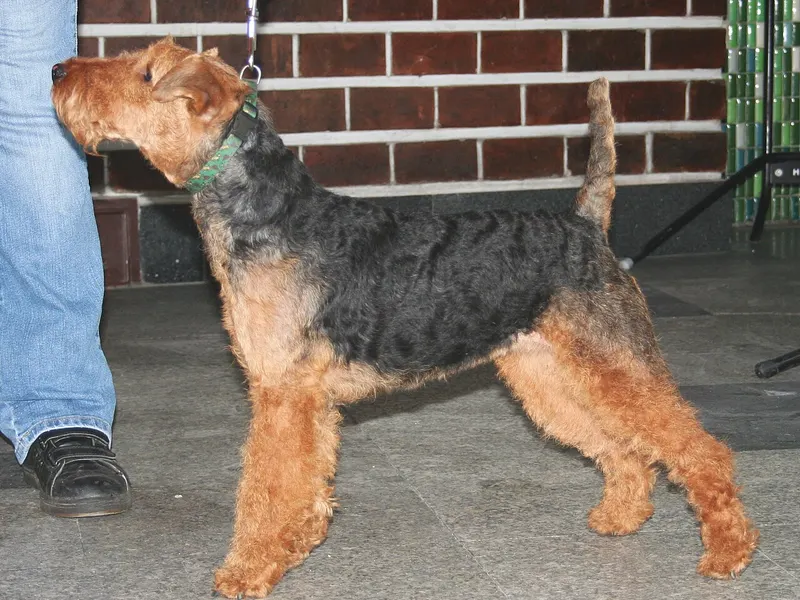
Wales's rugged hill country produced the Welsh Terrier as a working ratter and fox-bolter, and the breed is now considered one of the oldest terrier types still recognizable in something close to its original form, with roots that likely predate many of the more famous English terrier breeds developed later from crosses with it. The AKC recognized the Welsh Terrier in 1888, and the breed's working temperament survived largely intact through its transition to companion and show status, unlike some terrier breeds that softened considerably once bred primarily for the ring. Some breed historians link the Welsh Terrier's development closely to a working terrier type that disappeared from most of England by the late 1800s, arguing it survives most directly in the Welsh Terrier precisely because farmers in isolated Welsh hill regions kept breeding the working type long after fashion elsewhere had moved on. President Richard Nixon notably owned a Welsh Terrier named Vicky during his time in the White House, giving the breed a modest boost in American visibility during the 1970s.
Common health predispositions
- Hip dysplasia
- Glaucoma
- Epilepsy
Temperament
A Welsh Terrier tends to carry itself with real dignity — alert and game like most terriers but generally less scrappy and more even-tempered than some of its cousins, a trait breeders have often pointed to as a distinguishing feature of the type. That doesn't mean docile: the prey drive and independent streak from centuries of working history are still present, and this is a dog that thinks for itself more than it defers automatically. Most individuals do reasonably well with familiar dogs and enjoy an active household, provided training starts early and stays consistent. The breed's comparatively even keel among terriers doesn't eliminate its working instincts entirely, and Welsh Terriers still show real enthusiasm for digging and investigating burrows when given the chance, a trait worth channeling into supervised outdoor exploration rather than expecting it to disappear through training.
Living with a Welsh Terrier
Built for stamina rather than explosive bursts, a Welsh Terrier does well with 60 minutes of daily exercise split between a structured walk and off-leash time in a secure area. The wiry double coat holds its harsh texture best with periodic hand-stripping supplemented by regular brushing; clipping is an option for owners who'd rather skip stripping, though it softens texture and fades color over time. Hip dysplasia, glaucoma, and epilepsy are the breed's more notable documented concerns, worth asking a breeder directly about health-tested lines. A dignified, moderately independent terrier without the more extreme scrappiness of some cousins is what this breed offers, and households with older, considerate children tend to get along with it particularly well. Welsh Terrier rescue is coordinated mainly through breed-club networks given the relatively modest population, and prospective owners should expect a wait for an available rescue dog rather than immediate placement.
FAQ
Is a Welsh Terrier good for a first-time dog owner?
It can work, but this is a genuinely independent-minded terrier that does best with an owner willing to commit to consistent, early training rather than someone hoping for a naturally compliant dog.
Do Welsh Terriers shed much?
Very little — the wiry double coat sheds minimally, though it requires hand-stripping periodically to maintain its texture rather than being a truly no-maintenance coat.
How is a Welsh Terrier different from an Airedale Terrier?
The Welsh Terrier is essentially a smaller-scale version of the same general wire-coated terrier type as the Airedale, sharing similar coat and temperament traits, but standing considerably smaller and generally regarded as one of the older, less-modified terrier lines.
Did a US president own a Welsh Terrier?
Yes — President Richard Nixon's family kept a Welsh Terrier named Vicky in the White House during the early 1970s, a rare moment of mainstream American visibility for what remains a relatively uncommon breed.
Is the Welsh Terrier related to the extinct Black and Tan Terrier?
Many breed historians believe so — the Welsh Terrier is considered the closest living relative to the working type once called the Black and Tan Terrier in England, a lineage that vanished in most of Britain but survived specifically in isolated Welsh hill-farming communities.
Is a Welsh Terrier a good watchdog?
Reasonably alert without being excessively vocal, the breed tends to notice and announce genuinely unusual activity while staying calmer than some terrier breeds about routine household noise, striking a moderate balance many owners appreciate.
Is the Welsh Terrier one of the oldest terrier breeds?
It's often cited as such — the breed's lineage likely runs back centuries in Wales, closely tied to the now-extinct black-and-tan working terriers once common across Britain, and its appearance and proportions have changed comparatively little since formal breed standards were first written in the 19th century, unlike some terrier breeds substantially reshaped for the show ring.
Related on FetchBreed
Lists this breed appears in
Whichever breed fits your life, consider adoption or breed-specific rescue first — many purebred and mixed-breed dogs and cats are already waiting for homes.
General breed information, not veterinary advice — consult a vet for your pet's specific health, diet, and behavior needs.