Hound Group
Tyrolean Hound
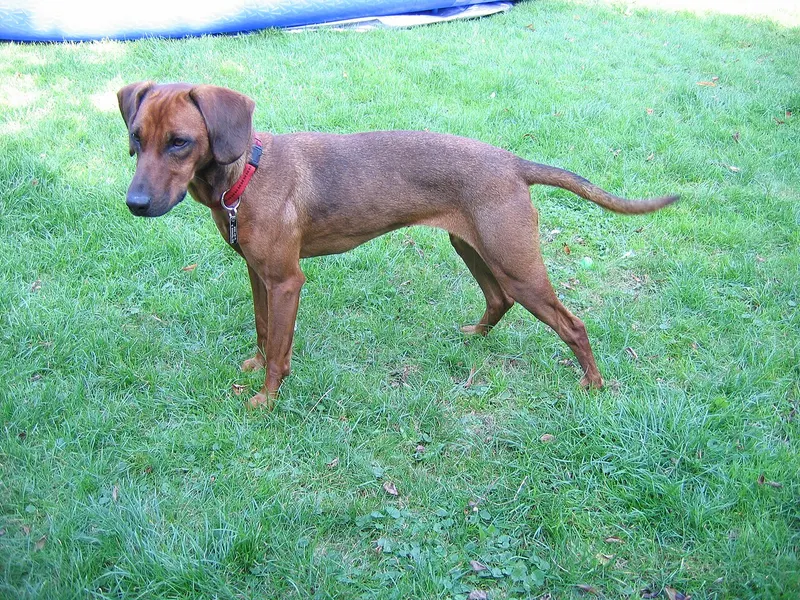
Hunters in the Tyrol region spanning the Austrian and Italian Alps developed this scenthound over centuries specifically for tracking wounded big game across genuinely difficult mountainous terrain, a job that rewarded a methodical, careful working style over raw speed and shaped the breed's moderate, sustainable build rather than the leaner sprint-capable structure some other scenthounds carry. The Tyrolean Hound's real specialty lies in blood-trailing, following the scent trail of game wounded but not immediately downed by a hunter, a genuinely demanding and precise tracking task that Alpine hunters have long relied on this breed to perform reliably across long distances and difficult footing. Austrian and Italian breed clubs on either side of the Alps have maintained the breed jointly for generations, reflecting the Tyrol region's own historical position straddling what's now the Austria-Italy border, and the Tyrolean Hound remains recognized and actively worked in both countries today. The breed stays almost entirely a working hunting dog in its Alpine homeland, genuinely uncommon as a companion breed even there, and it remains essentially unknown in the US outside dedicated Alpine hunting-breed enthusiasts.
Common health predispositions
- Ear infections
- Generally hardy mountain-hound breed
Temperament
Methodical, genuinely focused, and notably calm compared with faster-paced scenthound breeds, the Tyrolean Hound carries a working temperament built around careful, sustained scent-tracking rather than high-speed pursuit, a legacy of its specialized blood-trailing role across demanding Alpine terrain. Devotion to its handler runs deep, reflecting the close, cooperative working relationship blood-trailing requires between hunter and dog. Real patience and genuine steadiness at home tend to mirror the breed's field temperament, and Austrian and Italian hunters alike often describe the Tyrolean Hound as a notably easygoing companion between actual hunts, calmer at rest than its working intensity in the field might suggest. Alpine hunting clubs on both sides of the Austria-Italy border continue actively testing the breed against real blood-trailing standards, treating that ongoing working validation as essential to preserving its specialized tracking ability.
Living with a Tyrolean Hound
Plan on roughly 75 minutes of daily activity for this working mountain scenthound, and lean into real scent-work whenever possible, since methodical tracking is genuinely central to what the breed was built to do. Coat maintenance is refreshingly simple — an occasional brush is all the short, weather-resistant fur really asks for. Ear infections are worth watching given the drop-eared structure typical of scenthound breeds, and the Tyrolean Hound is otherwise widely considered a genuinely hardy mountain-hunting breed with limited breed-specific health concerns beyond that routine ear care. Real methodical focus and genuine calm at home suit a household that wants an engaged hunting or scent-work companion without the higher overall intensity some faster pursuit-hound breeds carry. Getting one at all means reaching out directly to an Austrian or Italian hunting organization that maintains the breed, since there's no real US pet-market presence to speak of. Outside its home region, this stays a specialist Alpine working breed rather than a mainstream companion-dog option.
FAQ
What is blood-trailing?
A specialized hunting task in which a dog follows the scent trail of game wounded but not immediately downed by a hunter, a genuinely demanding and precise job requiring methodical tracking across difficult terrain — it's the Tyrolean Hound's real specialty and primary working purpose.
Where does the Tyrolean Hound come from?
The Tyrol region spanning the Austrian and Italian Alps, where hunters developed the breed over centuries specifically for tracking wounded big game across genuinely difficult mountainous terrain, with Austrian and Italian breed clubs jointly maintaining it today.
Is the Tyrolean Hound a fast dog?
Not particularly, by scenthound standards — the breed has a moderate, sustainable build rather than a lean, sprint-capable structure, reflecting its specialized role in careful, methodical blood-trailing over raw speed and pursuit.
Is the Tyrolean Hound calm at home?
Often notably so, yes — Austrian and Italian hunters describe the breed as a genuinely easygoing companion between actual hunts, calmer at rest than its focused working intensity in the field might suggest.
Can you get a Tyrolean Hound in the US?
Not through any normal channel — this breed lives almost entirely as a working dog in its Alpine homeland, and reaching an actual breeder means contacting Austrian or Italian hunting organizations directly rather than searching domestically.
How big does a Tyrolean Hound get?
A medium-sized scenthound, typically 33 to 51 pounds and 17 to 19.5 inches at the shoulder, deliberately compact and sturdy rather than tall or leggy, a build suited to methodical, sure-footed tracking across steep and uneven Alpine ground rather than flat-out speed.
Is the Tyrolean Hound the same breed used in Bavarian mountain hunting?
Not quite — the Bavarian Mountain Scenthound is a separate, closely related breed developed for similar blood-trailing work on the German side of the Alps, and while the two share overlapping ancestry and near-identical working purpose, kennel clubs treat them as genuinely distinct breeds with their own separate standards.
Related on FetchBreed
Lists this breed appears in
Whichever breed fits your life, consider adoption or breed-specific rescue first — many purebred and mixed-breed dogs and cats are already waiting for homes.
General breed information, not veterinary advice — consult a vet for your pet's specific health, diet, and behavior needs.