Hound Group
Treeing Walker Coonhound
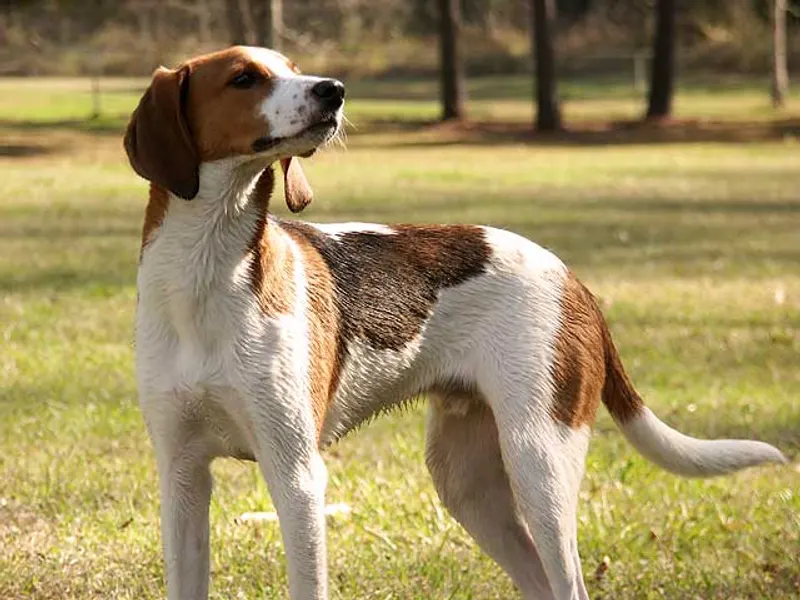
A single dog of uncertain but locally celebrated origin, known in Tennessee hunting lore as Tennessee Lead, is widely credited by breed historians as the foundational sire behind this breed's development in the early 20th century, when Tennessee hunters crossbred English Foxhound-descended Walker Hound lines specifically to sharpen treeing instinct for raccoon hunting rather than the open-country fox pursuit Walker Hounds were originally bred for. That deliberate redirection from fox-chasing to tree-and-bay raccoon work is what separates the Treeing Walker Coonhound from its close Walker Hound ancestors, even though the two share substantial genetic overlap and a similar tricolor coat pattern. The breed became genuinely one of the most popular American coonhounds by the mid-20th century, prized by hunters specifically for its combination of real speed on a trail and a distinctively clear, ringing bark once it trees its quarry, a vocal quality coonhound competition judges have long rated highly in organized treeing trials. AKC recognition didn't arrive until 2012, remarkably late given how thoroughly the Treeing Walker had already established itself as one of the most numerically popular coonhounds among American hunters decades earlier, reflecting the breed's working-hunter-first culture rather than any early push toward show-ring recognition.
Common health predispositions
- Hip dysplasia
- Ear infections
- Gastric dilatation-volvulus (bloat)
Temperament
Energetic, genuinely friendly, and famously fast on a trail, the Treeing Walker Coonhound carries real hunting intensity balanced by a notably sociable, people-oriented household temperament once exercise needs are met. Field-trial competitors specifically prize the breed for how cleanly it separates its two modes — full intensity on a hot trail, genuine off-duty warmth back at the truck or in the living room — a dual nature the breed's Tennessee Lead ancestry was deliberately selected to reinforce generation after generation. Most individuals do well with children, and a long history working shoulder-to-shoulder with other hounds during group hunts has generally left the breed comfortable sharing space with other dogs too. That clear, ringing bark that made the breed a favorite in competitive treeing trials remains genuinely present in household life, and prospective owners should expect real vocal expressiveness as part of the package rather than an occasional quirk.
Living with a Treeing Walker Coonhound
Speed is this breed's whole identity, and it needs somewhere to go — a minimum of 75 minutes of genuinely vigorous daily activity, well beyond that for a Treeing Walker actually doing hunting work, given how far and fast it genuinely ranges on a trail. The short, smooth tricolor coat asks little in return, needing just occasional brushing to look its best. Bloat is a real possibility on a deep-chested build like this one, so slower feeding is worth adopting early, and hips and ears both deserve their standard checkups too. Secure fencing isn't optional given how far this particular hound can range once it hits a scent, and a household needs honest tolerance for its notably vocal nature before bringing one home. Rescue is reasonably accessible in the US given the breed's substantial popularity among hunters, with regional coonhound rescue networks especially active across the South and Midwest. Grooming costs are close to nothing, but feeding a dog this athletic is where the real monthly expense lands.
FAQ
Who was Tennessee Lead?
A single dog of somewhat uncertain but locally celebrated origin, widely credited by breed historians as the foundational sire behind the Treeing Walker Coonhound's development in early 20th-century Tennessee, where hunters used him to sharpen treeing instinct in Walker Hound-descended lines.
What's the difference between a Treeing Walker Coonhound and a Walker Hound?
The Treeing Walker was deliberately developed from Walker Hound lines specifically to prioritize tree-and-bay raccoon work over the open-country fox pursuit Walker Hounds were originally bred for, though the two breeds share substantial genetic overlap and a similar tricolor coat.
Why did AKC recognition for the Treeing Walker Coonhound take so long?
Full recognition didn't arrive until 2012, remarkably late given the breed had already become one of the most numerically popular American coonhounds decades earlier, reflecting a working-hunter-first culture that historically prioritized field performance over show-ring credentials.
Is a Treeing Walker Coonhound a fast dog?
Yes, genuinely — real speed on a trail is one of the breed's defining traits, prized by hunters alongside its distinctively clear, ringing bark once it trees its quarry, and both qualities remain highly rated in competitive treeing trials today.
Is a Treeing Walker Coonhound good with other dogs?
Generally yes — a working history spent trailing and treeing alongside a full pack of fellow hounds means most individuals settle comfortably into a multi-dog household without much fuss.
How did the Treeing Walker Coonhound split off from the Walker Foxhound?
The breed traces to a stolen dog of unknown but likely English Foxhound ancestry, nicknamed Tennessee Lead, that was crossed into Walker Foxhound lines in the mid-1800s, producing offspring with a stronger natural treeing instinct toward raccoon rather than fox, and breeders eventually split that line off as its own recognized coonhound breed.
Related on FetchBreed
Lists this breed appears in
Whichever breed fits your life, consider adoption or breed-specific rescue first — many purebred and mixed-breed dogs and cats are already waiting for homes.
General breed information, not veterinary advice — consult a vet for your pet's specific health, diet, and behavior needs.