Toy Group
Toy Fox Terrier
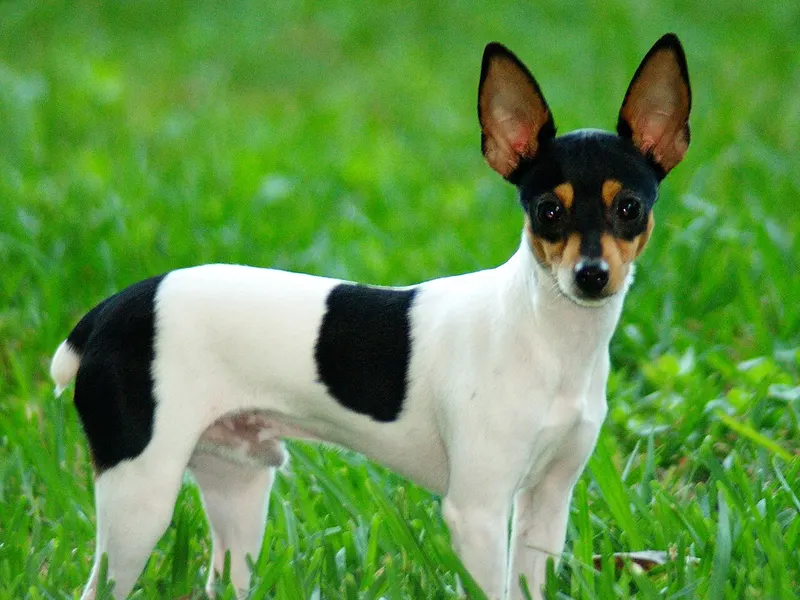
Early 20th-century American breeders crossed small Smooth Fox Terriers with Chihuahuas, Manchester Terriers, and Italian Greyhounds, aiming to shrink the working Fox Terrier down to a size that fit farmhouse life without losing any of its ratting instinct. The result kept the terrier's fearless, alert personality in a genuinely toy-sized body, and the breed found steady work as a farm ratter well into the mid-1900s before shifting toward companion status. UKC recognized the Toy Fox Terrier in 1936; AKC recognition didn't follow until 2003, one of the more recent additions to the Toy Group despite the breed's much longer working history. The breed's development drew on multiple regional lines of small Fox Terriers being bred down independently across the American Midwest in the early 1900s, and it took decades of inconsistent typing before the United Kennel Club standardized the breed in 1936. A particularly influential contribution came from Chihuahua crosses that helped stabilize the breed's small size while Italian Greyhound blood is credited with refining the leg length and overall elegance seen in the modern Toy Fox Terrier.
Common health predispositions
- Patellar luxation
- Legg-Calvé-Perthes disease
- Dental crowding
Temperament
Don't let the size fool anyone — Toy Fox Terriers carry the full terrier attitude in miniature, confident, alert, and often unaware of how small they actually are around bigger dogs. They're quick learners and genuinely food-motivated, which makes basic obedience come together fast, but that same boldness means early socialization matters to keep confidence from tipping into reactivity. Most individuals bond intensely with one or two people and stay watchfully aware of household comings and goings, making them capable, if small, watchdogs. Separation anxiety shows up more often in this breed than in many toy breeds, a trait linked to its tendency to bond intensely with one or two people, and Toy Fox Terriers left alone for long stretches without gradual conditioning can develop genuinely disruptive habits like excessive barking or destructive chewing.
Living with a Toy Fox Terrier
Around 40 minutes of daily activity, broken into shorter sessions, suits this breed better than one long outing — Toy Fox Terriers have real stamina for their size but tire in bursts rather than marathons. The short, smooth coat needs minimal upkeep beyond an occasional wipe-down, a genuine advantage for owners who don't want a grooming routine. Fragility is the bigger practical concern: their small bones make them a poor match for households with very young children who might handle them roughly, and patellar luxation, Legg-Calvé-Perthes disease, and dental crowding — common in small-mouthed toy breeds generally — are worth discussing with a vet early and monitoring through the dog's life. Toy Fox Terriers suit owners looking for a genuinely low-shedding, low-exercise small dog with real personality, though households with toddlers or very young children should think carefully given the breed's fragile bone structure. Toy Fox Terrier-specific rescue groups are relatively rare given the breed's smaller population, so prospective adopters often do better searching general small-breed and terrier rescues, where TFTs and TFT mixes do turn up periodically.
FAQ
Are Toy Fox Terriers good with young kids?
Their small, fine-boned frame makes them better suited to households with older, gentler children who understand how to handle a small dog carefully, rather than toddlers who might unintentionally hurt them.
How is a Toy Fox Terrier different from a Chihuahua?
Despite some shared ancestry, the Toy Fox Terrier descends primarily from working Smooth Fox Terrier stock and keeps a much stronger prey-drive and ratting instinct than the companion-bred Chihuahua, along with a distinctly terrier temperament.
Do Toy Fox Terriers shed a lot?
Not much — the short, smooth coat sheds lightly and needs only occasional brushing, making coat upkeep a genuinely small line item in the overall cost of owning this breed.
Do Toy Fox Terriers do well in apartments?
Generally yes — their small size and moderate exercise needs make apartment living workable, though their alert, sometimes vocal nature means noise-sensitive neighbors are worth considering, and daily outdoor time still matters for a breed this active mentally.
How trainable is a Toy Fox Terrier compared to other toy breeds?
Quite trainable by toy-breed standards — the working Fox Terrier ancestry left behind real intelligence and food motivation, and the breed often does well in agility and obedience settings scaled to its size.
Do Toy Fox Terriers get along well with other dogs?
Generally yes with proper introductions, though the breed's confident, sometimes bossy personality means it doesn't always defer to larger housemates, and early socialization helps establish good manners in a multi-dog household.
Is the Toy Fox Terrier related to the Smooth Fox Terrier?
Yes — breeders in the early 1900s selectively bred down smaller individuals from Smooth Fox Terrier litters, sometimes adding Chihuahua and Manchester Terrier lines, to fix a genuine toy size while retaining much of the parent breed's alert, feisty ratting temperament.
Related on FetchBreed
Lists this breed appears in
Whichever breed fits your life, consider adoption or breed-specific rescue first — many purebred and mixed-breed dogs and cats are already waiting for homes.
General breed information, not veterinary advice — consult a vet for your pet's specific health, diet, and behavior needs.