Working Group
Siberian Husky
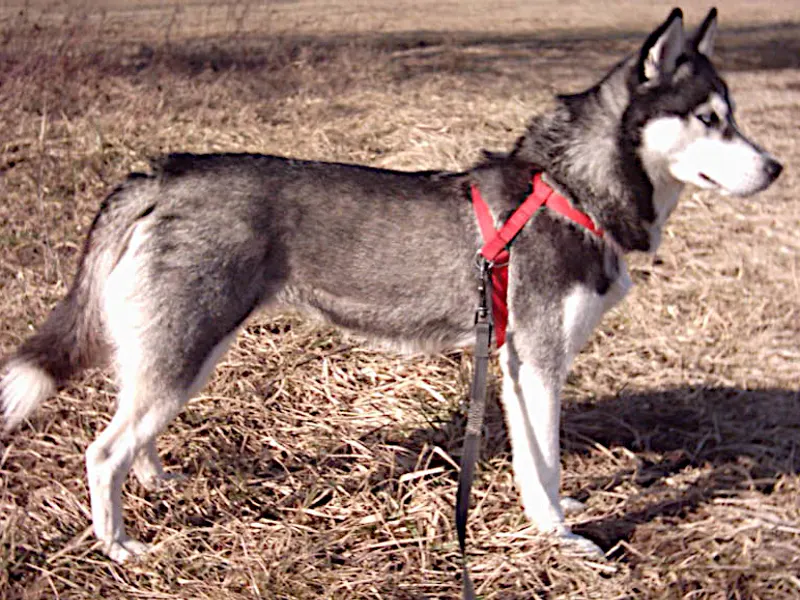
The Chukchi people of northeastern Siberia developed the Siberian Husky over centuries as an efficient long-distance sled dog suited to their subsistence Arctic lifestyle, breeding for endurance and low food intake relative to output rather than raw pulling power. The breed reached Alaska during the gold-rush-era sled races of the early 1900s and became famous worldwide after the 1925 serum run to Nome, in which relay teams of sled dogs — including the well-known Balto and Togo — carried diphtheria antitoxin roughly 674 miles across Alaska to stop an outbreak. The AKC recognized the breed in 1930, and organized Siberian Husky sled races, including Alaska's Iditarod (though most competitive Iditarod teams today use Alaskan Huskies, a distinct non-purebred sled-racing type), trace their roots directly to the same early-1900s gold-rush racing culture that first brought the breed to North America.
Common health predispositions
- Hip dysplasia
- Progressive retinal atrophy
- Hypothyroidism
Temperament
Huskies were bred to travel long distances while making some route decisions independently on the trail, and that history produces a dog that's intelligent but famously free-thinking rather than reflexively obedient — trainability in the breed lags well behind its actual intelligence because Huskies often decide for themselves whether a command is worth following. They're highly social pack animals that generally do well with other dogs, but the same working heritage gave them a strong prey drive that makes small animals, including cats, a genuine risk without careful introduction. Huskies are also famous for vocalizing in howls rather than typical barks. Recall training deserves special attention with this breed given its strong prey drive and independent streak; most experienced Husky owners simply avoid off-leash time in unfenced areas entirely rather than relying on training alone, since even well-trained individuals can bolt after an interesting scent or sight.
Living with a Siberian Husky
This is one of the highest-exercise-need breeds in the AKC roster — 90 minutes of real, vigorous activity daily is closer to a minimum than a target, and a bored Husky is notorious among owners for digging, fence-jumping, and relentless howling. The thick double coat sheds dramatically twice a year in a dramatic 'blow' and steadily otherwise, and the breed's cold-climate build genuinely struggles in hot, humid conditions. Hip dysplasia and inherited eye conditions, including progressive retinal atrophy and juvenile cataracts, are documented in the breed, and secure fencing — including buried wire, since Huskies dig — is close to mandatory given the breed's escape drive. Huskies are also notorious escape artists and jumpers in addition to diggers, and many owners find that a standard 6-foot fence is genuinely insufficient without a covered run or additional height — this is one of the few breeds where 'the dog got out' is a routine rather than rare complaint even from experienced owners. Their striking blue, brown, or bi-colored eyes (heterochromia is common and harmless in the breed) are a genetic trait, not a health concern.
FAQ
Can Siberian Huskies live in warm climates?
It's possible but genuinely harder on the dog — the breed's thick double coat and Arctic-adapted metabolism mean real heat sensitivity, so keeping the dog in shade and air conditioning through the day and saving walks for the early morning or evening becomes less optional than it would be for most breeds.
Why do Huskies escape so often?
The breed's working history selected hard for endurance and independent trail navigation over obedience, giving Huskies a strong roaming instinct and notable skill at digging under or jumping fences — secure, ideally buried fencing is standard advice for the breed.
Are Siberian Huskies good with cats?
Often not without careful, gradual introduction — the breed's prey drive, developed for chasing game across Arctic terrain, means small fast-moving animals can trigger a chase response, though individual dogs raised with cats from puppyhood can do fine.
Why do some Huskies have two different-colored eyes?
Heterochromia — one blue eye and one brown, or a mix within a single eye — is a common and entirely harmless genetic trait in the breed, not a health condition, caused by uneven melanin distribution in the iris.
Why does the Siberian Husky have such varied eye colors?
The breed carries a genuine genetic capacity for both brown and striking blue eyes, plus bi-eyed or parti-eyed individuals with two different colors in a single eye, a trait far more common in Siberian Huskies than in most other breeds and one the AKC standard explicitly accepts, unlike breeds where heterochromia is treated as a fault.
Related on FetchBreed
Comparisons
- Siberian Husky vs Basset Hound
- Siberian Husky vs Chihuahua
- Siberian Husky vs Maltese
- Siberian Husky vs Pomeranian
- Siberian Husky vs Portuguese Water Dog
- Siberian Husky vs Rhodesian Ridgeback
- Siberian Husky vs Samoyed
- Siberian Husky vs Shiba Inu
- Siberian Husky vs Standard Poodle
- Siberian Husky vs Vizsla
- Siberian Husky vs Weimaraner
- Siberian Husky vs Whippet
Lists this breed appears in
Care equipment for a Siberian Husky
As an Amazon Associate we earn from qualifying purchases made through these links, at no extra cost to you.
- Undercoat rake
This page describes a coat that sheds dramatically twice a year in a seasonal blow and steadily in between — a rake reaches the loose undercoat a surface brush leaves behind.
- Cooling mat
The same cold-climate build this profile credits for Arctic sled work is why it says the breed genuinely struggles in hot, humid conditions.
Whichever breed fits your life, consider adoption or breed-specific rescue first — many purebred and mixed-breed dogs and cats are already waiting for homes.
General breed information, not veterinary advice — consult a vet for your pet's specific health, diet, and behavior needs.