Herding Group
Shetland Sheepdog
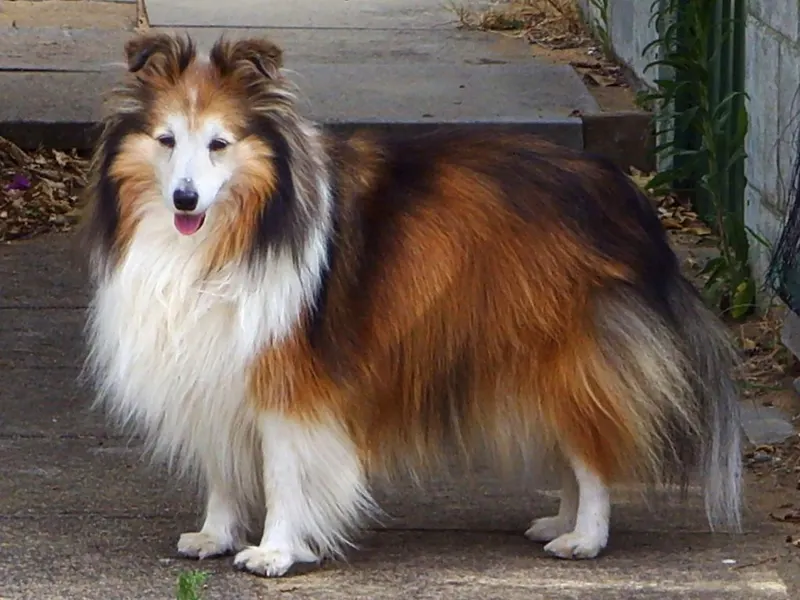
The Shetland Sheepdog developed on Scotland's remote, resource-poor Shetland Islands, where small livestock and a scarcity of food favored a smaller, more efficient herding dog than the mainland Collie types it's closely related to; the breed likely incorporates some Collie and possibly Spitz-type ancestry from local island dogs, refined further in the early 20th century with deliberate outcrossing to small show Collies to standardize its now-iconic miniature-Collie appearance. The AKC recognized the breed in 1911, and despite the common nickname 'Miniature Collie,' breed clubs on both sides of the Atlantic officially discourage the term since the Sheltie developed through its own distinct island lineage rather than being a simple size variant of the mainland Collie. The breed's isolated island origin, on a group of islands with historically limited outside dog traffic, is part of why the Sheltie developed as a genuinely distinct type rather than simply representing scaled-down Collie genetics.
Common health predispositions
- Collie eye anomaly
- Hip dysplasia
- MDR1 drug sensitivity
Temperament
Shelties carry maxed-out trainability paired with real sensitivity, a temperament that responds beautifully to positive training but poorly to harsh correction — the breed's genuine intelligence and eagerness to work show up prominently in obedience and agility competition, where Shelties are consistently among the top-performing breeds. The breed's high vocalization score is a real, functional herding-dog trait rather than an accident — Shelties bark readily both to alert and simply out of excitement during play, something apartment dwellers or anyone with close neighbors should factor in before committing to the breed.
Living with a Shetland Sheepdog
Plan on roughly an hour of daily exercise for a Sheltie, but don't stop there — this breed's working intelligence needs training or dog sports to feel genuinely satisfied, not just tired legs. The long double coat is its own commitment, shedding heavily and matting fast around the ruff and britches without several brushing sessions a week. Collie eye anomaly and MDR1 drug sensitivity, both documented across collie-type breeds generally, apply to the Sheltie as well, and hip dysplasia is also tracked in the breed despite its smaller size. Because of the breed's tendency to bark and its genuine sensitivity to being alone for long stretches, Shelties generally do best in households that can provide consistent company and mental engagement rather than being left to self-entertain. The breed's coat comes in sable, tricolor, blue merle, and bi-black patterns, and as with the Collie, breeding two merle-patterned Shelties together carries an elevated, well-documented risk of deafness and eye abnormalities in the resulting puppies.
FAQ
Do Shetland Sheepdogs bark a lot?
Yes, notably — the breed's herding heritage gave it a genuine tendency to vocalize as an alert and excitement behavior, and it's one of the higher-vocalization breeds in the herding group, worth planning for seriously in apartment or close-neighbor living situations.
Are Shelties good at dog sports?
Exceptionally so — the breed is consistently among the top performers in AKC obedience and agility competition relative to its size, a direct reflection of the very high trainability and genuine working intelligence bred into the Sheltie over generations of selection for herding ability.
How is the Shetland Sheepdog related to the Collie?
Closely, though not simply a miniature Collie — the Sheltie developed independently on Scotland's Shetland Islands from local dogs likely including some Collie ancestry, and was later deliberately refined with outcrossing to small show Collies in the early 20th century to standardize its now-recognizable Collie-like appearance in a smaller frame.
What is MDR1 drug sensitivity and does it affect Shelties?
Yes — Shelties carry the mutation at a higher-than-average rate along with most other herding breeds, and dogs carrying it can react dangerously to certain dewormers and anesthetics because their bodies can't clear those drugs from the brain normally. A cheap DNA panel identifies carriers before it becomes an emergency-room problem.
Is a Shetland Sheepdog just a small Collie?
Not quite, despite the common informal nickname — breed clubs officially discourage calling it a 'Miniature Collie' since the Sheltie developed through its own distinct lineage on Scotland's Shetland Islands, later refined with some deliberate small-Collie outcrossing, rather than simply being a size variant bred down from the mainland Collie.
Was the Shetland Sheepdog bred down in size from the Rough Collie?
Not directly, despite the strong resemblance — the Sheltie developed independently on Scotland's Shetland Islands from small local herding dogs adapted to the islands' limited food supply and harsh conditions, and later breeders did cross in Rough Collie and other breeds to refine type, which is why the resemblance is real even though the ancestry isn't simply one breed shrunk down.
Related on FetchBreed
Comparisons
- Shetland Sheepdog vs Australian Cattle Dog
- Shetland Sheepdog vs Australian Shepherd
- Shetland Sheepdog vs Belgian Malinois
- Shetland Sheepdog vs Border Collie
- Shetland Sheepdog vs Chihuahua
- Shetland Sheepdog vs Collie
- Shetland Sheepdog vs German Shepherd Dog
- Shetland Sheepdog vs Maltese
- Shetland Sheepdog vs Miniature Schnauzer
- Shetland Sheepdog vs Pembroke Welsh Corgi
- Shetland Sheepdog vs Pug
- Shetland Sheepdog vs Shiba Inu
Care equipment for a Shetland Sheepdog
As an Amazon Associate we earn from qualifying purchases made through these links, at no extra cost to you.
- Slicker brush
The long coat sheds heavily and mats fast around the ruff and britches without several brushing sessions a week.
- Steel grooming comb
A comb is what reaches the ruff and britches mats this page names specifically.
Whichever breed fits your life, consider adoption or breed-specific rescue first — many purebred and mixed-breed dogs and cats are already waiting for homes.
General breed information, not veterinary advice — consult a vet for your pet's specific health, diet, and behavior needs.