Hound Group
Scottish Deerhound
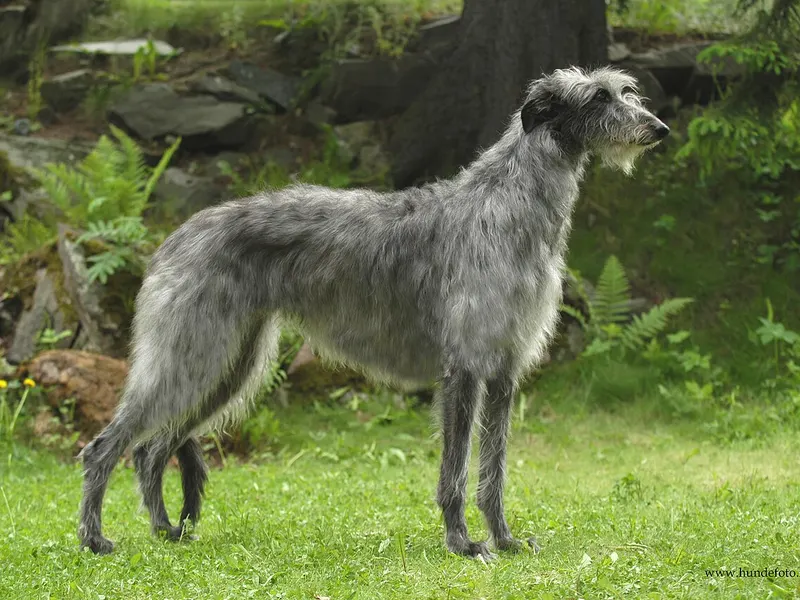
Scottish clans bred the Deerhound for centuries to course red deer across the Highlands, a genuinely demanding job given the size and speed of the quarry, and for a long stretch of Scottish history ownership of a Deerhound was restricted by law to nobility, reflecting the breed's prestige status as much as its practical hunting value. The introduction of firearms gradually reduced the need for coursing dogs, and the breed's numbers declined through the 18th and 19th centuries before dedicated preservation efforts, notably by Scottish breeders in the Victorian era, rebuilt the population. AKC recognition came in 1886. A Scottish law during the breed's peak restricted Deerhound ownership specifically to those holding the rank of earl or above, a genuinely severe legal limitation that reflects just how closely tied the breed's prestige was to Highland aristocratic identity during that period. Sir Walter Scott, the celebrated Scottish author, was a notable breed enthusiast in the early 19th century, and his writings are credited with helping generate renewed public interest in the Deerhound during a period when deer coursing itself was becoming less common as a practical hunting method.
Common health predispositions
- Bloat
- Osteosarcoma
- Dilated cardiomyopathy
Temperament
Gentle and dignified describes the Scottish Deerhound remarkably well for a breed once used to bring down deer — this is a giant sighthound with a notably calm, undemanding temperament indoors, often described as one of the more polite and low-key giant breeds available. Genuine affection for family runs deep, and most individuals are gentle with children, though as with any sighthound the instinct to chase fast-moving animals remains strong and shouldn't be assumed away by the breed's otherwise mellow disposition. The breed's historical restriction to nobility meant Deerhounds were bred and handled by people with genuine resources and time to invest in the dogs, a legacy that shows up today as a breed generally easy to live with despite its imposing size, provided its exercise and space needs are genuinely met.
Living with a Scottish Deerhound
The coursing history might suggest a livelier housemate, but in practice a Deerhound is perfectly content sacked out for hours indoors, provided a real sprint and roughly an hour of daily movement have already been ticked off. The wiry double coat manages moderate shedding with regular brushing. Given the breed's giant size, bloat is a real, documented risk worth managing through careful feeding practices, and osteosarcoma and dilated cardiomyopathy are also well-documented in the breed's veterinary literature, factors that contribute to a shorter typical lifespan than many smaller breeds see. This breed suits a calm household with space for a giant dog and appreciation for its dignified, undemanding indoor temperament — cramped housing and an owner uneasy with the shorter lifespan typical of giant sighthounds both make for a mismatch here. Sighthound-focused and Deerhound-specific rescue groups do place dogs from this breed periodically, though the modest overall population means an adopter should plan for a real wait rather than quick placement.
FAQ
Were Scottish Deerhounds only owned by nobility?
For a significant stretch of Scottish history, yes — ownership was legally restricted to nobility, reflecting both the breed's practical value for deer coursing and its status as a prestige symbol among Scottish clans.
Are Scottish Deerhounds calm indoors?
Yes, notably so — the coursing background doesn't translate into constant motion indoors; most Deerhounds are happy to sack out for the bulk of a day once their exercise is squared away, a genuinely different temperament than the breed's hunting history might suggest.
Why do Scottish Deerhounds have a shorter lifespan?
Like many giant breeds, the Deerhound is prone to conditions including bloat, osteosarcoma, and dilated cardiomyopathy that tend to shorten typical lifespan compared to smaller dogs, with most individuals living 8-11 years.
Was Deerhound ownership legally restricted historically?
Yes, quite severely at the breed's peak — Scottish law at one point restricted ownership to those holding the rank of earl or above, a legal limitation that reflects how tightly the breed's prestige was bound to Highland aristocratic identity.
Did a famous author help popularize the Scottish Deerhound?
Sir Walter Scott owned a Deerhound named Maida, frequently depicted alongside him in period portraits and later commemorated in statues, and Scott's own descriptions of the breed's dignified bearing in his writing are often credited with shaping how later breed standards emphasized a calm, aristocratic temperament over pure hunting ferocity. Maida himself was reportedly a cross with a Great Dane, which some breed historians believe subtly influenced the size of dogs Scott favored and wrote about.
Are Scottish Deerhounds good with children?
Generally yes, given the breed's notably gentle and patient temperament, though its sheer size means supervision matters for very young children, and the breed's instinct to chase fast-moving things extends to running kids just as much as small animals.
What game was the Scottish Deerhound originally bred to hunt?
Scottish clans bred the Deerhound specifically to course red deer, a large and fast quarry, across the Scottish Highlands, and for centuries ownership was restricted largely to nobility, since the size and speed needed to bring down deer alone made the breed genuinely valuable.
Related on FetchBreed
Lists this breed appears in
Whichever breed fits your life, consider adoption or breed-specific rescue first — many purebred and mixed-breed dogs and cats are already waiting for homes.
General breed information, not veterinary advice — consult a vet for your pet's specific health, diet, and behavior needs.