Hound Group
Redbone Coonhound
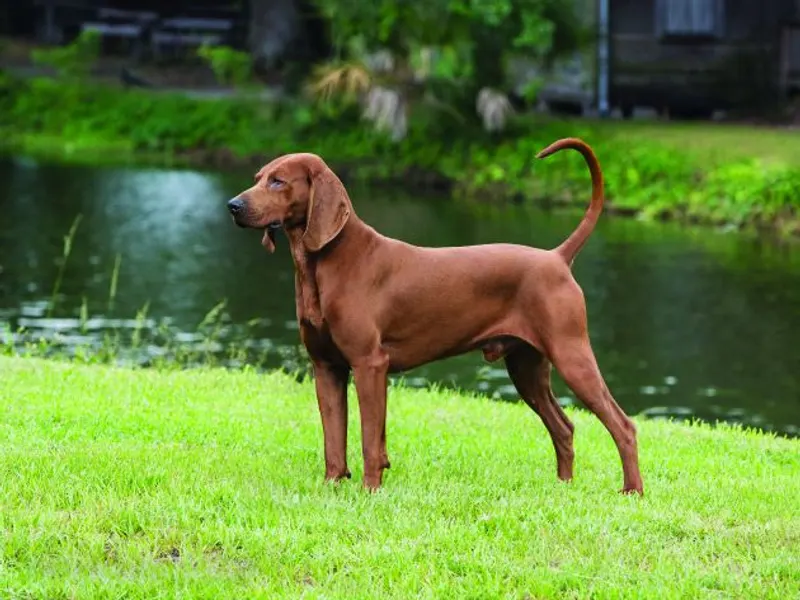
Solid, striking red coloring gives the Redbone Coonhound its name and traces back to selective breeding by Georgia hunters in the 19th century who crossed imported Foxhound and Bloodhound stock with local scenthounds, deliberately favoring the solid red color over the tricolor patterns more common in other American coonhound lines. That solid coloring served a genuinely practical purpose beyond aesthetics — a consistent, easily identifiable color helped hunters distinguish their own dog from others during group hunts or in mixed-breed hunting packs where multiple coonhounds might be working the same area. The breed gained wider cultural visibility well beyond hunting circles through Wilson Rawls's beloved 1961 novel "Where the Red Fern Grows," whose central canine characters, though sometimes described more generally as coonhounds in the text, are commonly associated with the Redbone specifically in popular culture, giving the breed a level of mainstream name recognition unusual among working scenthound breeds. AKC recognition came in 2009, relatively late relative to the breed's genuinely long 19th-century American hunting history, reflecting how long the Redbone remained primarily a regional Southern working breed before achieving broader national kennel-club status.
Common health predispositions
- Hip dysplasia
- Ear infections
- Gastric dilatation-volvulus (bloat)
Temperament
Even-tempered and genuinely affectionate for a working scent hound, the Redbone Coonhound tends toward a somewhat calmer baseline demeanor at home than some of its more high-strung coonhound relatives, though real hunting drive and a loud, distinctive voice remain fully intact once the dog is on a trail. Owners who've kept several coonhound breeds side by side often single out the Redbone specifically as the mellower housemate of the group, a reputation that has followed the breed for generations even among hunters who otherwise value raw intensity above all else. Most individuals bond closely with family, kids included, and a history working in group hunting settings has generally left the breed sociable with other dogs too. That mainstream cultural association through popular literature has drawn a wider range of pet-focused owners to the breed in recent decades, a shift from its historically hunting-focused ownership base that has, if anything, only reinforced the Redbone's reputation as a genuinely loyal, people-oriented dog.
Living with a Redbone Coonhound
Casual exercise won't satisfy the genuine working stamina bred into this dog — plan on roughly 75 minutes daily, and quite a bit more for a Redbone actually put to hunting work. Grooming, at least, is simple: the short, solid-red coat needs only occasional brushing to look its best. A deep-chested, large-breed build brings a genuine bloat risk worth discussing feeding practices about directly with a vet, while hips and ears get the standard once-over any hound this size should have. A rural or spacious suburban household with real appreciation for a loyal, vocal hunting breed, and genuine tolerance for the breed's distinctive baying voice, tends to do well with a Redbone Coonhound. Rescue availability in the US skews toward the South and rural Midwest given the breed's regional hunting-culture roots, though its literary fame has broadened interest and rescue networks somewhat nationally. Expect the food bill to dominate the monthly budget for a dog this size and activity level, with grooming barely registering by comparison.
FAQ
Is the Redbone Coonhound from 'Where the Red Fern Grows'?
The dogs in Wilson Rawls's 1961 novel are described more generally as coonhounds in the text, but they're commonly associated with the Redbone specifically in popular culture, giving this breed a level of mainstream name recognition unusual for a working scenthound.
Why is the Redbone Coonhound a solid color?
19th-century Georgia hunters deliberately favored the solid red coloring over more common tricolor patterns partly for practical reasons — a consistent, easily identifiable color helped distinguish an individual dog from others during group hunts involving multiple coonhounds.
Is a Redbone Coonhound a good family dog?
Often yes — the breed tends toward a calmer baseline temperament than some other coonhound breeds, bonds closely with family, and kids are rarely a problem, though it retains real hunting drive and a loud voice once actually on a scent.
How much exercise does a Redbone Coonhound need?
A genuine commitment — figure on around 75 minutes of vigorous activity a day at minimum, and a Redbone actually used for hunting work typically needs considerably more to stay satisfied.
What was the Redbone Coonhound originally bred for?
19th-century Georgia hunters developed the breed by crossing imported Foxhound and Bloodhound stock with local scenthounds specifically to tree raccoon, selecting deliberately for the solid red coat that gives the breed its name.
Is the Redbone Coonhound related to the Bloodhound?
Not directly, despite both being scenthounds — the Redbone descends from Irish and Scottish Foxhound stock brought to the American South in the 1700s and 1800s, later refined through crosses with Bloodhound lines specifically to sharpen its trailing ability, giving it strong scenting power while remaining a genuinely separate, distinctly American breed with its own solid red coat as a hallmark.
Related on FetchBreed
Lists this breed appears in
Whichever breed fits your life, consider adoption or breed-specific rescue first — many purebred and mixed-breed dogs and cats are already waiting for homes.
General breed information, not veterinary advice — consult a vet for your pet's specific health, diet, and behavior needs.