Herding Group
Puli
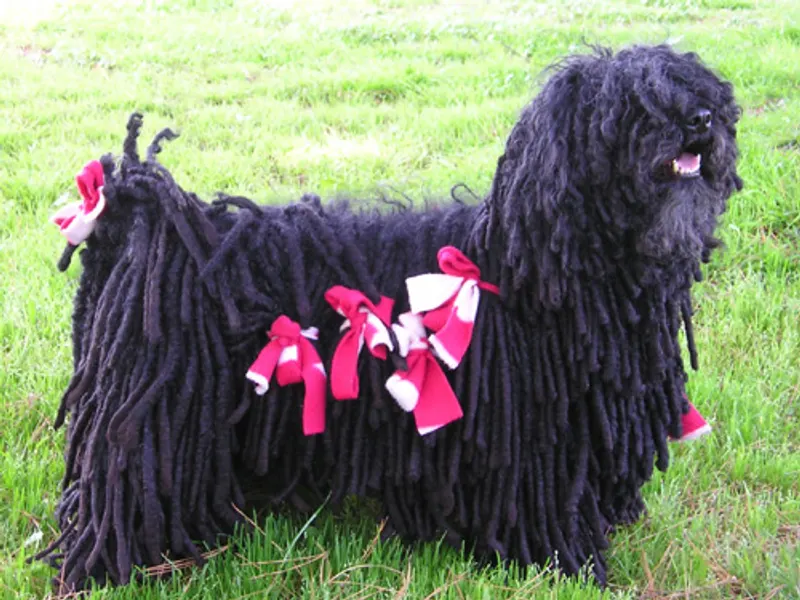
Hungarian shepherds developed the Puli over centuries specifically to herd sheep across the country's open plains, and the breed's most distinctive feature — a naturally corded coat that forms dense, rope-like strands resembling dreadlocks — served a real practical purpose, protecting the dog from harsh weather and from predator bites while working. Unlike many herding breeds that have shifted almost entirely into companion or show roles, the Puli remains in active working use as a herding dog in parts of Hungary today, a continuity relatively uncommon among historic European herding breeds. The AKC recognized the breed in 1936, and the Puli's cords, while dramatic to look at, require deliberate ongoing separation by hand to keep individual cords distinct rather than merging into one solid matted mass.
Common health predispositions
- Hip dysplasia
- Progressive retinal atrophy
- Patellar luxation
Temperament
Pulik (the breed's Hungarian plural) carry a genuinely high energy level and strong herding drive, and the breed's intelligence and agility — useful traits for quickly repositioning around a moving flock — translate at home into a dog that needs real mental engagement, not just physical exercise, to stay well-adjusted. GoodWithKids ratings run solidly good, though the breed's herding instinct can show up as nipping or circling behavior around running children that benefits from early training. Trainability is good but comes with a genuine independent streak typical of livestock guardian and herding breeds bred to make quick decisions without constant direction from a shepherd.
Living with a Puli
A short leash walk alone won't come close to satisfying a Puli's working herding heritage — plan on a full hour of vigorous daily activity, and make sure a good chunk of it actually challenges the dog's mind. The corded coat is a genuinely unusual, hands-on commitment: cords need to be separated by hand periodically as they form and grow to prevent them from merging together, and full-coat maintenance is a real, ongoing time investment, though the coat sheds very little once properly corded, which is exactly why allergy-sensitive households often look at the breed twice — genuinely allergen-free dogs don't exist, so a visit with the specific dog beforehand still matters. Hip dysplasia, progressive retinal atrophy, and patellar luxation are the most commonly documented health concerns. Many pet owners choose to keep a Puli's coat brushed out rather than corded specifically because corded coat maintenance is so labor-intensive, a choice that trades the breed's signature look for meaningfully less grooming time, though it does increase shedding somewhat compared with a properly maintained corded coat.
FAQ
Why does a Puli have a corded coat?
The naturally forming, rope-like cords developed as genuine protection against harsh weather and predator bites while the breed worked herding sheep across the open Hungarian plains — a working origin behind what's become the single most eye-catching trait in the whole herding group.
How do you take care of a Puli's cords?
The cords need to be separated by hand periodically as they form and grow, preventing them from merging into one solid matted mass — it's a genuinely labor-intensive, ongoing commitment, which is why some pet owners choose to keep the coat brushed out instead of corded.
Are Pulik still used as working herding dogs?
Yes — unlike many historic European herding breeds that have shifted almost entirely into companion or show roles, the Puli remains in active use as a working herding dog in parts of Hungary today.
Are Pulik hypoallergenic?
A properly maintained corded coat sheds very little, which is the practical reason the Puli turns up on allergy-friendly breed lists — no dog earns a true allergen-free label, though, so confirming with the individual dog still matters.
How much exercise does a Puli need?
A genuine, substantial commitment — about an hour of vigorous daily activity plus real mental engagement suits the breed's working herding drive, and a Puli that only gets short leash walks tends to become restless or destructive.
Are Pulik good with children?
Kids and Pulik solidly get along, though the breed's herding instinct occasionally surfaces as nipping or circling behavior around running children — something early, consistent training generally resolves.
How big does a Puli get?
Medium — typically 25 to 35 pounds and 16 to 17 inches at the shoulder, a size that made the breed agile enough to reposition quickly around a moving flock of sheep.
How long do Pulik live?
Ten to 15 years is the commonly cited range, and it's genuinely wide because individual lines vary; hip health and vision screening are the two proactive steps most responsible breeders lean on.
Is a Puli a good first dog?
The temperament itself is approachable enough, but cord maintenance — or the regular-brushing alternative — is a genuinely unusual, ongoing task most first-time owners simply don't see coming.
Are Pulik good watchdogs?
Yes, genuinely — the breed is alert and quick to bark at anything unfamiliar, a trait consistent with its farm-guarding heritage alongside its primary herding role.
What colors do Pulik come in?
Solid black is the most iconic and common, though white, gray, and a fawn-cream color called 'apricot' also occur within the breed standard, all cosmetic variations unrelated to temperament.
Do Pulik get along with other dogs?
A cooperative streak comes with the breed's herding background, so a properly socialized Puli usually settles into a multi-dog household without much drama.
Is the Puli a rare breed?
Relatively, yes, outside Hungary — the breed's distinctive coat maintenance requirements and specialized working role have kept it a comparatively uncommon choice among American dog owners despite its long, genuine working history.
Related on FetchBreed
Lists this breed appears in
Whichever breed fits your life, consider adoption or breed-specific rescue first — many purebred and mixed-breed dogs and cats are already waiting for homes.
General breed information, not veterinary advice — consult a vet for your pet's specific health, diet, and behavior needs.